Small family farmer tending to organic vegetables
1344×768 · AVIF · CC BY 4.0
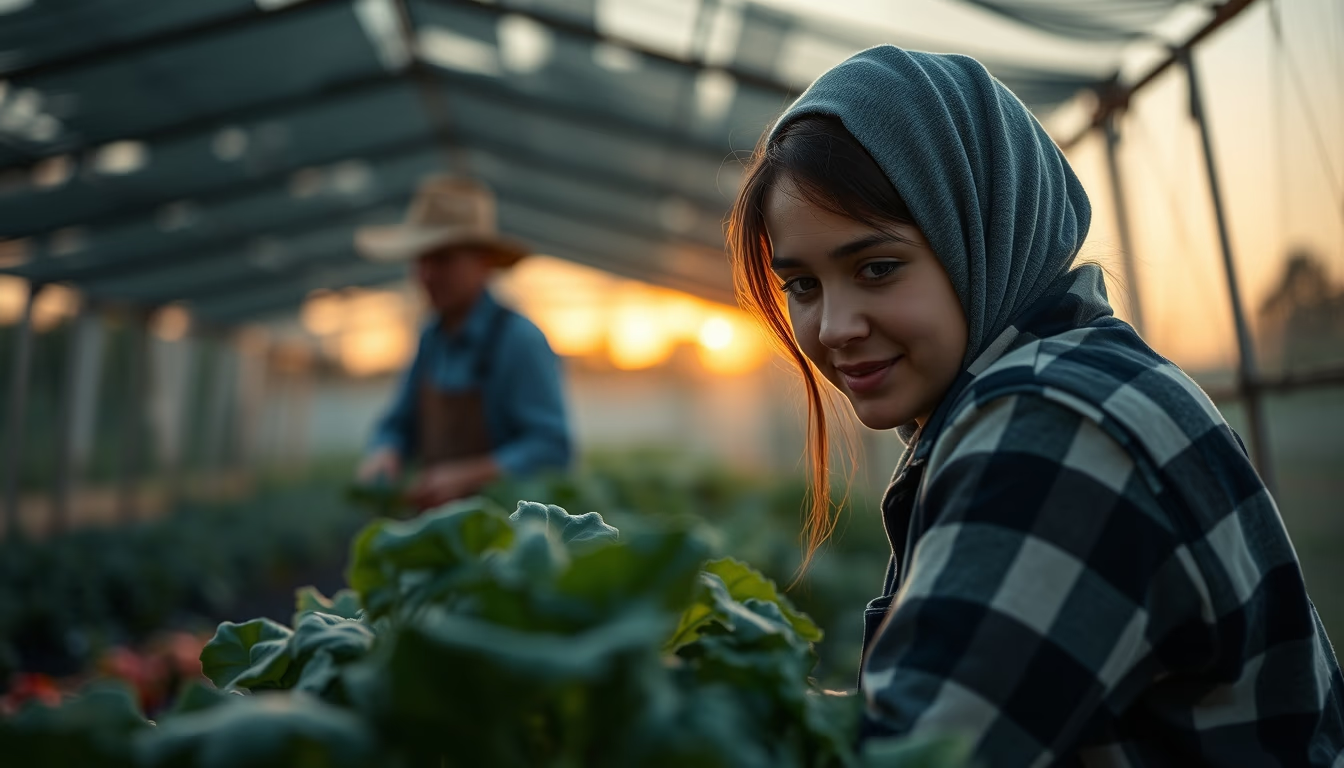
A small family farmer tends organic vegetables at twilight, highlighting sustainable production and manual cultivation in Brazil.
About this subject
Brazilian family farmers play a crucial role in producing healthy food, especially organic vegetables. Unlike large-scale industrial agriculture, family farming accounts for about 70% of the food consumed in Brazil, according to IBGE 2017 data. Organic cultivation eliminates synthetic pesticides and fertilizers, preserving soil biodiversity and consumer health. In Brazil, organic production has grown by 20% annually in recent years, driven by demand for natural foods and public policies like the National School Feeding Program (PNAE), which prioritizes purchases from family farms.
Twilight is a strategic time for farmers. The soft light and cooler temperatures allow delicate tasks such as harvesting leafy greens and inspecting for pests without stressing plants. Additionally, late-day irrigation reduces water evaporation, optimizing this increasingly scarce resource. Many family farmers adopt agroforestry systems or crop rotation to maintain soil fertility, blending traditional knowledge with modern ecological management techniques.
The image of a farmer manually tending to plants reflects a reality beyond romanticism. Brazil has over 4.4 million family farming establishments, occupying only 23% of total agricultural land but employing 67% of the rural workforce. These producers face challenges such as access to credit, technical assistance, and organic certification, but they also rely on solidarity networks like organic fairs and responsible consumer groups. Organic production, in particular, requires more manual labor and technical knowledge but offers higher added value and lower dependence on external inputs.
Interestingly, Brazil is one of the world's largest organic producers, especially fruits, vegetables, and coffee. However, domestic consumption is still low compared to European countries. Initiatives like participatory certification, where farmers themselves validate organic quality, have helped democratize access to this market. By choosing organic, family farmers not only produce healthier food but also contribute to water conservation, reduced greenhouse gas emissions, and soil carbon sequestration.
Frequently Asked Questions
Why is family farming important for organic production in Brazil?
Family farming supplies most of the food consumed in Brazil and, due to its smaller scale and careful management, is well-suited for organic production, which requires manual labor and ecological knowledge. Public policies like PNAE encourage purchasing organic products from these farmers.
What are the main challenges for family farmers producing organic crops?
Key challenges include access to specific rural credit, specialized technical assistance, organic certification (which can be costly or bureaucratic), and fair marketing channels. Many producers rely on associations and cooperatives to overcome these barriers.
How does twilight benefit vegetable cultivation?
At twilight, sunlight is softer and temperatures are cooler, reducing plant water stress and water evaporation. This allows harvesting and crop management with lower risk of leaf damage and more efficient water use.
Direct URL
https://pub-c7d6a6ea828543ac903a74a341ccb2e1.r2.dev/imagens/small-family-farmer-tending-to-organic-vegetables-closeup-twilight-4.avifHow to credit
Include a visible link back to UtilizAí. Copy one of the snippets below:
<a href="https://xn--utiliza-eza.com/en/midia/imagens/small-family-farmer-tending-to-organic-vegetables-closeup-twilight-4">Small family farmer tending to organic vegetables</a> by <a href="https://xn--utiliza-eza.com">UtilizAí</a>, licensed under <a href="https://creativecommons.org/licenses/by/4.0/">CC BY 4.0</a>.
[Small family farmer tending to organic vegetables](https://xn--utiliza-eza.com/en/midia/imagens/small-family-farmer-tending-to-organic-vegetables-closeup-twilight-4) by [UtilizAí](https://xn--utiliza-eza.com), CC BY 4.0
License: CC-BY-4.0