Small family farmer tending to organic vegetables
1344×768 · AVIF · CC BY 4.0
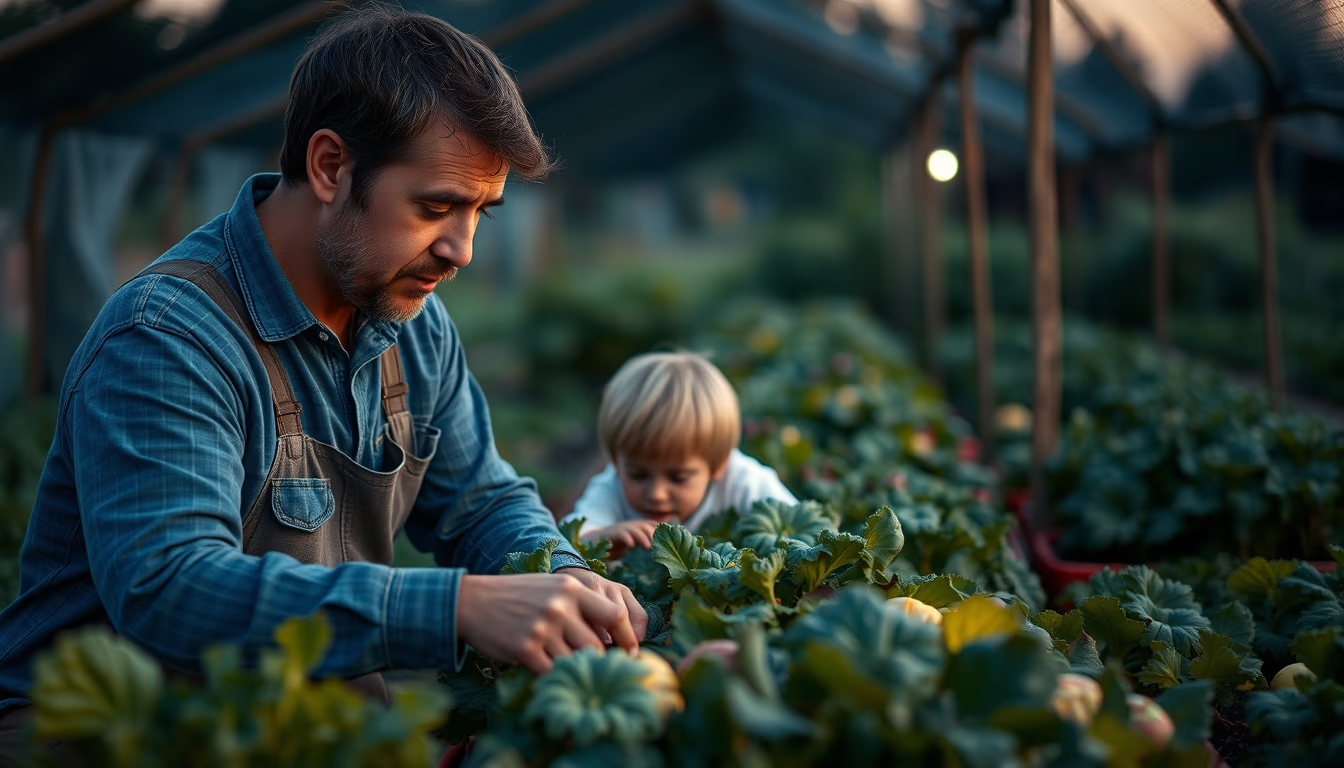
A family farmer tends to organic vegetables at dusk, a sustainable practice that strengthens food security in Brazil.
About this subject
Family farming accounts for about 70% of the food consumed in Brazil, according to IBGE data. This productive segment, which includes small farmers like the one depicted, cultivates organic vegetables without pesticides, preserving soil biodiversity and consumer health. Organic farming has grown in the country, with over 20,000 certified producers, especially in the South and Southeast regions.
Dusk is a critical time for irrigating and harvesting leafy vegetables such as lettuce, arugula, and spinach. The soft evening light reduces water loss through evaporation, optimizing water resource use. Techniques like no-till farming and crop rotation are common in this system, which also employs green manure with legumes to fix nitrogen in the soil.
The farmer's closeness to the land reflects the tradition of small properties that supply open-air markets and institutional purchase programs like the PAA (Food Acquisition Program). Studies from Embrapa show that organic family farming can be up to 30% more profitable per hectare than conventional farming, due to reduced external inputs and added value of products.
Interestingly, Brazil has one of the largest organic cultivation areas in the world, with over 1 million certified hectares. Organic family farming also contributes to climate change mitigation by sequestering carbon in the soil through practices such as composting and mulching.
Frequently Asked Questions
What is the difference between family farming and organic farming?
Family farming refers to property size and family management, while organic farming is a production method without pesticides. Many family farmers adopt organic practices, but not all family farming is certified organic.
Why is dusk important for vegetable cultivation?
Dusk offers milder temperatures and lower evaporation, ideal for irrigation and harvesting. This reduces plant water stress and preserves vegetable quality.
Which vegetables are most common in Brazilian organic family farming?
Lettuce, arugula, kale, spinach, carrots, and beets are common. These crops adapt well to small areas and have high demand at organic markets.
Direct URL
https://pub-c7d6a6ea828543ac903a74a341ccb2e1.r2.dev/imagens/small-family-farmer-tending-to-organic-vegetables-closeup-twilight.avifHow to credit
Include a visible link back to UtilizAí. Copy one of the snippets below:
<a href="https://xn--utiliza-eza.com/en/midia/imagens/small-family-farmer-tending-to-organic-vegetables-closeup-twilight">Small family farmer tending to organic vegetables</a> by <a href="https://xn--utiliza-eza.com">UtilizAí</a>, licensed under <a href="https://creativecommons.org/licenses/by/4.0/">CC BY 4.0</a>.
[Small family farmer tending to organic vegetables](https://xn--utiliza-eza.com/en/midia/imagens/small-family-farmer-tending-to-organic-vegetables-closeup-twilight) by [UtilizAí](https://xn--utiliza-eza.com), CC BY 4.0
License: CC-BY-4.0