Silk thread spool
1344×768 · AVIF · CC BY 4.0
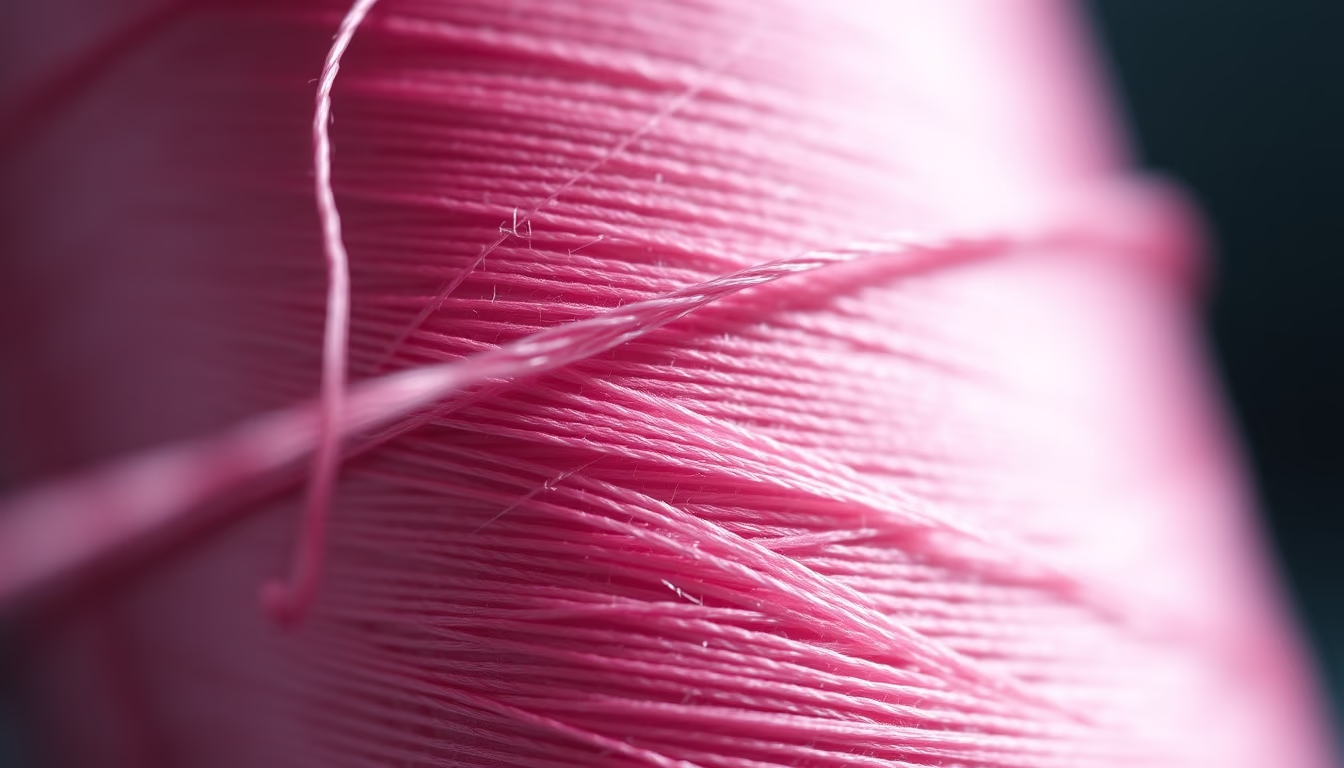
Macro close-up of a silk thread spool, highlighting the texture and natural luster of the silk fiber.
About this subject
Silk is a natural protein fiber produced by the silkworm (Bombyx mori) during cocoon formation. Each cocoon consists of a single continuous filament up to 900 meters long. To obtain silk thread, cocoons are boiled in hot water to soften the sericin (the gum holding the filament), then carefully unwound. This process, called silk reeling, has been practiced for millennia, originating in ancient China around 2700 BCE.
Silk thread spools are traditionally made of light wood, such as birch or bamboo, to avoid damaging the delicate fiber. The smooth surface and conical or cylindrical shape allow the thread to unwind without friction, preserving fiber integrity. Silk is valued for its strength (comparable to steel in tensile strength per weight), elasticity, and ability to absorb dyes, resulting in vibrant, deep colors.
In the textile industry, silk thread is used in fine embroidery, sewing luxury fabrics, and making lingerie and scarves. In medicine, silk threads are used in surgical sutures due to their biocompatibility and strength. Macrophotography of a silk spool reveals the twist of the thread, soft luster, and subtle color variations that distinguish natural silk from synthetic fibers.
Interestingly, producing 1 kg of silk requires approximately 6,000 silkworm cocoons. Brazil, though not a major global producer, has sericulture hubs in states like São Paulo and Paraná, where Japanese immigration traditions fostered the activity. Brazilian silk is recognized for high quality, especially in the Londrina region.
Frequently Asked Questions
How is silk thread made from silkworm cocoons?
Silk thread is produced by boiling cocoons in hot water to loosen the sericin, then unwinding the continuous filament from each cocoon. Several filaments are twisted together to form the thread.
What are the main characteristics that make silk special?
Silk is known for its strength, natural luster, softness, and dyeability. It is stronger than cotton of the same thickness and has moderate elasticity.
Where are the best silk thread spools manufactured?
Wooden spools for silk are often made in regions with a sericulture tradition, such as China, India, and Brazil (especially Londrina, PR). Light, smooth wood is preferred to avoid snags.
Direct URL
https://pub-c7d6a6ea828543ac903a74a341ccb2e1.r2.dev/imagens/silk-thread-spool-macro-closeup-fresh17.avifHow to credit
Include a visible link back to UtilizAí. Copy one of the snippets below:
<a href="https://xn--utiliza-eza.com/en/midia/imagens/silk-thread-spool-macro-closeup-fresh17">Silk thread spool</a> by <a href="https://xn--utiliza-eza.com">UtilizAí</a>, licensed under <a href="https://creativecommons.org/licenses/by/4.0/">CC BY 4.0</a>.
[Silk thread spool](https://xn--utiliza-eza.com/en/midia/imagens/silk-thread-spool-macro-closeup-fresh17) by [UtilizAí](https://xn--utiliza-eza.com), CC BY 4.0
License: CC-BY-4.0