Silk thread spool
1344×768 · AVIF · CC BY 4.0
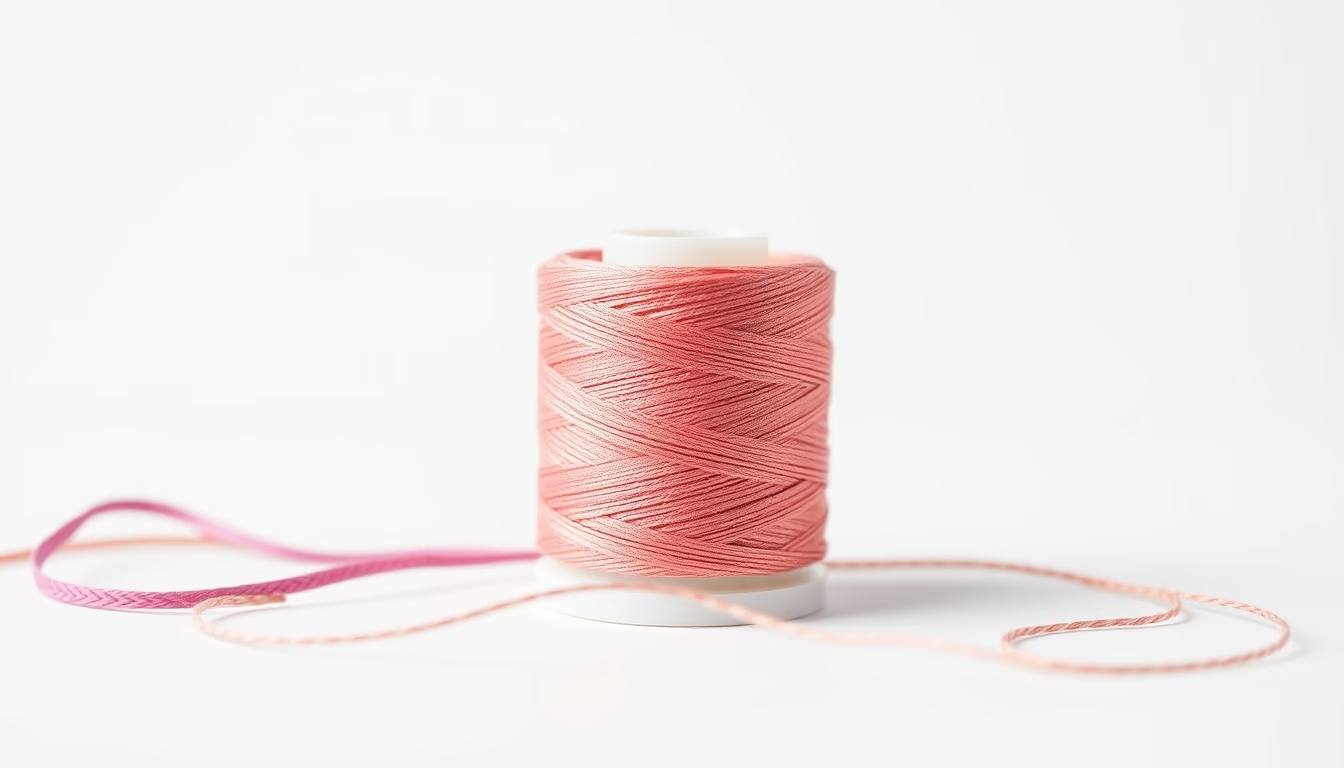
Silk thread spools are essential for fine sewing and embroidery, with a history tied to sericulture and the global textile industry.
About this subject
The silk thread spool represents one of the most refined products of the textile industry. Silk, a natural fiber produced by the silkworm (Bombyx mori), is known for its strength, luster, and softness. The practice of sericulture, which involves raising these insects for thread production, has ancient origins in China, dating back to approximately 2700 BCE. From there, the technique spread to other parts of Asia, Europe, and later to Brazil, which has a sericulture tradition especially in the states of Paraná and São Paulo.
The manufacturing process of a silk thread spool begins with harvesting the cocoons, which are immersed in hot water to soften the sericin, allowing the continuous filament to be unwound. Each cocoon can yield 600 to 1500 meters of fiber. These filaments are twisted together to form a thicker thread, which is then wound onto spools. The thread thickness is measured in denier or metric number, influencing its application from delicate haute couture sewing to hand embroidery.
In the Brazilian context, silk production gained momentum with Japanese immigration in the early 20th century, bringing sericulture knowledge. Today, Brazil is one of the world's largest silk producers, with particular emphasis on the Londrina region in Paraná. Silk thread spools are sold in haberdasheries and fabric stores, prized by artisans and seamstresses for the material's superior quality. Proper storage, away from light and moisture, is crucial to prevent silk from losing its tenacity and sheen.
Frequently Asked Questions
How many meters of silk thread are on a typical spool?
Commercial silk spools for sewing usually contain 100 to 500 meters, depending on thread thickness. Larger industrial spools can hold thousands of meters.
How to identify a real silk thread spool?
Real silk has natural luster, feels soft, and when burned smells like burnt hair. Spools often have labels saying '100% silk' or 'natural silk' along with the thread count.
What is the difference between silk and synthetic threads?
Silk is a natural protein fiber, while synthetics are petroleum-based (polyester, nylon). Silk is stronger, breathable, and biodegradable, but more expensive and requires special care when washing.
Direct URL
https://pub-c7d6a6ea828543ac903a74a341ccb2e1.r2.dev/imagens/silk-thread-spool-commercial-product-photography-fresh1.avifHow to credit
Include a visible link back to UtilizAí. Copy one of the snippets below:
<a href="https://xn--utiliza-eza.com/en/midia/imagens/silk-thread-spool-commercial-product-photography-fresh1">Silk thread spool</a> by <a href="https://xn--utiliza-eza.com">UtilizAí</a>, licensed under <a href="https://creativecommons.org/licenses/by/4.0/">CC BY 4.0</a>.
[Silk thread spool](https://xn--utiliza-eza.com/en/midia/imagens/silk-thread-spool-commercial-product-photography-fresh1) by [UtilizAí](https://xn--utiliza-eza.com), CC BY 4.0
License: CC-BY-4.0