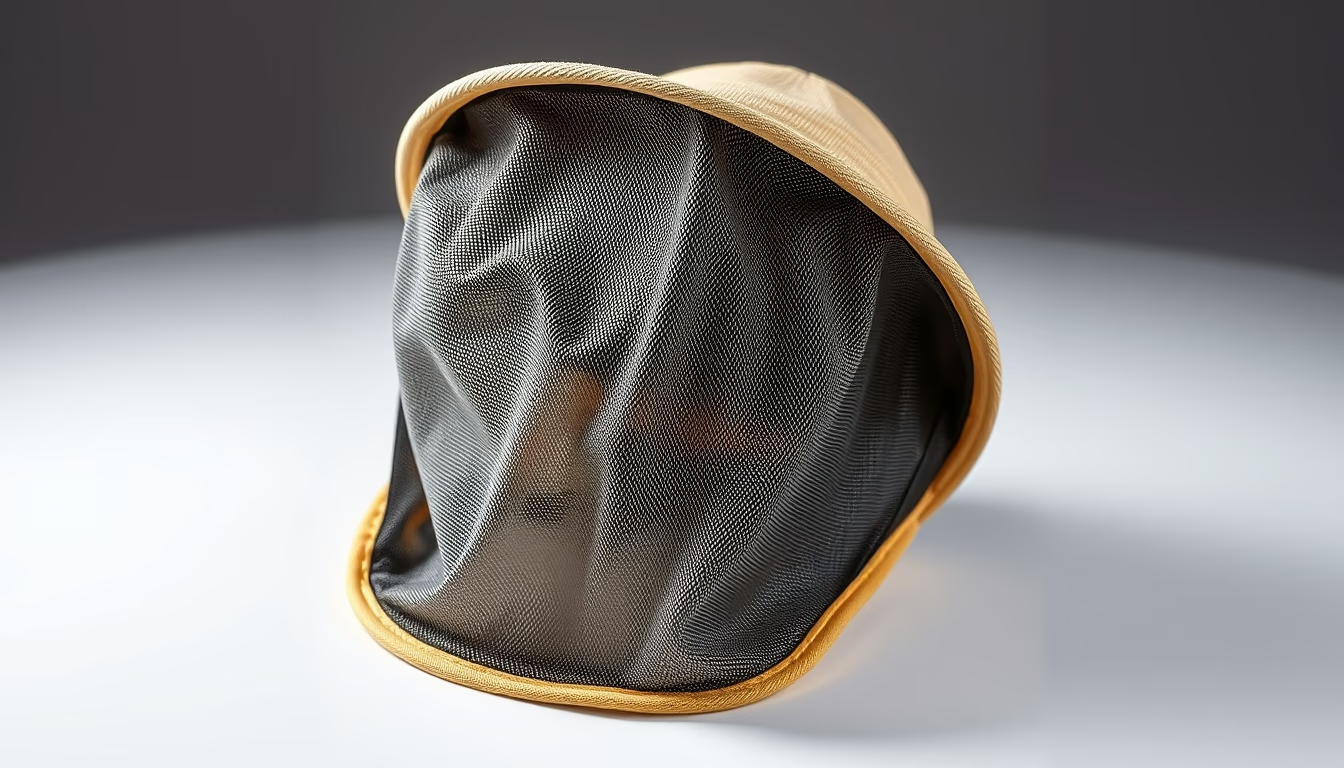
Silk thread spool
1344×768 · AVIF · CC BY 4.0

A spool of silk thread, a luxurious material produced by silkworms (Bombyx mori), essential in the textile and embroidery industries, known for its strength, sheen, and softness.
About this subject
Silk thread is obtained from the cocoons of the silkworm (Bombyx mori), which feeds exclusively on mulberry leaves. Each cocoon consists of a single continuous filament of fibroin, which can be up to 1.5 km long. To produce the thread, the cocoons are soaked in hot water to soften the sericin gum that binds the fiber, and then unwound. The result is an extremely strong thread with a characteristic natural luster, which reflects light in a prismatic manner due to its triangular structure.
Historically, silk was one of the most valuable commodities in world trade, originating in China about 5,000 years ago and transported along the Silk Road. In Brazil, sericulture (silkworm farming) is prominent in the states of Paraná, São Paulo, and Santa Catarina, making the country one of the world's largest producers of raw silk. Silk thread is widely used in fine embroidery, such as crivo and renascença, and in the making of wedding dresses, ties, and luxury scarves.
Technically, silk fiber has high tensile strength (comparable to steel in terms of strength per weight), good elasticity, and excellent dye absorption, resulting in vibrant and lasting colors. In medicine, silk threads are used in surgical sutures due to their biocompatibility and low inflammatory response. Additionally, silk is hypoallergenic and thermoregulatory, keeping the body cool in summer and warm in winter.
Interestingly, producing one kilogram of silk requires about 10 kg of cocoons and 100 kg of mulberry leaves. The natural luster of silk comes from its prismatic fibers that scatter light, and its softness from the absence of impurities in the fiber. Despite its high cost, silk remains a symbol of elegance and quality in fashion and handicrafts.
Frequently Asked Questions
How is silk thread made?
Silk thread is made from silkworm cocoons. The cocoons are boiled to soften the sericin, allowing the single filament to be unwound. Multiple filaments are twisted together to form the thread, which can be dyed and used for sewing or embroidery.
What types of work is silk thread best suited for?
Silk thread is ideal for fine embroidery like crivo and renascença, sewing delicate fabrics (silk, satin, organza), making lingerie and wedding dresses, as well as surgical applications due to its biocompatibility.
What are the differences between pure silk and blends?
Pure silk is 100% silkworm fiber, offering superior luster, softness, and strength. Blends with cotton or polyester reduce cost and alter properties: they lose some luster and elasticity but gain durability and ease of care.
Direct URL
https://pub-c7d6a6ea828543ac903a74a341ccb2e1.r2.dev/imagens/silk-thread-spool-cinematic-wide-shot-fresh14.avifHow to credit
Include a visible link back to UtilizAí. Copy one of the snippets below:
<a href="https://xn--utiliza-eza.com/en/midia/imagens/silk-thread-spool-cinematic-wide-shot-fresh14">Silk thread spool</a> by <a href="https://xn--utiliza-eza.com">UtilizAí</a>, licensed under <a href="https://creativecommons.org/licenses/by/4.0/">CC BY 4.0</a>.
[Silk thread spool](https://xn--utiliza-eza.com/en/midia/imagens/silk-thread-spool-cinematic-wide-shot-fresh14) by [UtilizAí](https://xn--utiliza-eza.com), CC BY 4.0
License: CC-BY-4.0