Silk thread spool
1344×768 · AVIF · CC BY 4.0
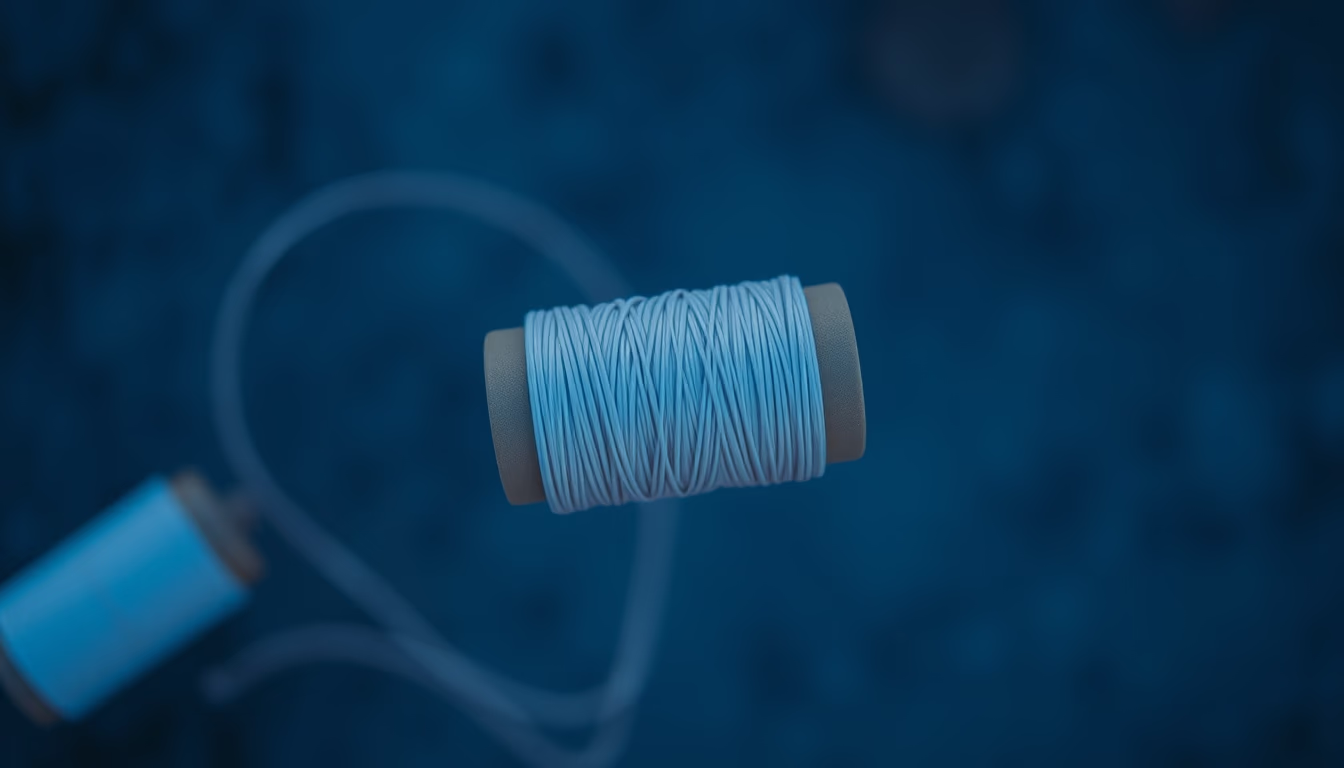
Silk thread spool, a high-value textile material produced from silkworm cocoons, essential for fine fabrics and embroidery.
About this subject
Silk thread is obtained from the cocoons of the silkworm (Bombyx mori). The process involves boiling the cocoons to soften the sericin and then unwinding the continuous filament, which can reach up to 900 meters in length. This thread is wound onto spools, as shown, for use in weaving, embroidery, and high-quality sewing.
Silk originated in ancient China, where its production was a closely guarded secret for millennia. Today, major producers include China, India, Brazil (especially in Paraná and São Paulo), and Thailand. Silk thread is prized for its strength, natural luster, and soft texture, used in luxury clothing, bed linens, and accessories.
Interestingly, to produce 1 kg of raw silk, about 10 kg of cocoons are needed, equivalent to roughly 5,000 silkworms. Hand-spinning is still preserved in traditional communities, such as in parts of India and Japan, where silk is dyed with natural pigments.
The silk thread spool is a common sight in haute couture studios and artisanal embroidery. Unlike synthetic threads, silk absorbs dyes well, resulting in vibrant colors. Additionally, sericin, a protein in the thread, has hypoallergenic properties, making it suitable for sensitive skin.
Frequently Asked Questions
What is the difference between silk thread and other threads?
Silk thread is stronger and smoother than cotton, has a natural luster and soft feel, and is hypoallergenic. Unlike synthetics, it absorbs dyes well and does not build up static electricity.
How is a silk thread spool made?
After harvesting cocoons, they are boiled to soften the sericin. The filament is unwound and twisted into threads, then wound onto spools made of wood, plastic, or cardboard.
Is silk a sustainable material?
Silk production has environmental impacts such as high water use and chemical treatment, but eco-friendly practices (organic or Ahimsa silk) avoid killing the silkworm by allowing extraction without boiling the cocoon.
Direct URL
https://pub-c7d6a6ea828543ac903a74a341ccb2e1.r2.dev/imagens/silk-thread-spool-aerial-drone-shot-fresh16.avifHow to credit
Include a visible link back to UtilizAí. Copy one of the snippets below:
<a href="https://xn--utiliza-eza.com/en/midia/imagens/silk-thread-spool-aerial-drone-shot-fresh16">Silk thread spool</a> by <a href="https://xn--utiliza-eza.com">UtilizAí</a>, licensed under <a href="https://creativecommons.org/licenses/by/4.0/">CC BY 4.0</a>.
[Silk thread spool](https://xn--utiliza-eza.com/en/midia/imagens/silk-thread-spool-aerial-drone-shot-fresh16) by [UtilizAí](https://xn--utiliza-eza.com), CC BY 4.0
License: CC-BY-4.0