Show jumping arena empty
1344×768 · AVIF · CC BY 4.0
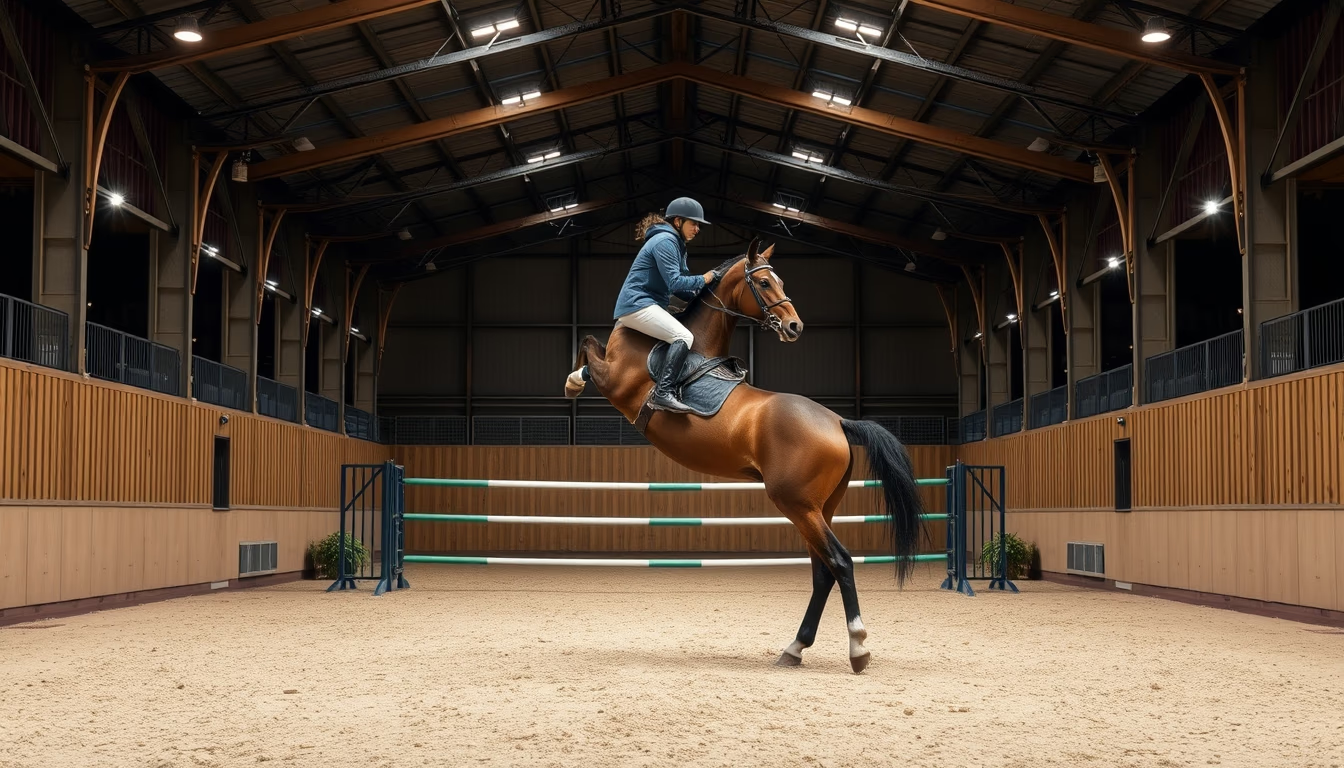
Empty show jumping arena: explore the design, dimensions, and elements that make up a top-tier equestrian course.
About this subject
A show jumping arena is the stage for one of the most exciting equestrian sports: show jumping. In this discipline, horse and rider must clear a series of obstacles in a timed course with the fewest faults. The arena is typically rectangular, measuring between 30×40 meters and 60×90 meters, depending on the category and competition level. The footing is composed of sand, specialized fiber mixes, or turf, designed to absorb impact and provide traction.
Obstacles are colorful and varied: oxers (two parallel poles), verticals (single pole), cavaletti, triple bars, walls, and water jumps. Each can reach heights of up to 1.60 meters in Olympic events. The layout is designed by a course designer, who creates challenges in distance, angle, and rhythm. In the empty image, we see only the prepared space, with ground markings indicating where horses must go.
Beyond the track, the arena includes in-gate and out-gate areas, visible timers for the audience, and judges' towers. In official FEI competitions, the ground is leveled and measured precisely to ensure safety and fairness. Artificial lighting is common in indoor arenas, as events may occur at night. Fun fact: the world record for high jump is 2.47 meters, set in 1975.
The sport has military and hunting origins, but today it is an elegant and technical discipline, strongly featured in the Olympic Games since 1900. Modern arenas have drainage and irrigation systems to maintain optimal footing. The absence of obstacles in the photo highlights the strategic emptiness that precedes course construction.
Frequently Asked Questions
What are the standard dimensions of a show jumping arena?
Dimensions vary, but an Olympic arena is approximately 60 x 90 meters. Smaller arenas for introductory levels may be 30 x 40 meters.
What type of footing is most common in show jumping arenas?
The most common footing is sand mixed with synthetic fibers (geotextile) or rubber, providing cushioning and grip. Grass arenas are also used for outdoor events.
How are obstacles built in a show jumping course?
Obstacles are made of wooden or PVC poles on adjustable supports for height and width. They are colored for contrast and safety, and may include elements like water (a water jump, where the horse must clear a shallow pool).
Direct URL
https://pub-c7d6a6ea828543ac903a74a341ccb2e1.r2.dev/imagens/show-jumping-arena-empty-studio-editorial-portrait-fresh10.avifHow to credit
Include a visible link back to UtilizAí. Copy one of the snippets below:
<a href="https://xn--utiliza-eza.com/en/midia/imagens/show-jumping-arena-empty-studio-editorial-portrait-fresh10">Show jumping arena empty</a> by <a href="https://xn--utiliza-eza.com">UtilizAí</a>, licensed under <a href="https://creativecommons.org/licenses/by/4.0/">CC BY 4.0</a>.
[Show jumping arena empty](https://xn--utiliza-eza.com/en/midia/imagens/show-jumping-arena-empty-studio-editorial-portrait-fresh10) by [UtilizAí](https://xn--utiliza-eza.com), CC BY 4.0
License: CC-BY-4.0