Show jumping arena empty
1344×768 · AVIF · CC BY 4.0
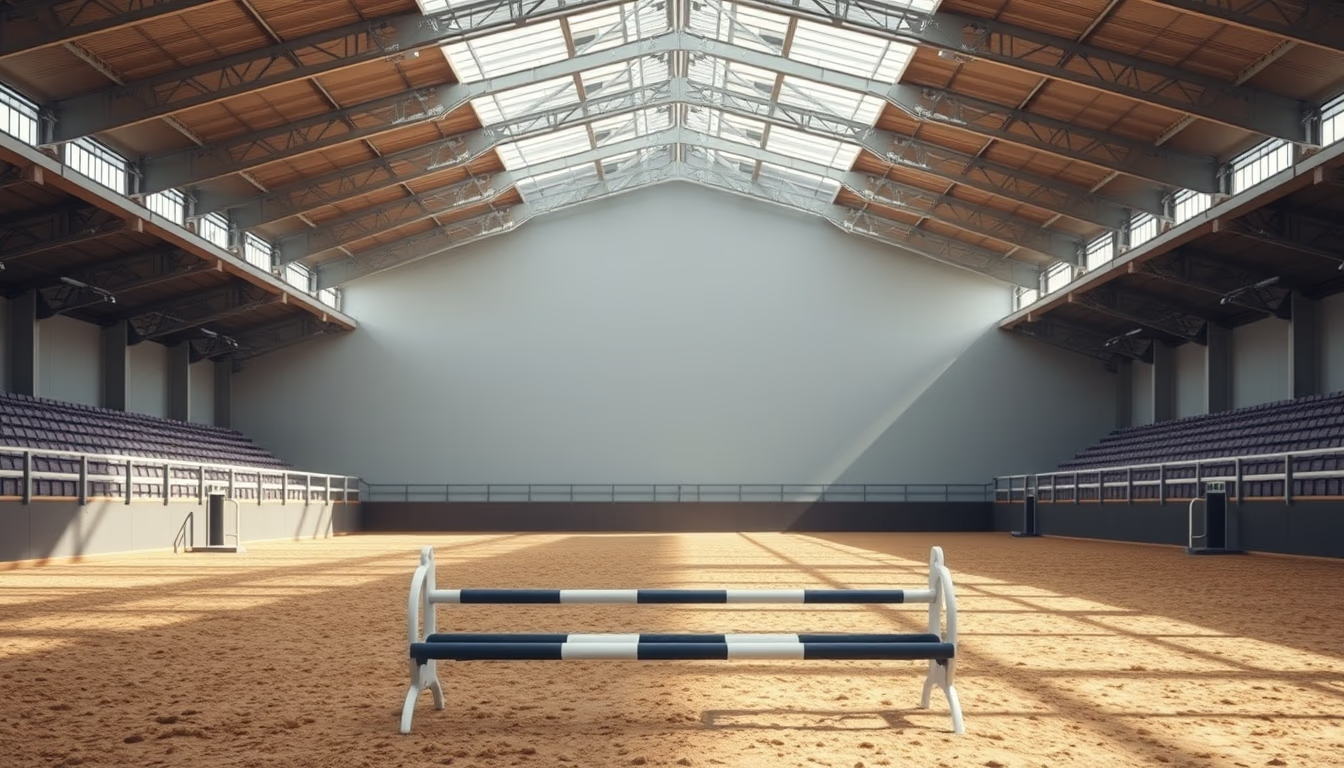
Empty show jumping arena: equestrian course with jumps and sand footing, stage for the Olympic equestrian sport of show jumping.
About this subject
Show jumping is one of the most popular equestrian disciplines, originating from English fox hunting. It was included in the 1900 Paris Olympics and has since evolved into a technical and precision sport. The arena where the competition takes place is a rectangular space, typically measuring at least 20 meters wide by 60 meters long for international events, and can be outdoors or in covered riding halls. The footing consists of washed sand or synthetic mixtures with fibers to ensure drainage and cushioning, reducing impact on horses' joints.
The course is set with various obstacles testing the horse-and-rider combination. Main types include: vertical, formed by stacked horizontal poles; oxer, with two parallel sets of poles; double or triple combinations; water jump, a ditch with or without a fence; and walls, imitating brick walls. Height and width vary by category, reaching up to 1.60 m high and 2.00 m wide at top levels. Each knockdown incurs 4 faults, and the time allowed is strictly timed.
Building a show jumping arena requires careful planning. Drainage is crucial to avoid puddles; irrigation systems maintain ideal footing moisture. Fences and poles are made of lightweight wood or synthetic materials, designed to fall easily on contact for horse safety. Beyond Olympic events, the sport is practiced at clubs and farms across Brazil, with state federations organizing championships. The International Equestrian Federation (FEI) regulates rules and approves arenas for official competitions.
Frequently Asked Questions
What is show jumping?
Show jumping is an equestrian discipline where horse and rider jump a series of obstacles over a timed course, with penalties for knocking down rails, refusals, or exceeding the time allowed.
What are the typical dimensions of a show jumping arena?
For international competitions, the arena must be at least 20 meters wide by 60 meters long. Smaller arenas are used at local levels.
What are the main obstacles in a show jumping course?
Obstacles include verticals (stacked poles), oxers (two sets of parallel poles), combinations (two or three jumps in a row), water jumps (ditch), and walls.
Direct URL
https://pub-c7d6a6ea828543ac903a74a341ccb2e1.r2.dev/imagens/show-jumping-arena-empty-minimalist-composition-fresh13.avifHow to credit
Include a visible link back to UtilizAí. Copy one of the snippets below:
<a href="https://xn--utiliza-eza.com/en/midia/imagens/show-jumping-arena-empty-minimalist-composition-fresh13">Show jumping arena empty</a> by <a href="https://xn--utiliza-eza.com">UtilizAí</a>, licensed under <a href="https://creativecommons.org/licenses/by/4.0/">CC BY 4.0</a>.
[Show jumping arena empty](https://xn--utiliza-eza.com/en/midia/imagens/show-jumping-arena-empty-minimalist-composition-fresh13) by [UtilizAí](https://xn--utiliza-eza.com), CC BY 4.0
License: CC-BY-4.0