Show jumping arena empty
1344×768 · AVIF · CC BY 4.0
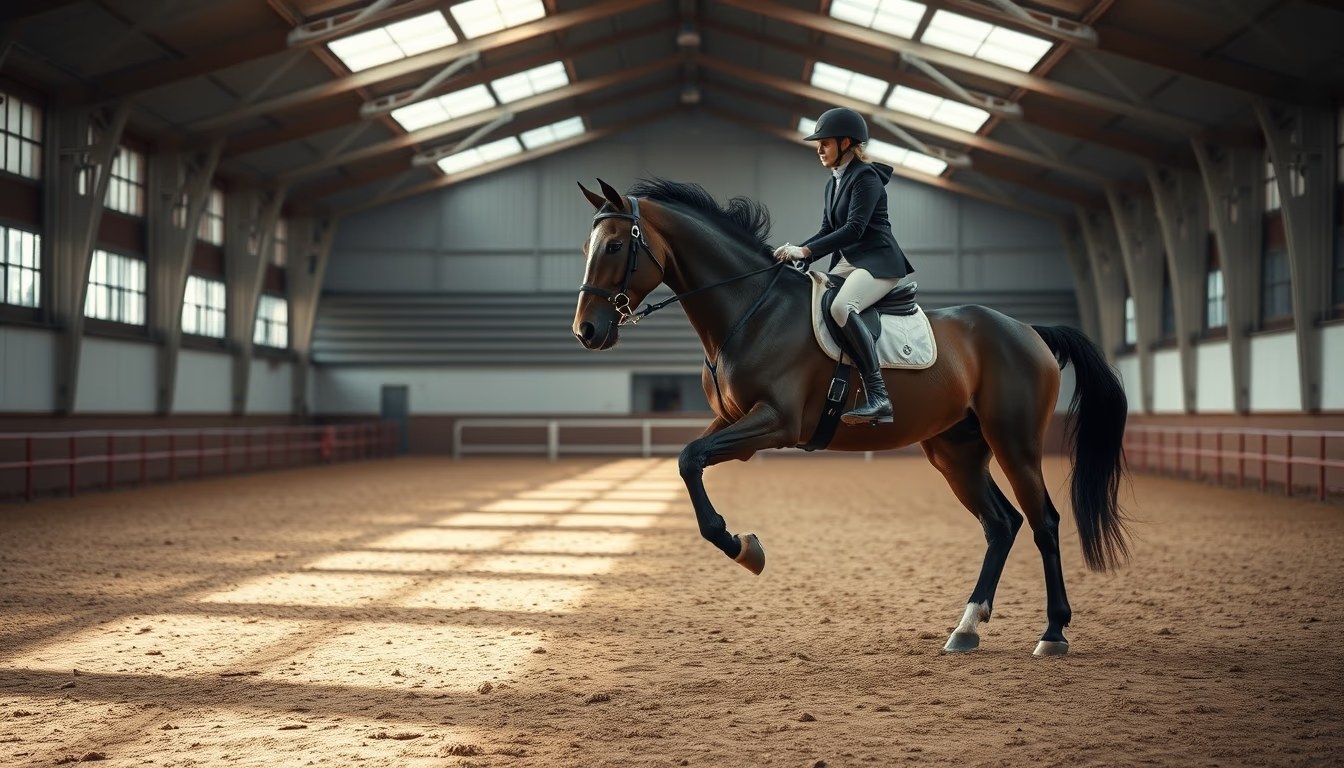
Empty show jumping arena: learn about official dimensions, ground preparation, and the technical importance of this equestrian sports venue.
About this subject
The show jumping arena is the central stage for one of the most technical equestrian disciplines. Official dimensions vary by competition level, but a standard international show jumping arena (CSI) measures at least 70 meters in length and 40 meters in width, accommodating 12 to 15 obstacles arranged in courses designed by a course designer. The footing is a critical element, typically composed of a mix of silica sand, geotextile, and synthetic fiber to ensure rapid drainage and uniform traction for the horses. Daily maintenance includes harrowing and leveling, plus controlled irrigation to avoid dust or mud.
The jumping course requires obstacles with heights between 1.20m and 1.60m (up to 1.70m for Grand Prix), and distances between them are calculated to test the horse-rider combination's impulsion, rhythm, and agility. Sequences of verticals and oxers are positioned at angles that demand precise turning and speed control. During the European show jumping season, arenas such as those in Aachen and Spruce Meadows are world references, featuring underground drainage systems and washed sand footing.
Culturally, show jumping is one of the most-watched sports in the Olympic and Paralympic Games, and empty arenas after competitions reveal the complex logistics of setting up and dismantling obstacles, each weighing up to 100 kg. Viewing an empty course allows appreciation of the geometric design and the absence of shadows that might disturb the horses, as lighting is engineered to avoid glare.
A fun fact: arena dimensions are not fixed; for indoor competitions, the length may be reduced to 60m and maximum obstacle height to 1.50m. The International Equestrian Federation (FEI) mandates a minimum footing depth of 12 cm to absorb hoof impact, and maintenance is performed by specialized tractors that till and moisten the soil between rounds.
Frequently Asked Questions
What is the ideal footing depth for a show jumping arena?
The International Equestrian Federation (FEI) mandates a minimum depth of 12 cm to absorb hoof impact. Common mixtures include silica sand, geotextile, and fiber for drainage and traction.
How many obstacles are in a typical show jumping course?
A standard course features 12 to 15 obstacles, including verticals, oxers, combinations (e.g., doubles or triples), and sometimes water jumps. Heights range from 1.20m to 1.70m.
Why are show jumping arenas watered and harrowed between rounds?
Controlled irrigation prevents dust and maintains optimal moisture; harrowing (scarifying) levels the ground and removes compaction, ensuring safety and consistency for all competitors.
Direct URL
https://pub-c7d6a6ea828543ac903a74a341ccb2e1.r2.dev/imagens/show-jumping-arena-empty-magazine-editorial-fresh15.avifHow to credit
Include a visible link back to UtilizAí. Copy one of the snippets below:
<a href="https://xn--utiliza-eza.com/en/midia/imagens/show-jumping-arena-empty-magazine-editorial-fresh15">Show jumping arena empty</a> by <a href="https://xn--utiliza-eza.com">UtilizAí</a>, licensed under <a href="https://creativecommons.org/licenses/by/4.0/">CC BY 4.0</a>.
[Show jumping arena empty](https://xn--utiliza-eza.com/en/midia/imagens/show-jumping-arena-empty-magazine-editorial-fresh15) by [UtilizAí](https://xn--utiliza-eza.com), CC BY 4.0
License: CC-BY-4.0