Show jumping arena empty
1344×768 · AVIF · CC BY 4.0
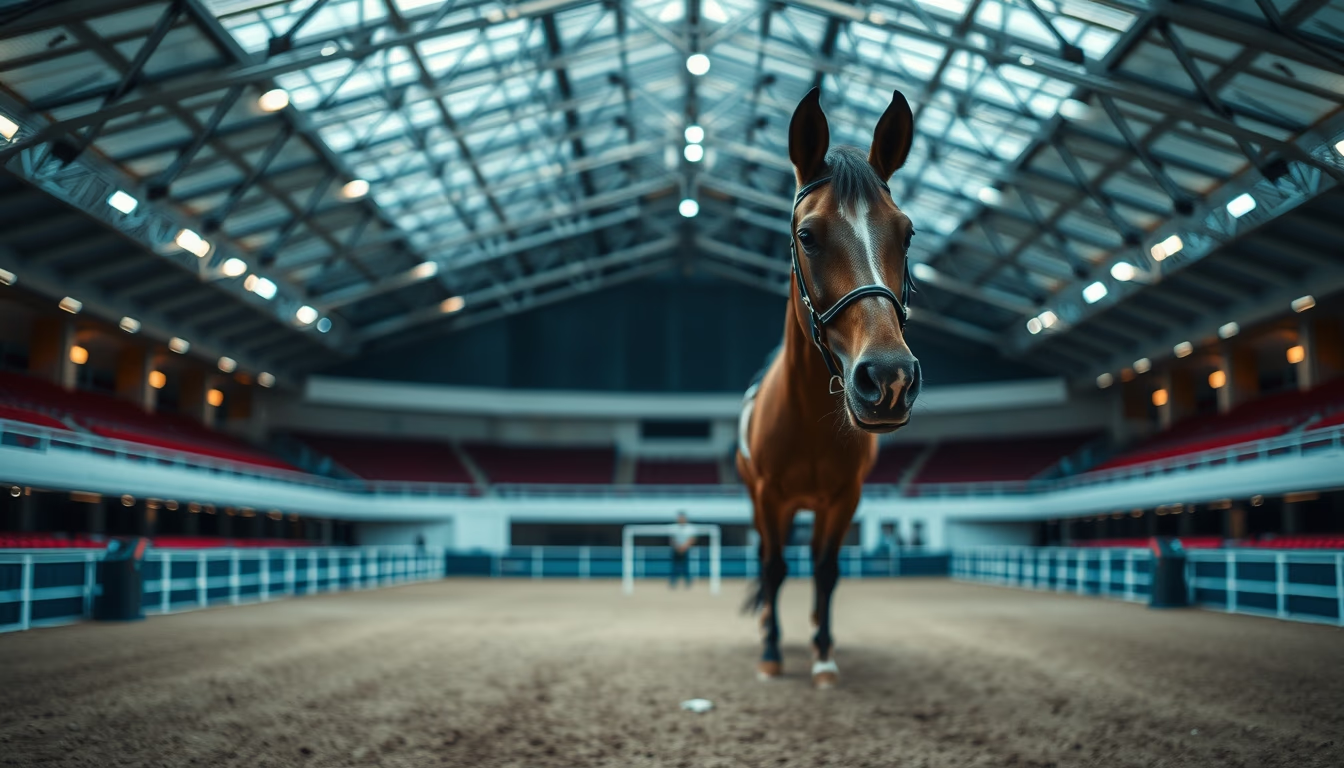
Empty show jumping arena reveals design details and technical precision for equestrian competitions.
About this subject
An empty show jumping arena is more than a sand field; it is a meticulously designed stage for tests of agility, speed, and obedience between horse and rider. In official competitions, the course is built with obstacles varying in height (up to 1.60m in Olympic classes) and width, requiring combinations of verticals, oxers, and combinations. The surface, typically silica sand mixed with textile or geotextile fibers, is prepared to provide adequate traction and shock absorption, reducing injury risk.
Obstacle layout follows strict Fédération Equestre Internationale (FEI) rules. Distances between jumps are calculated for horses with a 1.60m stride length (about 3.5m per beat), allowing riders to adjust the canter. Letters around the arena (A, B, C, etc.) mark reference points for judges. In large arenas such as those at Hipódromo da Gávea (RJ) or Centro Olímpico de Hipismo (SP), the footing may be irrigated for dust and temperature control.
Culturally, show jumping is one of Brazil's most traditional equestrian sports, with competitions dating to the early 20th century. The Brazilian Equestrian Federation (CBH) organizes national championships, and the country has hosted World Cup Jumping stages. An empty arena also highlights drainage systems and lighting for night events, such as those at the CSI (International Jumping Competition) in Porto Alegre.
Trivia includes the use of colors and obstacle shapes: red and white obstacles are common, but thematic designs (flowers, logos) appear in specific events. Each element has meaning: wall jumps simulate masonry, while oxers test scope. Maximum height at the Olympics is 1.60m, but in indoor competitions it can reach 1.70m.
Frequently Asked Questions
What is the typical width of an obstacle in a show jumping arena?
In official competitions, minimum width for vertical jumps is 2.5 meters, and oxers can be up to 3.5 meters wide. The FEI defines specific measurements for each type of obstacle.
Why is the arena covered with sand instead of grass?
Sand provides better drainage, impact absorption, and consistent traction. High-level arenas use sand mixed with fibers and geotextiles for stability, reducing injury risk for horses.
What do the letters placed around the arena mean?
The letters (A, B, C, etc.) are reference points for judges to record faults like refusals or knockdowns. They follow a FEI standard and aid communication during the competition.
Direct URL
https://pub-c7d6a6ea828543ac903a74a341ccb2e1.r2.dev/imagens/show-jumping-arena-empty-macro-closeup-fresh12.avifHow to credit
Include a visible link back to UtilizAí. Copy one of the snippets below:
<a href="https://xn--utiliza-eza.com/en/midia/imagens/show-jumping-arena-empty-macro-closeup-fresh12">Show jumping arena empty</a> by <a href="https://xn--utiliza-eza.com">UtilizAí</a>, licensed under <a href="https://creativecommons.org/licenses/by/4.0/">CC BY 4.0</a>.
[Show jumping arena empty](https://xn--utiliza-eza.com/en/midia/imagens/show-jumping-arena-empty-macro-closeup-fresh12) by [UtilizAí](https://xn--utiliza-eza.com), CC BY 4.0
License: CC-BY-4.0