Show jumping arena empty
1344×768 · AVIF · CC BY 4.0
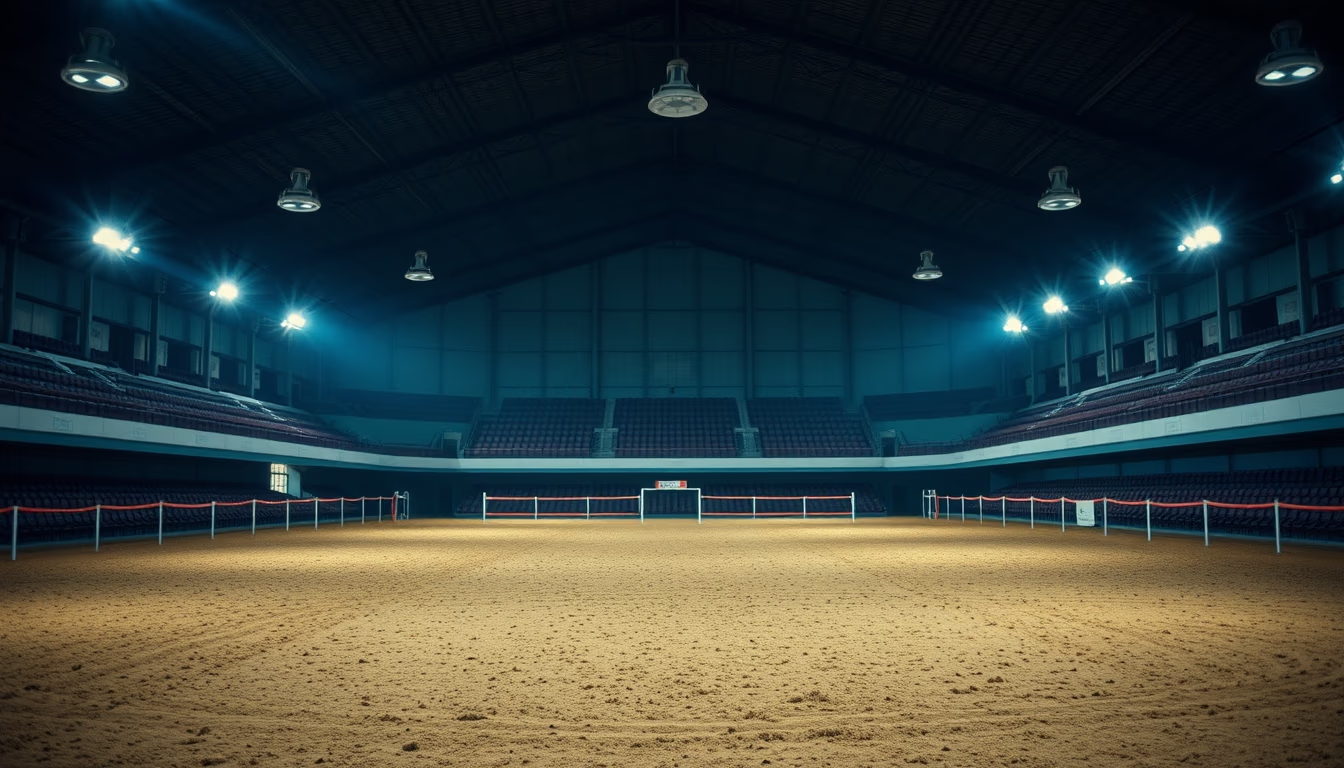
An empty show jumping arena, stage for equestrian competitions demanding precision, speed, and harmony between horse and rider.
About this subject
The show jumping arena is the heart of equestrian jumping competitions. In the sport, horse-and-rider pairs must navigate a course of obstacles up to 1.60 meters high, within a set time, with the fewest faults (knockdowns or refusals). Official arenas follow Fédération Équestre Internationale (FEI) standards, requiring minimum dimensions of 60 meters long by 20 meters wide for top-level events. The footing is carefully engineered with sand, fiber, and geotextile layers to provide traction and shock absorption, protecting horses' tendons during landings.
Obstacles vary widely: verticals (height only), oxers (height and width), combinations (double or triple), walls, water jumps, and even themed fences. The course design is approved by the course designer, testing both technique and strategy. The sport traces back to 18th-century fox hunting in England, but modern show jumping emerged in the early 20th century, with the first international competition in 1907. Iconic arenas like Spruce Meadows (Canada) and the Palace of Versailles (France) host global events such as the World Cup and Olympic Games.
Arena maintenance is critical for safety and performance. Irrigation is done via water trucks or automated systems, and the footing is harrowed and compacted between rounds. The empty arena, devoid of riders and spectators, highlights the technical infrastructure: fences, obstacle numbers, sponsor banners, and the pristine track ready for the next challenge. This quiet scene also evokes the stillness before competitions, when horses and athletes focus for the showdown.
Frequently Asked Questions
What is the standard size of an official show jumping arena?
The FEI requires minimum dimensions of 60 meters by 20 meters for international competitions, though smaller arenas are used at regional levels.
How many types of obstacles are there in show jumping?
Main types include verticals (height only), oxers (height and width), combinations (two or three consecutive jumps), walls, water jumps, and the joker (an optional high-difficulty jump).
Why is the footing in show jumping arenas so important?
Proper footing reduces impact on horses' joints, prevents injuries, and ensures grip during turns. The ideal mix of sand, fiber, and geotextile is constantly watered and leveled.
Direct URL
https://pub-c7d6a6ea828543ac903a74a341ccb2e1.r2.dev/imagens/show-jumping-arena-empty-lo-fi-disposable-camera-fresh1.avifHow to credit
Include a visible link back to UtilizAí. Copy one of the snippets below:
<a href="https://xn--utiliza-eza.com/en/midia/imagens/show-jumping-arena-empty-lo-fi-disposable-camera-fresh1">Show jumping arena empty</a> by <a href="https://xn--utiliza-eza.com">UtilizAí</a>, licensed under <a href="https://creativecommons.org/licenses/by/4.0/">CC BY 4.0</a>.
[Show jumping arena empty](https://xn--utiliza-eza.com/en/midia/imagens/show-jumping-arena-empty-lo-fi-disposable-camera-fresh1) by [UtilizAí](https://xn--utiliza-eza.com), CC BY 4.0
License: CC-BY-4.0