Show jumping arena empty
1344×768 · AVIF · CC BY 4.0
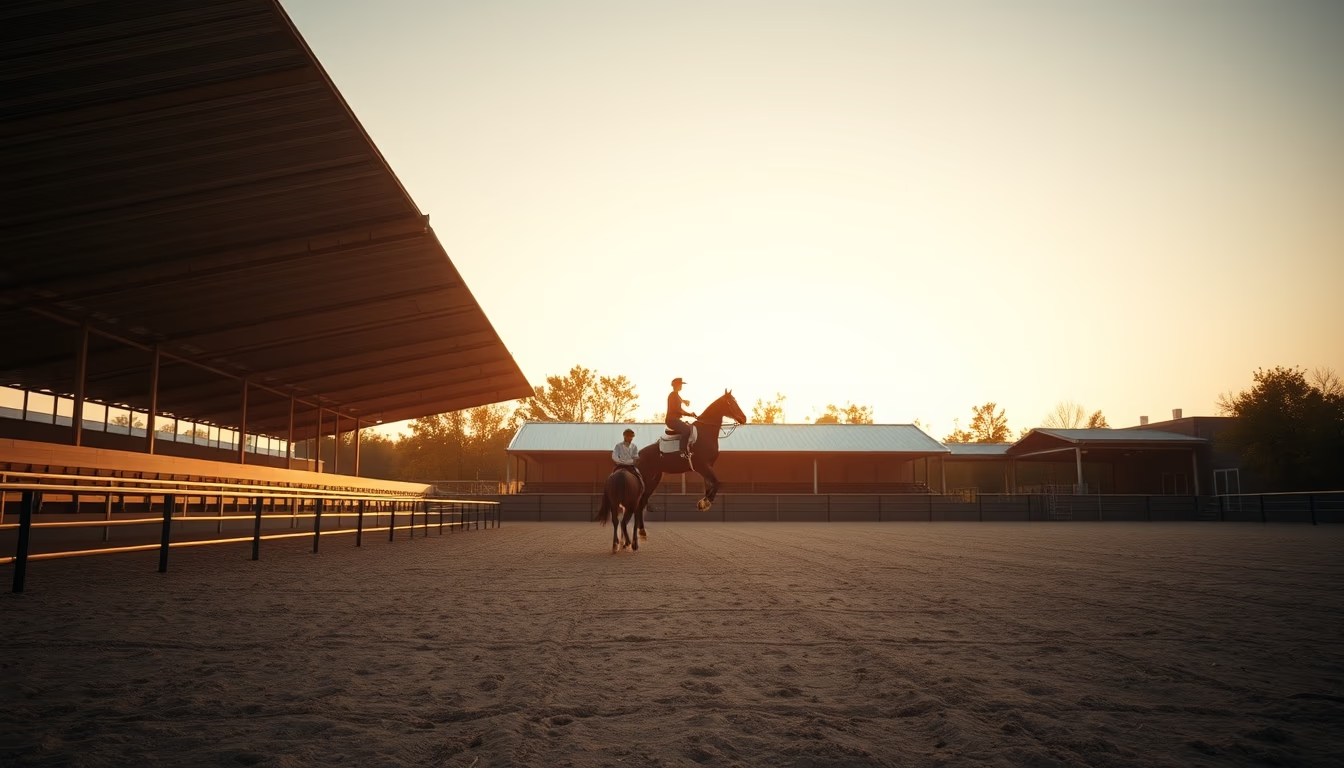
An empty show jumping arena reveals the meticulous structure and technical preparations for high-level equestrian competitions.
About this subject
An empty show jumping arena offers a unique perspective on the infrastructure required for equestrian sport. These arenas follow international standards, with typical dimensions ranging from 60 to 90 meters wide and 80 to 100 meters long, ensuring ample space for challenging courses. The footing is a specialized mix of sand, fibers, and geotextiles designed to absorb impact and provide adequate traction for horses under various weather conditions.
Obstacles such as verticals, oxers, combinations, and water jumps are strategically placed to test the skill of the horse and rider. During competition, the order and distances between jumps are precisely calculated, requiring horses to adjust stride and impulsion. Empty arenas reveal the carefully leveled base and anchor points for the jumps, highlighting the engineering involved.
Events like the World Cup Show Jumping and the Olympic Games use temporary or permanent arenas that adhere to strict regulations. Daily maintenance includes irrigation for optimal moisture and harrowing for uniformity. The absence of riders and spectators allows one to perceive the vastness of the space, where every detail, from drainage to lighting, is planned for safety and performance.
Interestingly, some of the largest equestrian complexes, such as the London Olympic Park, feature under-floor heating to prevent freezing in winter. The empty arena is a field of possibilities, waiting for the next challenge.
Frequently Asked Questions
What are the typical dimensions of an Olympic show jumping arena?
Official show jumping arenas usually measure between 60 and 90 meters wide and 80 to 100 meters long, according to FEI regulations.
What is the footing composition in a show jumping arena?
The footing is a controlled mix of sand, synthetic fibers, and geotextiles, designed for drainage, shock absorption, and consistent traction. Moisture is maintained between 12% and 18% for optimal performance.
What types of obstacles are used in show jumping competitions?
Obstacles include verticals (horizontal rails), oxers (two parallel rails), combinations (series of two or three distances), and water jumps (water obstacle without a top rail). Each tests different aspects of equestrian skill.
Direct URL
https://pub-c7d6a6ea828543ac903a74a341ccb2e1.r2.dev/imagens/show-jumping-arena-empty-cinematic-wide-shot-fresh9.avifHow to credit
Include a visible link back to UtilizAí. Copy one of the snippets below:
<a href="https://xn--utiliza-eza.com/en/midia/imagens/show-jumping-arena-empty-cinematic-wide-shot-fresh9">Show jumping arena empty</a> by <a href="https://xn--utiliza-eza.com">UtilizAí</a>, licensed under <a href="https://creativecommons.org/licenses/by/4.0/">CC BY 4.0</a>.
[Show jumping arena empty](https://xn--utiliza-eza.com/en/midia/imagens/show-jumping-arena-empty-cinematic-wide-shot-fresh9) by [UtilizAí](https://xn--utiliza-eza.com), CC BY 4.0
License: CC-BY-4.0