Shipwreck underwater old
1344×768 · AVIF · CC BY 4.0
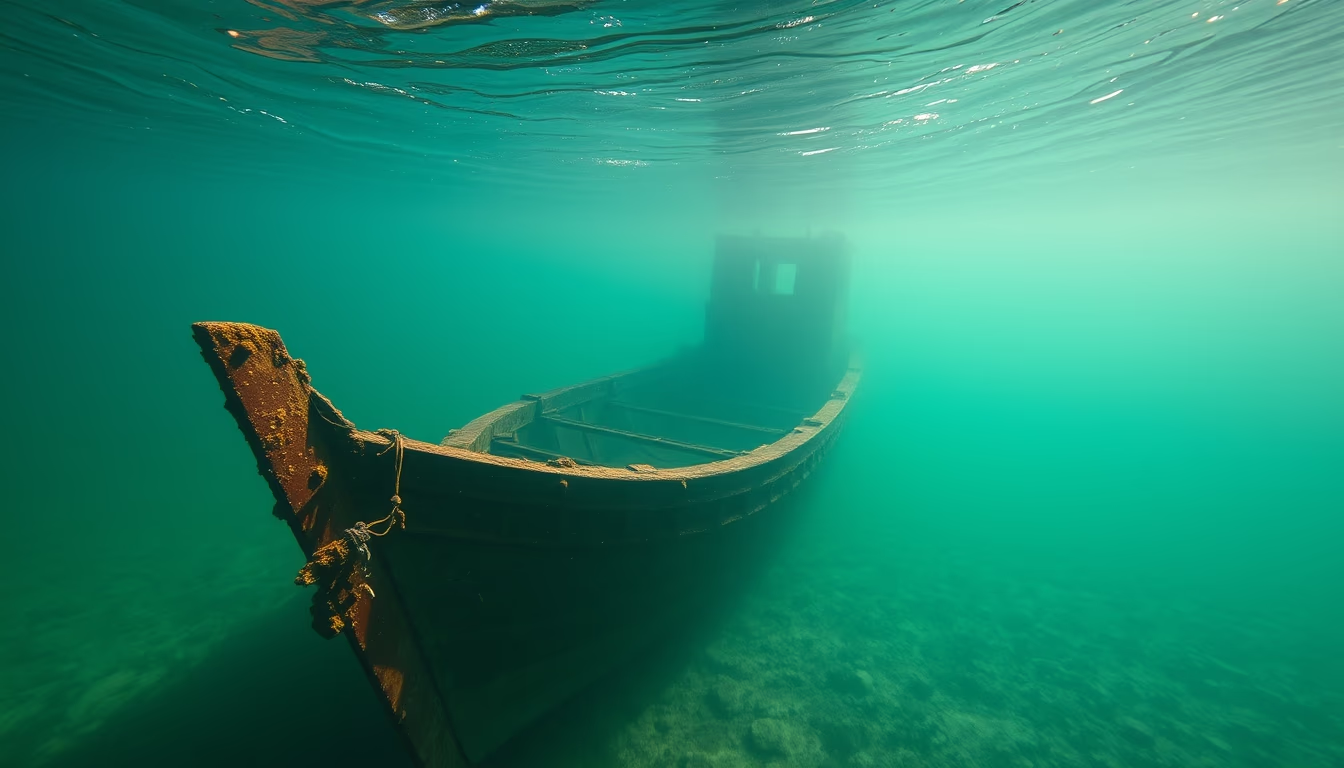
Ancient shipwrecks on the ocean floor are submerged archaeological sites that preserve centuries of naval history and become artificial reefs for marine life.
About this subject
Ancient shipwrecks are submerged time capsules, offering a direct glimpse into past eras. Each wreck carries stories of trade routes, naval conflicts, geographical discoveries, and maritime tragedies. For instance, the sinking of the Brazilian battleship Aquidabã in 1906 in Angra dos Reis Bay is a significant underwater archaeological site. The Titanic wreck, discovered in 1985 at a depth of about 3,800 meters, is one of the most famous, having spurred major changes in maritime safety regulations.
Once a ship sinks, its structure becomes a hard substrate in a soft-bottom environment, allowing corals, sponges, and algae to attach. This process transforms the wreck into an artificial reef, attracting fish, crustaceans, and mollusks, thereby boosting local biodiversity. Studies indicate that shipwrecks can host up to ten times more species than the surrounding seabed. They also serve as ecological corridors for migratory species like sea turtles and sharks.
Culturally, wrecks are protected by international conventions, such as UNESCO's, which set guidelines for preservation and management. Many are accessible for recreational diving, provided artifacts are not removed. Along the coast of São Paulo, the wreck of the cargo ship S. S. Goyaz, sunk in 1932, is a popular dive site. Preserving these places is essential to balance tourism, historical research, and environmental conservation.
Frequently Asked Questions
Why are ancient shipwrecks important for marine biology?
They function as artificial reefs, providing a hard substrate for benthic organisms like corals and sponges, and host a high diversity of fish and invertebrates, boosting local biodiversity.
What are the largest shipwrecks ever discovered?
Among the largest are the RMS Titanic (269 meters), the cruise ship Costa Concordia (290 meters), and the Japanese battleship Yamato (263 meters). Many lie at depths requiring submersible vehicles for exploration.
Is it legal for recreational divers to explore shipwrecks?
Yes, as long as local and international laws are followed. Typically, removing artifacts or damaging the site is prohibited. Many wrecks are considered war graves or protected underwater cultural heritage.
Direct URL
https://pub-c7d6a6ea828543ac903a74a341ccb2e1.r2.dev/imagens/shipwreck-underwater-old-minimalist-composition-p3.avifHow to credit
Include a visible link back to UtilizAí. Copy one of the snippets below:
<a href="https://xn--utiliza-eza.com/en/midia/imagens/shipwreck-underwater-old-minimalist-composition-p3">Shipwreck underwater old</a> by <a href="https://xn--utiliza-eza.com">UtilizAí</a>, licensed under <a href="https://creativecommons.org/licenses/by/4.0/">CC BY 4.0</a>.
[Shipwreck underwater old](https://xn--utiliza-eza.com/en/midia/imagens/shipwreck-underwater-old-minimalist-composition-p3) by [UtilizAí](https://xn--utiliza-eza.com), CC BY 4.0
License: CC-BY-4.0