Shipwreck underwater old
1344×768 · AVIF · CC BY 4.0
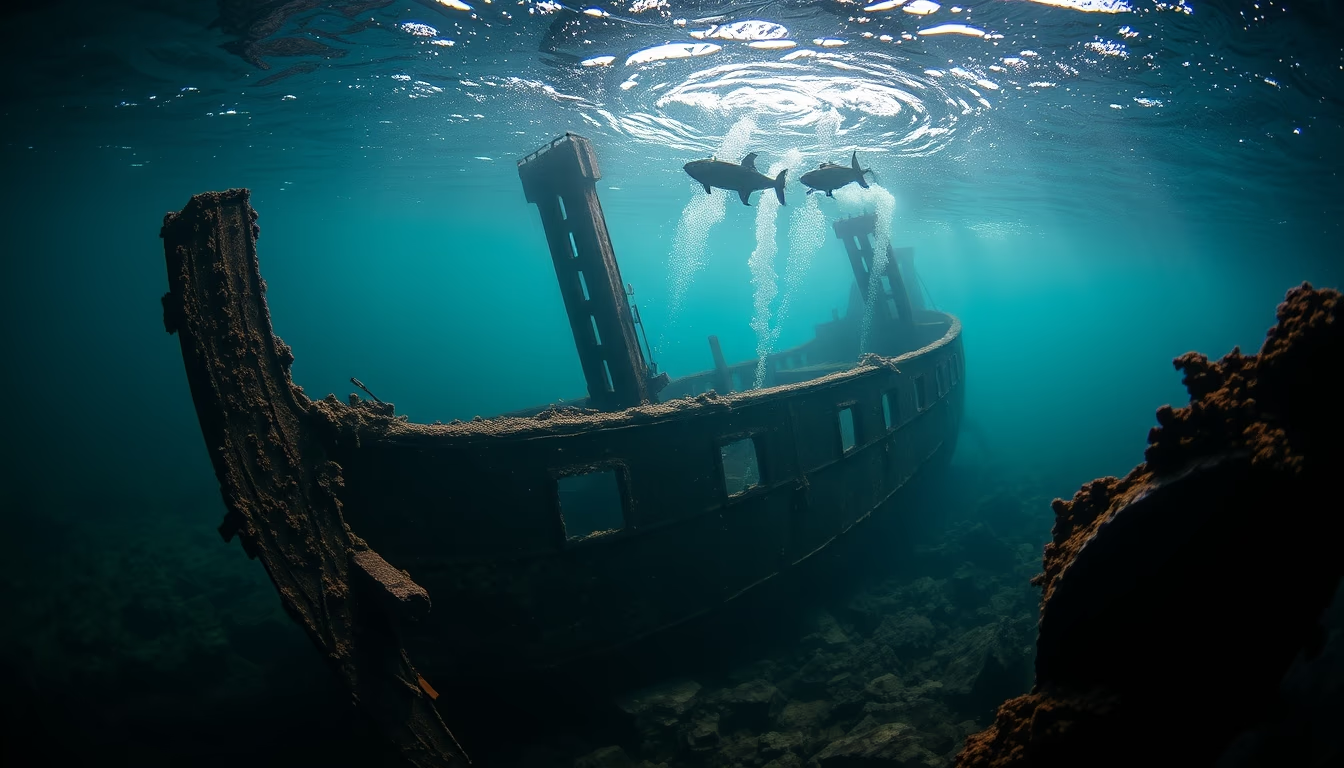
Ancient shipwrecks on the seafloor become havens for marine life and historical time capsules, revealing secrets of bygone eras.
About this subject
Ancient underwater shipwrecks are far more than debris; they transform into rich artificial ecosystems. When a ship sinks, its metal or wooden structure quickly becomes substrate for corals, sponges, and algae. Fish, crustaceans, and mollusks find shelter in the cavities, creating an oasis on the often monotonous seafloor. This process, called ecological succession on artificial reefs, can take decades, but the result is an environment where rare and commercial species coexist.
From a historical and archaeological perspective, shipwrecks are true time capsules. The wrecked vessel preserves everyday objects, cargo, navigation instruments, and even human remains, frozen at the moment of disaster. Famous examples include the Titanic, discovered in 1985 at nearly 4,000 meters depth, and the Vasa, a 17th-century Swedish warship that sank on its maiden voyage and was recovered almost intact. These underwater sites require special excavation and conservation techniques, as saltwater and pressure rapidly alter materials.
Brazil's coast harbors several historic wrecks, such as the Spanish galleon Santíssimo Sacramento (1668) and the battleship Aquidabã (1906). They attract divers and researchers but also face threats from looting and environmental degradation. Protection laws for underwater cultural heritage, such as the 2001 UNESCO Convention, aim to balance tourism and science with preservation. Each wreck tells a unique story of trade, war, or exploration, helping reconstruct past maritime routes and commercial relationships.
Fine art photography of these underwater scenes requires specialized equipment and mastery of natural or artificial light. Photographers like Jason deCaires Taylor have created submerged sculpture galleries that become reefs, but true wrecks offer dramatic compositions: corroded silhouettes, schools of fish dancing between beams, skylights torn by rust. These images not only document the melancholic beauty of the remains but also warn about the fragility of our oceanic heritage.
Frequently Asked Questions
How do shipwrecks become underwater ecosystems?
After sinking, the structure serves as substrate for encrusting organisms like corals and algae. Fish and invertebrates find shelter and food, forming an artificial reef that supports high biodiversity.
What is the archaeological importance of ancient shipwrecks?
They preserve objects and information from the period of sinking, helping to understand trade routes, naval technologies, and historical events. They are considered underwater cultural heritage.
What are the main challenges in preserving shipwrecks?
Corrosion, illegal looting, trawling, and uncontrolled tourism threaten site integrity. Protection laws and continuous monitoring are essential for their conservation.
Direct URL
https://pub-c7d6a6ea828543ac903a74a341ccb2e1.r2.dev/imagens/shipwreck-underwater-old-fine-art-photography-p4.avifHow to credit
Include a visible link back to UtilizAí. Copy one of the snippets below:
<a href="https://xn--utiliza-eza.com/en/midia/imagens/shipwreck-underwater-old-fine-art-photography-p4">Shipwreck underwater old</a> by <a href="https://xn--utiliza-eza.com">UtilizAí</a>, licensed under <a href="https://creativecommons.org/licenses/by/4.0/">CC BY 4.0</a>.
[Shipwreck underwater old](https://xn--utiliza-eza.com/en/midia/imagens/shipwreck-underwater-old-fine-art-photography-p4) by [UtilizAí](https://xn--utiliza-eza.com), CC BY 4.0
License: CC-BY-4.0