Sewing machine vintage
1344×768 · AVIF · CC BY 4.0
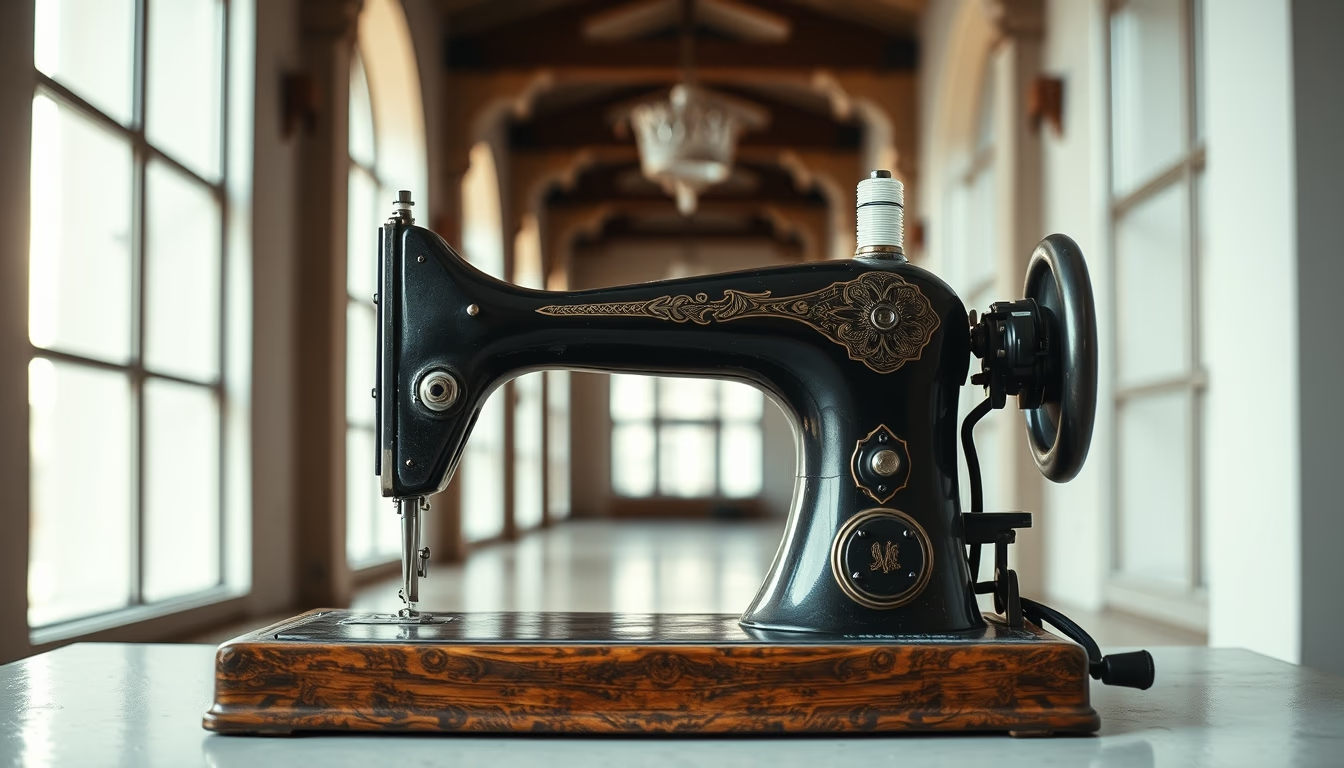
Vintage sewing machines represent a milestone of the Industrial Revolution and fashion, combining mechanical engineering with 19th-century craftsmanship.
About this subject
The sewing machine revolutionized textile manufacturing in the 19th century. Patented by Elias Howe in 1846 and improved by Isaac Singer in 1851, it became one of the first affordable household appliances. Before its invention, clothing was entirely handmade, a slow and expensive process. The widespread adoption of sewing machines reduced costs and accelerated production, boosting the fashion industry and enabling families to make their own clothes at home.
Vintage machines are distinguished by heavy cast iron frames, large handwheels, and exposed gear mechanisms. Many feature hand-painted arabesques, gold leaf details, and carved wooden bases. Iconic models include the Singer VS (Vibrating Shuttle) and the Pfaff 30, celebrated for their industrial design. Unlike modern machines, these were built to last decades, with simple repairs often done by the user.
Culturally, the sewing machine played a pivotal role in women's emancipation. Many women achieved financial independence as seamstresses, and the machine became a symbol of domestic skill. Today, vintage machine collecting is thriving, with restored models fetching high prices at auctions. Museums such as the Textile Industry Museum in Portugal and the Singer Museum in Germany preserve the history of these devices.
Remarkably, many vintage machines still work perfectly after over a century. Restoration is a popular hobby among enthusiasts, who seek original parts and specific lubricants. The classic design also influences contemporary decor, with machines displayed as art objects in industrial, retro, or steampunk styles. The blend of functionality and aesthetics makes them coveted by decorators and historians alike.
Frequently Asked Questions
What was the first successful sewing machine?
Isaac Singer's machine, launched in 1851, was the first to achieve mass commercial success, although Elias Howe had patented an earlier model in 1846.
How to identify a valuable vintage machine?
Brands like Singer, Pfaff, and White are most sought after. Features such as a 'S' shaped base, cast iron handwheel, and serial numbers can indicate rare models.
Can I use a vintage sewing machine today?
Yes, many work with a hand crank or treadle. However, a complete overhaul is recommended, along with using compatible needles and thread.
Direct URL
https://pub-c7d6a6ea828543ac903a74a341ccb2e1.r2.dev/imagens/sewing-machine-vintage-architectural-photography-p4.avifHow to credit
Include a visible link back to UtilizAí. Copy one of the snippets below:
<a href="https://xn--utiliza-eza.com/en/midia/imagens/sewing-machine-vintage-architectural-photography-p4">Sewing machine vintage</a> by <a href="https://xn--utiliza-eza.com">UtilizAí</a>, licensed under <a href="https://creativecommons.org/licenses/by/4.0/">CC BY 4.0</a>.
[Sewing machine vintage](https://xn--utiliza-eza.com/en/midia/imagens/sewing-machine-vintage-architectural-photography-p4) by [UtilizAí](https://xn--utiliza-eza.com), CC BY 4.0
License: CC-BY-4.0