Seedlings tray nursery
1344×768 · AVIF · CC BY 4.0
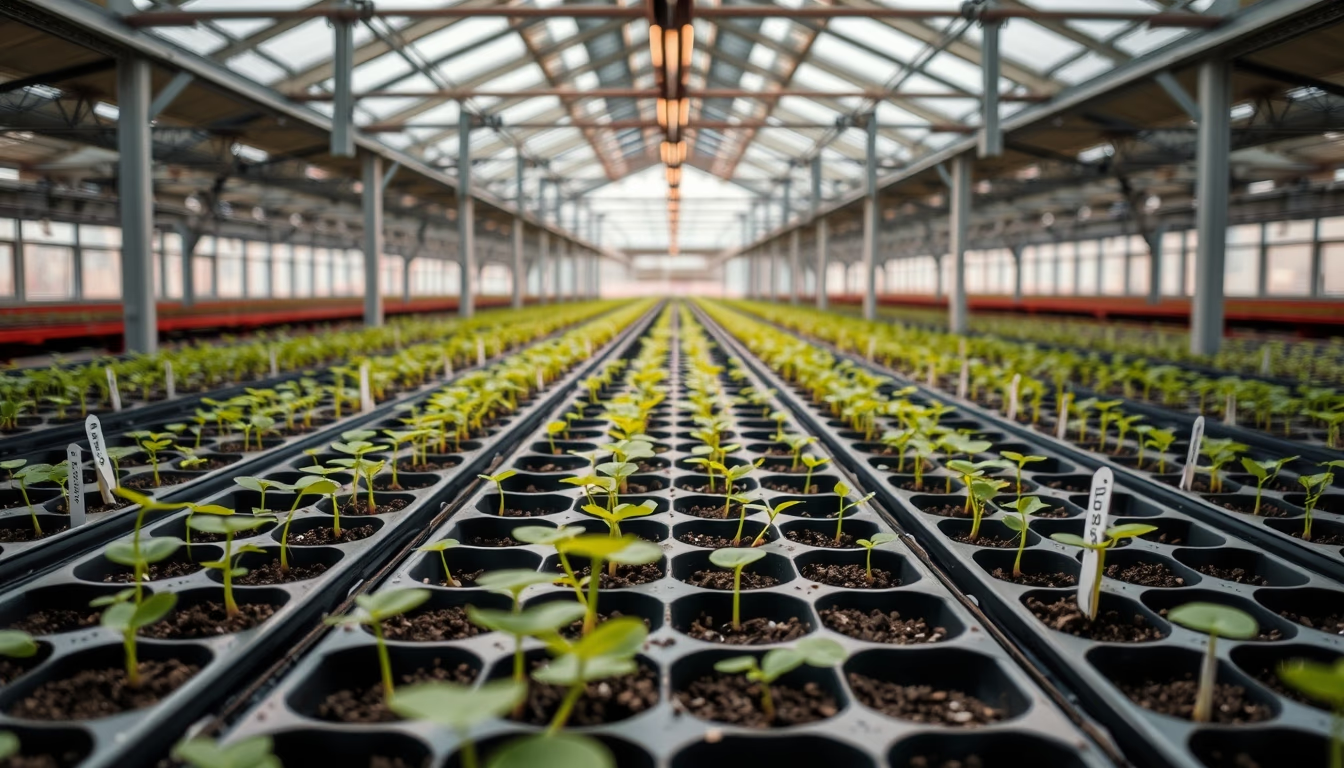
Seedling trays in nurseries organize protected cultivation, optimizing space and ensuring healthy plants for agriculture and gardening.
About this subject
Seedling tray nurseries are efficient plant propagation systems widely used in modern agriculture. The trays, typically made of polystyrene or plastic, feature individual cells that hold substrate and seeds, allowing root development without competition. This method facilitates handling, irrigation, and phytosanitary control, reducing losses and increasing transplant success rates.
In Brazil, tray nurseries are common for producing vegetables such as lettuce, tomato, and bell pepper, as well as forest seedlings for reforestation. The technique gained traction with precision agriculture and the demand for disease-free plants. Architectural structures like greenhouses and shade houses shelter these trays, controlling light, temperature, and humidity. The nursery design, often including metal shelving and drip or sprinkler irrigation systems, is crucial for efficiency.
Interestingly, the use of seedling trays dates back to Japanese horticultural practices, but it became widespread in Europe during the 1970s with nursery industrialization. Today, automated systems with conveyors and robots handle thousands of trays per hour. The choice of cell size (from 128 to 200 cells per tray) depends on the species and nursery duration. For tomato, 128-cell trays are ideal, allowing vigorous roots within 30 days.
Despite efficiency, plastic tray disposal poses environmental challenges. Biodegradable alternatives, such as coir or cellulose trays, are gaining ground. Organic nurseries often reuse trays after disinfection. The nursery architecture, with high ceilings and cross-ventilation, also influences seedling health by reducing fungal incidence.
Frequently Asked Questions
What is the advantage of using seedling trays over open seedbeds?
Trays prevent root competition, facilitate handling and transplanting without damage, and allow precise irrigation and nutrient control, resulting in more uniform and healthy seedlings.
How many cells does a seedling tray typically have?
Common trays range from 128 to 200 cells. For fast-growing species like lettuce, 200 cells are used; for seedlings needing more space, like tomatoes, 128 cells are recommended.
How to dispose or recycle used seedling trays?
Plastic trays can be recycled at rigid plastic collection points. Biodegradable alternatives, such as coir trays, can be composted. Many nurseries reuse trays after washing and disinfection.
Direct URL
https://pub-c7d6a6ea828543ac903a74a341ccb2e1.r2.dev/imagens/seedlings-tray-nursery-architectural-photography-p1.avifHow to credit
Include a visible link back to UtilizAí. Copy one of the snippets below:
<a href="https://xn--utiliza-eza.com/en/midia/imagens/seedlings-tray-nursery-architectural-photography-p1">Seedlings tray nursery</a> by <a href="https://xn--utiliza-eza.com">UtilizAí</a>, licensed under <a href="https://creativecommons.org/licenses/by/4.0/">CC BY 4.0</a>.
[Seedlings tray nursery](https://xn--utiliza-eza.com/en/midia/imagens/seedlings-tray-nursery-architectural-photography-p1) by [UtilizAí](https://xn--utiliza-eza.com), CC BY 4.0
License: CC-BY-4.0