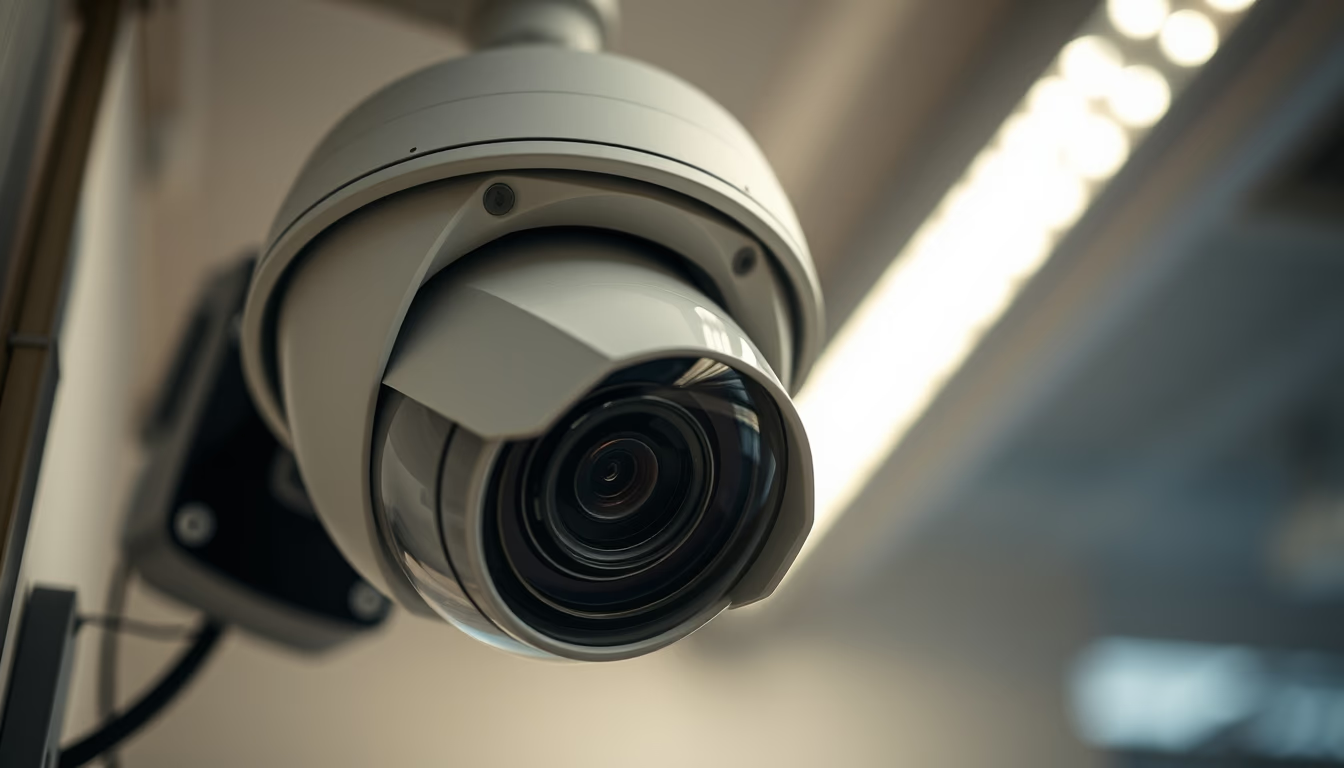
Security camera surveillance
1344×768 · AVIF · CC BY 4.0
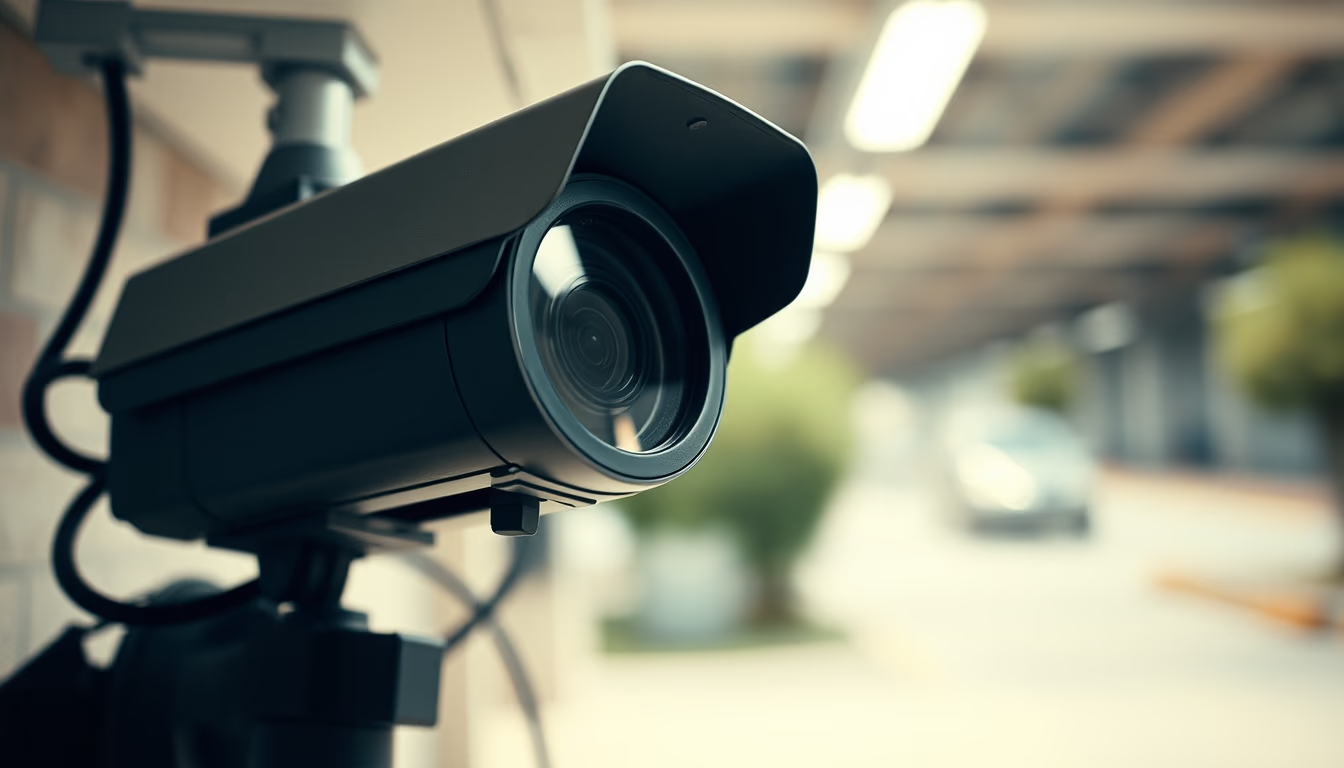
Security cameras evolved from analog systems to IP networks with artificial intelligence, monitoring homes, businesses and public spaces in Brazil and globally.
About this subject
Security cameras have become ubiquitous in urban life. Originally developed in the 1940s for military monitoring, today they outfit everything from homes to entire cities. In Brazil, over 30 million cameras are estimated to be installed, a number that grows with falling prices and the popularization of smart devices.
There are two main types: analog cameras, which transmit signal via coaxial cables, and IP cameras, which use data networks and allow remote access. Modern ones incorporate night vision, motion detection, and facial recognition powered by artificial intelligence. This evolution has brought benefits like crime reduction in monitored areas, but also raises questions about privacy and mass surveillance.
Brazil's General Data Protection Law (LGPD) regulates the use of images, especially in condominiums and businesses. It is mandatory to inform about recording and limit access to footage. Additionally, cameras on public streets are controlled by municipal and state agencies, with integrated systems like Detecta in São Paulo, which uses license plate recognition.
Interestingly, the first CCTV system was installed in Germany in 1942 to observe V-2 rocket launches. Today, cameras with artificial intelligence can identify suspicious behavior in real time, such as abandoning a backpack in airports. In Brazil, their use in schools and public transportation is growing, with projects like Olho Vivo on buses in Belo Horizonte.
Frequently Asked Questions
Can security cameras be hacked?
Yes, especially if not properly protected. IP cameras exposed to the internet without strong passwords or outdated firmware are vulnerable. Recommendations include using separate networks, regular updates, and two-factor authentication.
What is the difference between IP and analog cameras?
IP cameras transmit data over a network, enabling remote access and higher resolution, while analog cameras use coaxial cables and DVR recorders with limited quality. IPs are more flexible and intelligent but require network infrastructure.
Is it legal to install cameras on a building's facade?
Yes, as long as only common areas are filmed and a visible notice is provided. Brazil's LGPD requires transparency and restricted access to footage. Filming private units or public streets without specific authorization is not allowed.
Direct URL
https://pub-c7d6a6ea828543ac903a74a341ccb2e1.r2.dev/imagens/security-camera-surveillance-film-grain-authentic-p0.avifHow to credit
Include a visible link back to UtilizAí. Copy one of the snippets below:
<a href="https://xn--utiliza-eza.com/en/midia/imagens/security-camera-surveillance-film-grain-authentic-p0">Security camera surveillance</a> by <a href="https://xn--utiliza-eza.com">UtilizAí</a>, licensed under <a href="https://creativecommons.org/licenses/by/4.0/">CC BY 4.0</a>.
[Security camera surveillance](https://xn--utiliza-eza.com/en/midia/imagens/security-camera-surveillance-film-grain-authentic-p0) by [UtilizAí](https://xn--utiliza-eza.com), CC BY 4.0
License: CC-BY-4.0