Security camera home outdoor
1344×768 · AVIF · CC BY 4.0
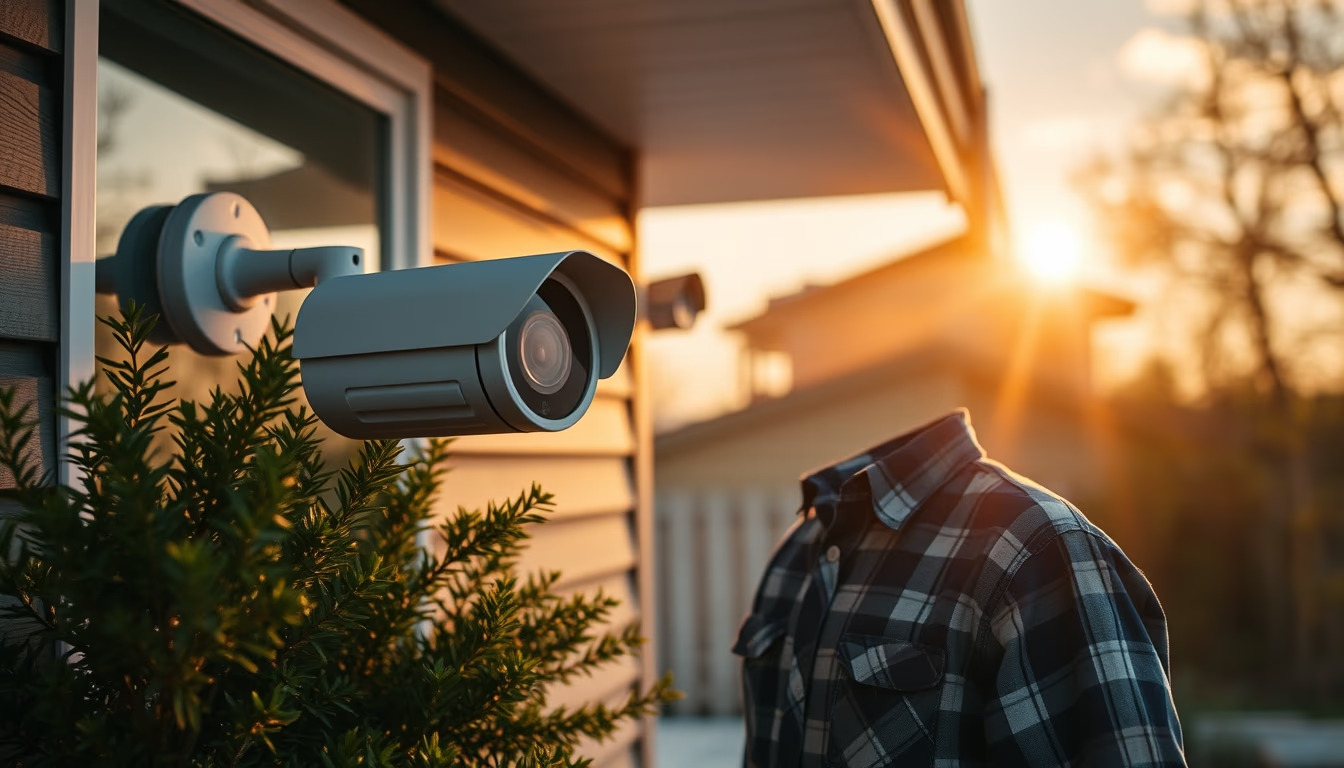
Outdoor security cameras are essential for home protection, combining night vision, smart motion detection, and integration with smart home systems.
About this subject
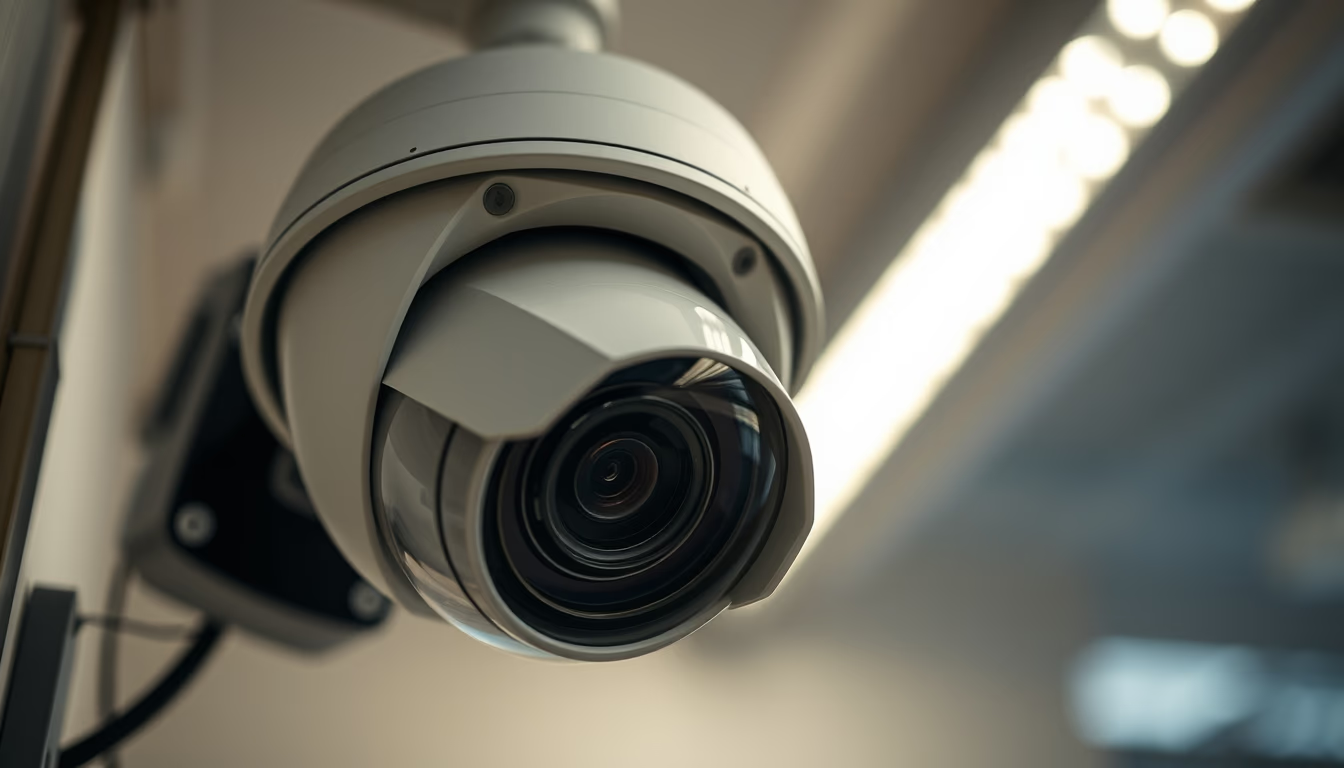
Outdoor security cameras have evolved significantly in recent years, transitioning from simple recording devices to smart, internet-connected equipment. In Brazil, adoption has grown driven by high crime rates in urban areas, making these cameras a common sight on homes and buildings. Common resolutions include 1080p and 4K, with wide-angle lenses covering 130° to 180°. Features like infrared night vision and AI-based motion detection can distinguish people, animals, and vehicles, reducing false alarms.
Wireless connectivity via 2.4 GHz or 5 GHz Wi-Fi has made installation more flexible, though many models still offer wired Power over Ethernet (PoE) options. Cloud storage, with monthly plans starting around $5 USD, eliminates the need for local DVRs but requires stable broadband. Some cameras include built-in sirens and two-way audio, allowing interaction with visitors or intruders.
Trends for 2026 include solar-powered cameras, radar sensors for even greater detection accuracy, and advanced facial recognition algorithms. However, privacy and cybersecurity remain challenges: weak passwords and outdated firmware are common entry points for hackers. Manufacturers recommend two-factor authentication and end-to-end encryption. In the US and European markets, brands like Ring, Arlo, and Nest dominate, while in Latin America, Intelbras and Positivo lead the entry-level segment.
Ideal outdoor camera installation considers blind spots, a minimum height of 2.5 meters to prevent vandalism, and weather protection (IP65 rating or higher). For apartments, focus is typically on the front door and service area; for houses, the full perimeter. Integration with voice assistants like Alexa and Google Home allows voice commands to display cameras on smart screens or trigger security routines.
Frequently Asked Questions
How to install an outdoor security camera?
Choose a location with good coverage, at least 2.5 meters high. Follow the manual: mount the base, connect the cable (if wired) or pair via Wi-Fi. Test the angle and connection before finalizing. Ensure the camera is weatherproof (IP65 or higher).
Do outdoor cameras work at night?
Yes, most have infrared night vision (black and white) or color mode with LED illumination. Range varies from 10 to 30 meters. Models with more sensitive sensors (e.g., 0.01 lux) can capture color images even in low light.
Can a security camera be hacked?
Yes, if the password is weak or firmware outdated. Use strong passwords, enable two-factor authentication, keep firmware updated, and disable remote access if not needed. Cameras with end-to-end encryption are more secure.
Direct URL
https://pub-c7d6a6ea828543ac903a74a341ccb2e1.r2.dev/imagens/security-camera-home-outdoor-cinematic-wide-shot-p3.avifHow to credit
Include a visible link back to UtilizAí. Copy one of the snippets below:
<a href="https://xn--utiliza-eza.com/en/midia/imagens/security-camera-home-outdoor-cinematic-wide-shot-p3">Security camera home outdoor</a> by <a href="https://xn--utiliza-eza.com">UtilizAí</a>, licensed under <a href="https://creativecommons.org/licenses/by/4.0/">CC BY 4.0</a>.
[Security camera home outdoor](https://xn--utiliza-eza.com/en/midia/imagens/security-camera-home-outdoor-cinematic-wide-shot-p3) by [UtilizAí](https://xn--utiliza-eza.com), CC BY 4.0
License: CC-BY-4.0