Screentone manga texture
1344×768 · AVIF · CC BY 4.0
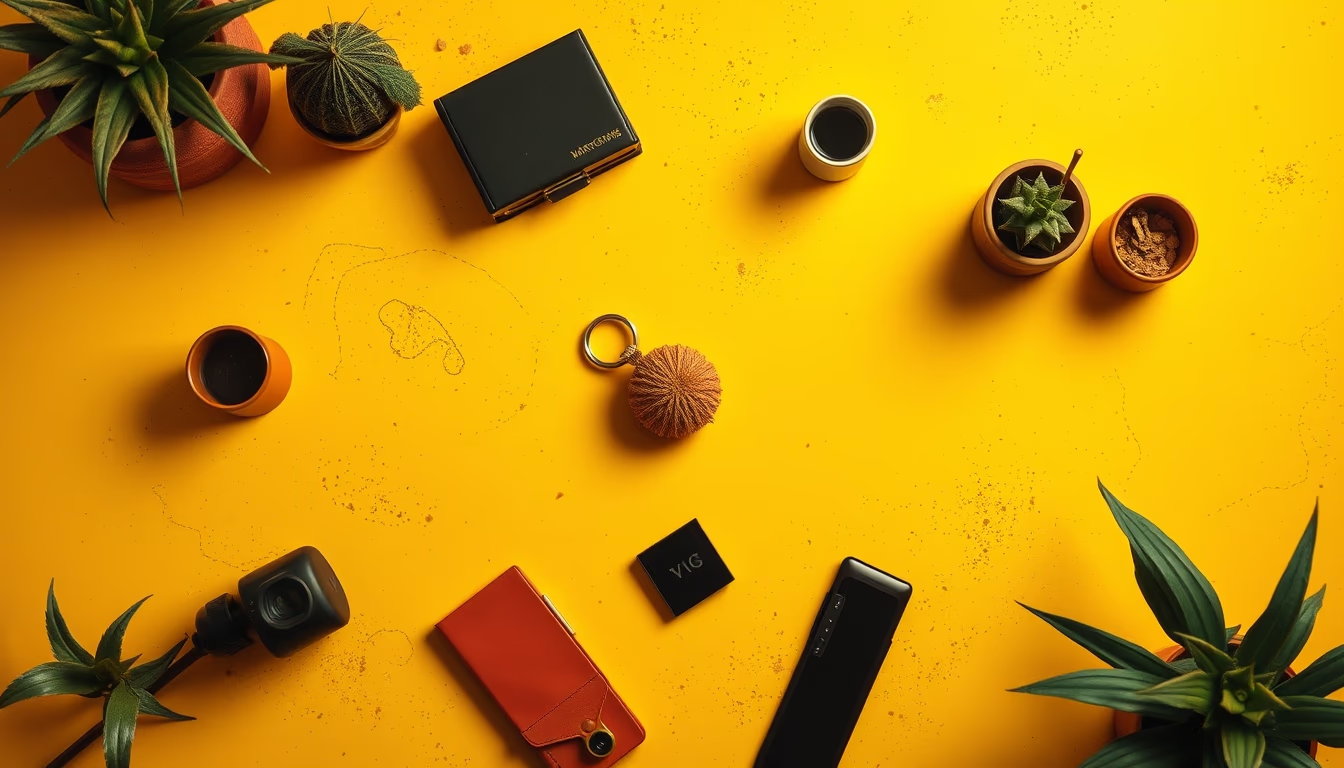
Screentones are dot patterns used in manga and comic art to create shading and textures, essential to the Japanese visual style since the mid-20th century.
About this subject
Screentones, also known as letraset or tone transfer sheets, are thin adhesive films containing repetitive patterns of dots, lines, or other textures. They are applied over ink drawings to simulate shades of gray, saving time and ensuring consistency in printing. The technique revolutionized manga production starting in the 1950s, when artist Osamu Tezuka, creator of Astro Boy, popularized its use to add depth and atmosphere to scenes without the need for manual hatching.
Each screentone sheet has a specific density, measured in lines per inch (LPI), which determines how dark or light the pattern appears. The artist cuts the desired area with a knife, transfers the adhesive onto the paper, and may use a scraper to create fade effects. This handmade process requires precision but gives a professional finish characteristic of black-and-white printed manga.
In the West, screentones were also adopted by indie comic artists and inkers, especially during the manga boom of the 1990s. With digital technology, software like Clip Studio Paint or Photoshop offers brushes and textures that simulate screentones, allowing unlimited adjustments without waste. Yet many purist artists still prefer physical sheets for their tactile feel and organic unpredictability.
Today, screentones remain a cultural icon of manga and are often associated with the retro aesthetic of the 1980s and 1990s. They are used not only in comics but also in illustrations, character design, and even animation to evoke classic Japanese style. The versatility of these patterns, from fine dots to sand or wood textures, continues to inspire new generations of artists worldwide.
Frequently Asked Questions
What is a screentone?
It is an adhesive sheet with repetitive patterns (like dots or lines) used in manga and comics to add shading and textures, replacing manual hatching.
Who invented the screentone?
The screentone was developed in post-war Japan, but it was popularized by Osamu Tezuka in the 1950s, becoming standard in manga production.
Are physical screentones still used today?
Yes, although digital versions are common, many artists still use physical screentones for unique textures and a more hands-on process.
Direct URL
https://pub-c7d6a6ea828543ac903a74a341ccb2e1.r2.dev/imagens/screentone-manga-texture-isometric-flat-lay-fresh17.avifHow to credit
Include a visible link back to UtilizAí. Copy one of the snippets below:
<a href="https://xn--utiliza-eza.com/en/midia/imagens/screentone-manga-texture-isometric-flat-lay-fresh17">Screentone manga texture</a> by <a href="https://xn--utiliza-eza.com">UtilizAí</a>, licensed under <a href="https://creativecommons.org/licenses/by/4.0/">CC BY 4.0</a>.
[Screentone manga texture](https://xn--utiliza-eza.com/en/midia/imagens/screentone-manga-texture-isometric-flat-lay-fresh17) by [UtilizAí](https://xn--utiliza-eza.com), CC BY 4.0
License: CC-BY-4.0