Safe deposit boxes row
1344×768 · AVIF · CC BY 4.0
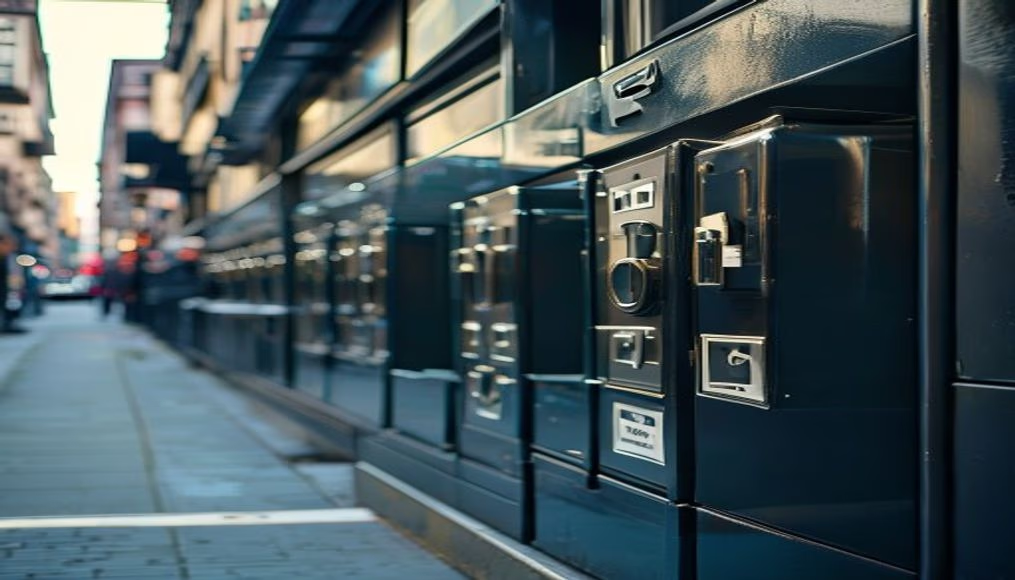
Safe deposit boxes in banks ensure the safekeeping of valuables with high physical security and confidentiality, a traditional service offered by financial institutions.
About this subject
Safe deposit boxes are individual secure containers housed within heavily fortified bank vaults. Customers rent these compartments to store valuables such as jewelry, important documents, art collections, and cash. The primary advantage is protection against theft, fire, and natural disasters, as banks invest in advanced security systems including steel doors, time locks, motion sensors, and 24/7 surveillance.
Historically, the concept of storing valuables in secure locations dates back to medieval monasteries, but modern safe deposit boxes emerged in the 19th century with specialized vault companies. In the United States and globally, banks like Chase and HSBC have long offered this service. However, usage has declined due to digital document storage and home safes, though demand persists for inheritance planning and high-value item storage.
Security features include dual-key systems (customer and bank guard key), biometric access, and video monitoring. Boxes are made of reinforced steel and reside in controlled-access vault rooms. Some banks provide optional insurance coverage. The security protocol ensures that only the renter, with proper identification, can access the box.
Culturally, safe deposit boxes hold an air of secrecy and prestige. They gained notoriety in scandals revealing hidden assets in Switzerland and Brazil. Today, stricter anti-money laundering regulations have led many banks to close their safe deposit departments. Nevertheless, they remain crucial for art conservation, precious metal storage, and estate planning, offering a physical haven in an increasingly digital world.
Frequently Asked Questions
What is a safe deposit box and how does it work?
It is a locked metal compartment inside a bank vault. Customers rent the space annually, receive a key, and must present ID and the key to access the box in person.
What items are commonly stored in safe deposit boxes?
Jewelry, important documents (deeds, wills), collectibles (coins, stamps), digital backup media, and small artwork. Cash is also common but loses value due to inflation.
Is it safe to keep cash in a bank safe deposit box?
Physically, yes, but cash earns no interest and depreciates with inflation. The bank is not liable for losses unless the customer purchases optional insurance.
Direct URL
https://pub-c7d6a6ea828543ac903a74a341ccb2e1.r2.dev/imagens/safe-deposit-boxes-row-street-photography-v11.avifHow to credit
Include a visible link back to UtilizAí. Copy one of the snippets below:
<a href="https://xn--utiliza-eza.com/en/midia/imagens/safe-deposit-boxes-row-street-photography-v11">Safe deposit boxes row</a> by <a href="https://xn--utiliza-eza.com">UtilizAí</a>, licensed under <a href="https://creativecommons.org/licenses/by/4.0/">CC BY 4.0</a>.
[Safe deposit boxes row](https://xn--utiliza-eza.com/en/midia/imagens/safe-deposit-boxes-row-street-photography-v11) by [UtilizAí](https://xn--utiliza-eza.com), CC BY 4.0
License: CC-BY-4.0