Sacsayhuamán cusco
1344×768 · AVIF · CC BY 4.0
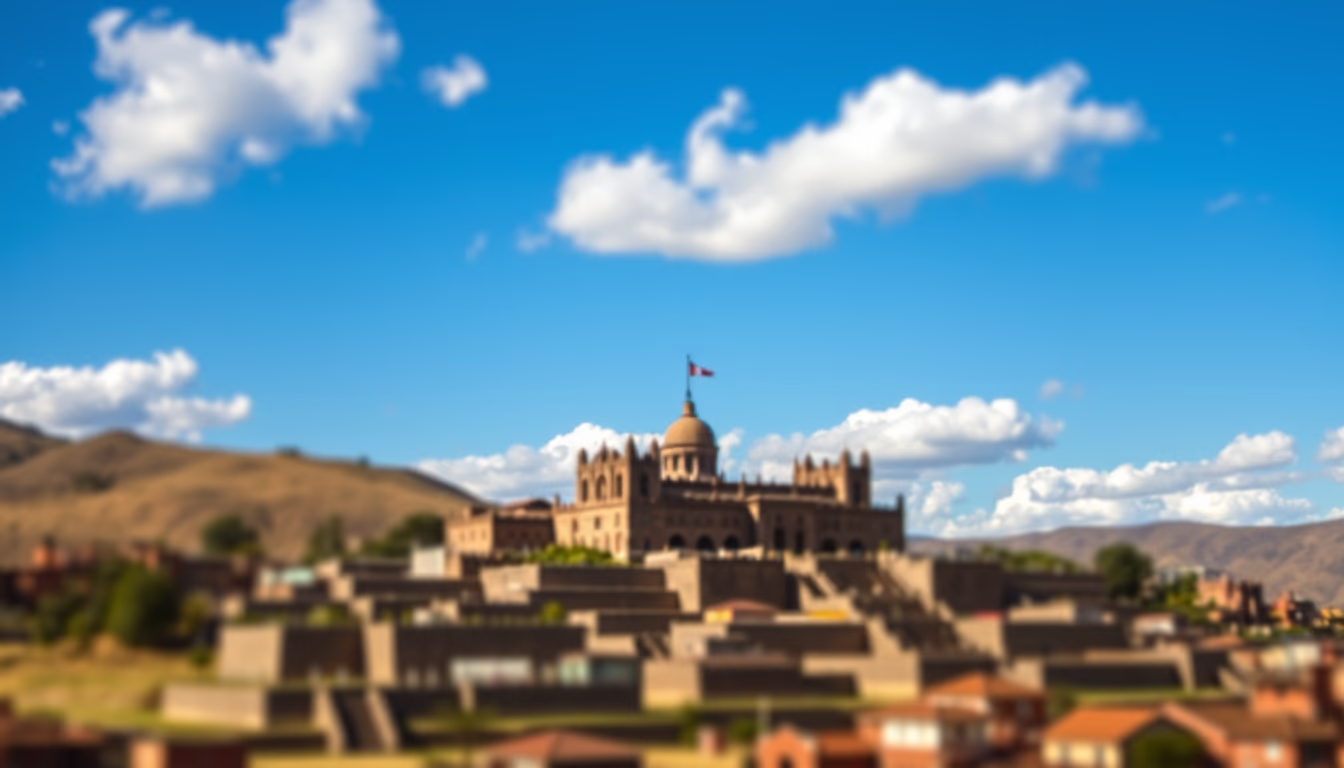
Sacsayhuamán, the colossal Inca ceremonial fortress on the outskirts of Cusco, amazes with its megalithic architecture and precise engineering.
About this subject
Sacsayhuamán is an archaeological site located about 2 km from the historic center of Cusco, Peru, at an altitude of 3,700 meters. Built during the reign of Emperor Pachacuti (15th century), the complex served as a ceremonial center, military fortress, and symbol of Inca power. Its walls are formed by enormous stone blocks, some weighing over 100 tons, fitted with millimeter precision without mortar. The dry stone construction technique ensured resistance to earthquakes over the centuries.
The site is famous for its three concentric zigzag terraces, forming walls up to 6 meters high. It is believed that Sacsayhuamán had astronomical and religious functions, such as observing the winter solstice. During the Spanish conquest, it was the scene of one of the bloodiest battles between Incas and Spaniards in 1536, when rebel Incas led by Manco Inca tried to retake Cusco. Much of the stone was later removed to build colonial houses and churches in the city.
Today, Sacsayhuamán has been a UNESCO World Heritage Site since 1983 and attracts visitors from around the world. The site still preserves over 200 structures, including towers, aqueducts, and underground tunnels. Every year on June 24, the Inti Raymi (Festival of the Sun) is held there, reviving Inca rituals with thousands of participants.
Frequently Asked Questions
What was the main function of Sacsayhuamán?
Sacsayhuamán had multiple functions: it was a ceremonial center dedicated to the Sun god, a military fortress, and a symbol of Inca imperial power. It also served as an astronomical observatory.
How did the Incas transport and fit such large stones?
The exact technique is unknown, but it is believed they used ramps, ropes, and levers. The stones were shaped by percussion with harder stones and fitted by trial and error until achieving the perfect joint.
Was Sacsayhuamán destroyed by the Spanish?
During the conquest, the Spanish damaged part of the complex and reused many stones to build colonial buildings. Despite this, the main structures survived and are now protected as heritage.
Direct URL
https://pub-c7d6a6ea828543ac903a74a341ccb2e1.r2.dev/imagens/sacsayhuaman-cusco-tilt-shift-miniature-p8.avifHow to credit
Include a visible link back to UtilizAí. Copy one of the snippets below:
<a href="https://xn--utiliza-eza.com/en/midia/imagens/sacsayhuaman-cusco-tilt-shift-miniature-p8">Sacsayhuamán cusco</a> by <a href="https://xn--utiliza-eza.com">UtilizAí</a>, licensed under <a href="https://creativecommons.org/licenses/by/4.0/">CC BY 4.0</a>.
[Sacsayhuamán cusco](https://xn--utiliza-eza.com/en/midia/imagens/sacsayhuaman-cusco-tilt-shift-miniature-p8) by [UtilizAí](https://xn--utiliza-eza.com), CC BY 4.0
License: CC-BY-4.0