Sacsayhuamán cusco
1344×768 · AVIF · CC BY 4.0
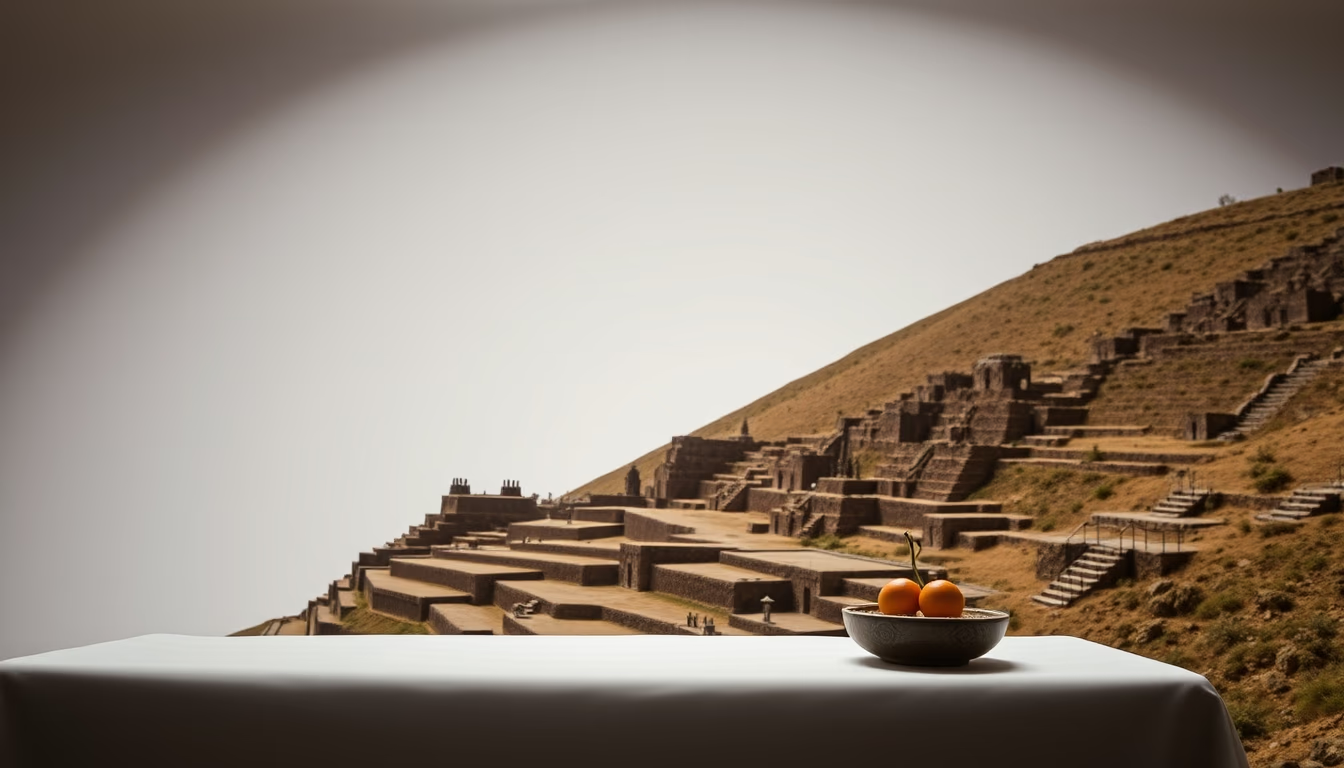
Sacsayhuamán, a colossal Inca fortress on the outskirts of Cusco, amazes with its perfectly fitted stone blocks and ceremonial importance.
About this subject
Sacsayhuamán is an archaeological complex located about 2 km from the center of Cusco, Peru, at an altitude of approximately 3,700 meters. Built during the reign of Emperor Pachacuti (15th century), the fortress served both as a defensive structure and as a ceremonial center dedicated to the sun god, Inti. Its construction required decades of labor from thousands of men, who transported and fitted stone blocks weighing up to 130 tons without the use of mortar. The polygonal masonry technique, where irregular stones fit together with millimeter precision, is so exact that even a knife blade cannot penetrate the joints.
The site consists of three parallel zigzag walls made of calcite and diorite, representing the teeth of a puma’s head, a sacred Inca animal whose body would be formed by the city of Cusco itself. In addition to the walls, there are towers, terraces, and drainage systems that still function today, demonstrating the Incas' advanced knowledge of hydraulic engineering. During the empire, Sacsayhuamán was the stage for important rituals, such as Inti Raymi (Festival of the Sun), which is still celebrated annually at the site.
After the arrival of the Spanish, Sacsayhuamán was the scene of one of the bloodiest battles of Inca resistance in 1536, when leader Manco Inca attempted to retake Cusco. The conquerors dismantled much of the structures to build houses and churches in Cusco, but the foundations and main walls endured. In 1983, UNESCO declared the historic center of Cusco, which includes Sacsayhuamán, a World Heritage Site. The fortress attracts millions of tourists each year, fascinated by the mystery of how such large blocks were moved and fitted so precisely without metal tools or the wheel.
A little-known fact is that during the equinox, the sun rises aligned with certain doors and niches in the complex, evidencing its use as an astronomical observatory. Recent research suggests the site also functioned as a water reservoir, as underground channels supplied fountains and tanks. Despite theories of alien intervention or lost technology, scholars affirm that the Incas used ramps, levers, and thousands of workers to shape the stones through percussion and abrasion, an engineering feat that continues to inspire awe.
Frequently Asked Questions
What was the main function of Sacsayhuamán?
Sacsayhuamán had military (defensive fortress) and ceremonial functions. It was a religious center dedicated to the sun god, with temples and spaces for rituals like Inti Raymi.
How did the Incas build Sacsayhuamán without mortar?
They used polygonal masonry, where irregular stones were carved by percussion and abrasion until they fit perfectly. The weight and precise fit provided stability without mortar.
Was Sacsayhuamán destroyed by the Spanish?
Partially. The Spanish removed many stones to build colonial buildings in Cusco, but the main walls and foundations remain. Despite the damage, the site still impresses with its grandeur.
Direct URL
https://pub-c7d6a6ea828543ac903a74a341ccb2e1.r2.dev/imagens/sacsayhuaman-cusco-studio-still-life-p4.avifHow to credit
Include a visible link back to UtilizAí. Copy one of the snippets below:
<a href="https://xn--utiliza-eza.com/en/midia/imagens/sacsayhuaman-cusco-studio-still-life-p4">Sacsayhuamán cusco</a> by <a href="https://xn--utiliza-eza.com">UtilizAí</a>, licensed under <a href="https://creativecommons.org/licenses/by/4.0/">CC BY 4.0</a>.
[Sacsayhuamán cusco](https://xn--utiliza-eza.com/en/midia/imagens/sacsayhuaman-cusco-studio-still-life-p4) by [UtilizAí](https://xn--utiliza-eza.com), CC BY 4.0
License: CC-BY-4.0