Rural worker in a sunny field with traditional hat
1344×768 · AVIF · CC BY 4.0
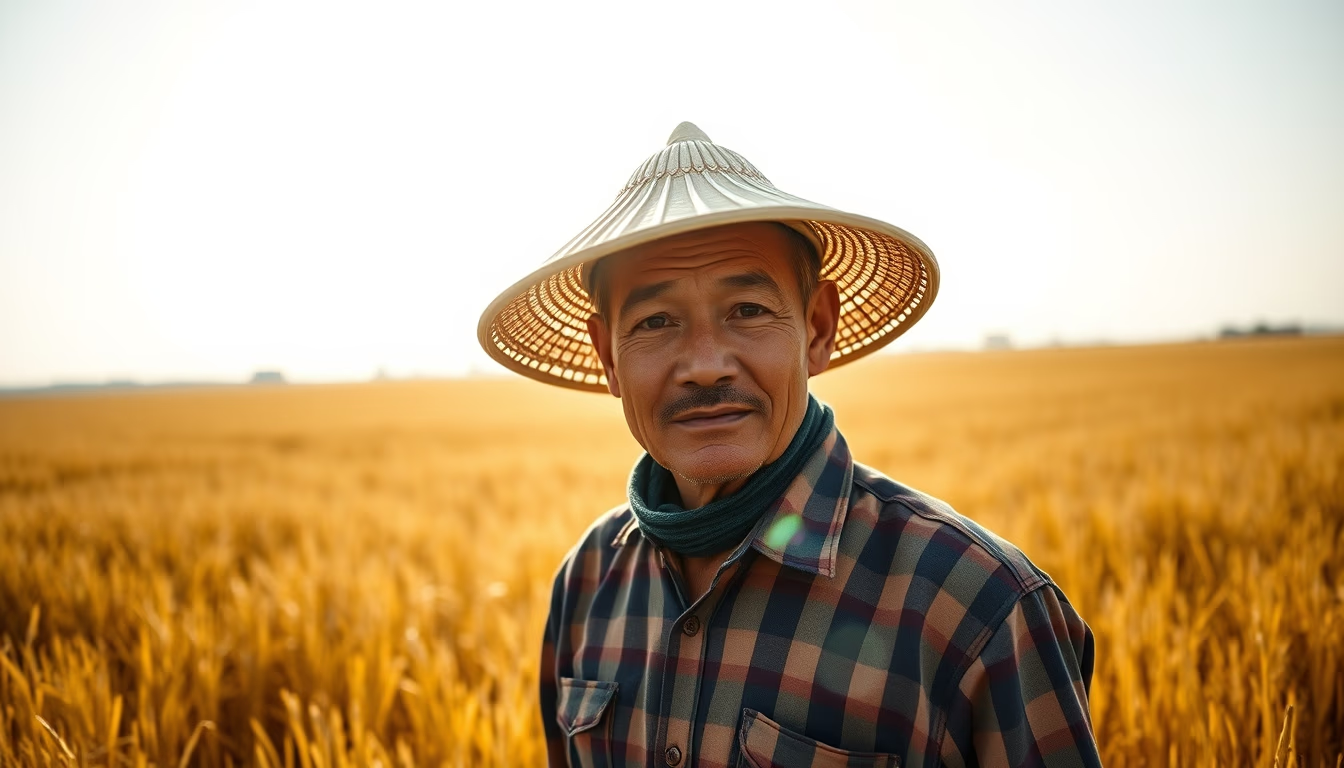
Rural worker in traditional hat under a sunny field symbolizes Brazilian agriculture's strength and social security challenges in rural areas.
About this subject
The Brazilian rural worker, often depicted with a straw or leather hat, is a central figure in the country's economy. Brazil is one of the world's largest food producers, and the agricultural sector employs about 15 million people, according to IBGE. Many of these workers are in family farming, which supplies 70% of the food consumed by Brazilians.
This category faces specific social security challenges. Rural work is legally recognized as an activity granting differentiated retirement benefits, such as age retirement five years earlier than urban workers (60 for men, 55 for women). However, informality affects around 60% of rural workers, hindering access to benefits like sickness aid and survivor's pension.
The traditional hat, besides protecting from strong sun, symbolizes a culture that values hard work and connection to the land. The image of a worker in a sunny field evokes grain harvests like soy and corn, or coffee and sugarcane harvesting, activities that drive entire regions' economies. The midday brightness highlights the intensity of the workday, which often starts before dawn.
Interestingly, the composition's symmetry may represent the balance between individual effort and necessary public policies to ensure dignity for these professionals. Brazil has advanced in digitizing social security services for rural areas, but lack of connectivity in remote regions remains a barrier.
Frequently Asked Questions
What are the social security rights of rural workers in Brazil?
Rural workers are entitled to age retirement five years earlier (60 for men, 55 for women), disability retirement, sickness aid, maternity salary, and survivor's pension. They must prove at least 15 years of rural activity.
How does informality affect rural workers' access to social security?
About 60% of rural workers are informal, without INSS contributions. This hinders access to benefits like sickness aid and retirement, requiring documentary or testimonial proof of rural work.
Why is the traditional hat important for rural workers?
The straw or leather hat protects against sunstroke and UV rays, and is a cultural symbol of rural identity. It also helps regulate body temperature during long workdays under the sun.
Direct URL
https://pub-c7d6a6ea828543ac903a74a341ccb2e1.r2.dev/imagens/rural-worker-in-a-sunny-field-with-traditional-hat-symmetric-bright-midday-5.avifHow to credit
Include a visible link back to UtilizAí. Copy one of the snippets below:
<a href="https://xn--utiliza-eza.com/en/midia/imagens/rural-worker-in-a-sunny-field-with-traditional-hat-symmetric-bright-midday-5">Rural worker in a sunny field with traditional hat</a> by <a href="https://xn--utiliza-eza.com">UtilizAí</a>, licensed under <a href="https://creativecommons.org/licenses/by/4.0/">CC BY 4.0</a>.
[Rural worker in a sunny field with traditional hat](https://xn--utiliza-eza.com/en/midia/imagens/rural-worker-in-a-sunny-field-with-traditional-hat-symmetric-bright-midday-5) by [UtilizAí](https://xn--utiliza-eza.com), CC BY 4.0
License: CC-BY-4.0