Rural worker in a sunny field with traditional hat
1344×768 · AVIF · CC BY 4.0
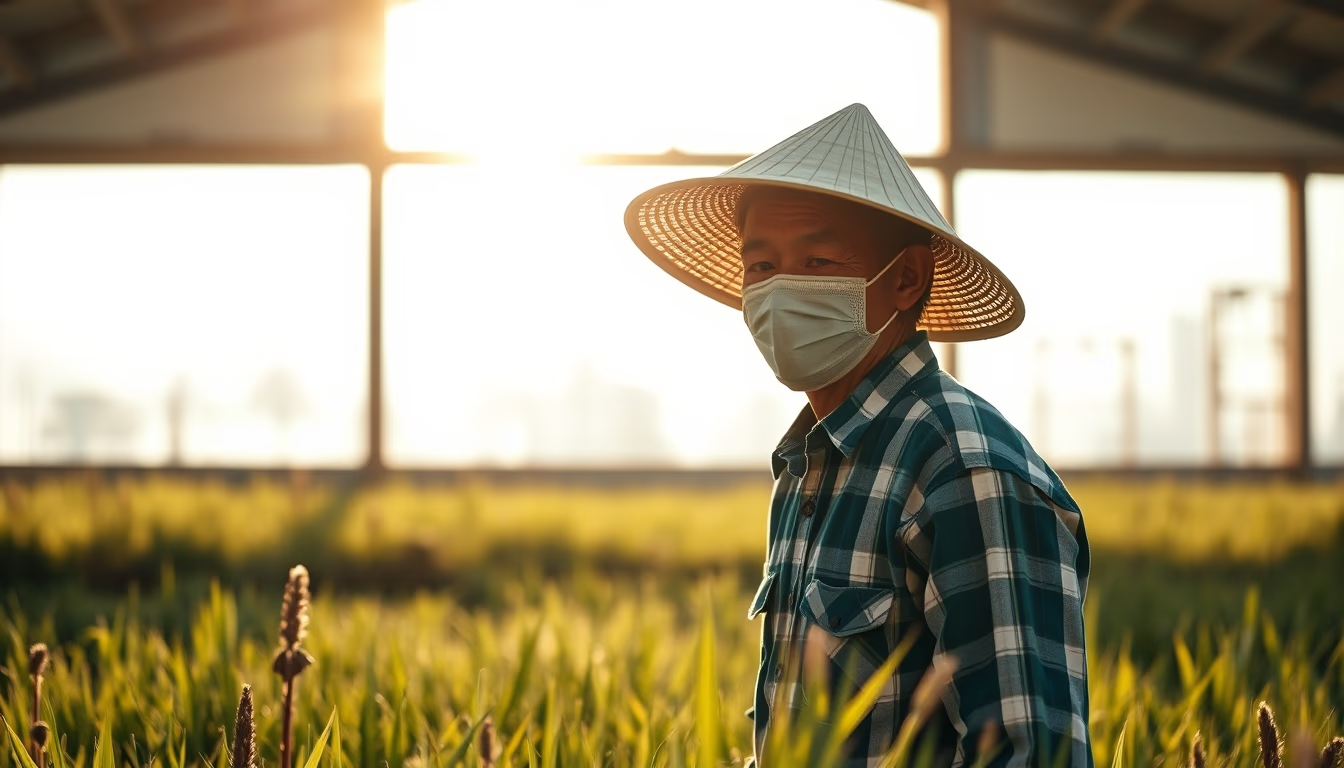
Rural worker in a sunny field with traditional hat portrays Brazilian agriculture reality and the importance of rural social security.
About this subject
The rural worker in a traditional hat under a sunny field embodies the strength of Brazilian agribusiness, which accounts for about 25% of the national GDP. This professional is often a special insured person under Social Security, a category that guarantees rights such as old‑age retirement (at 60 for men and 55 for women) and sickness benefits, provided rural activity is proven. The 2019 pension reform (Constitutional Amendment 103) kept these special rules but required additional contributions for those wishing to retire with a benefit above the minimum wage.
The straw or wide‑brimmed hat is more than an accessory: it protects against intense solar radiation common in regions like the Cerrado and the Northeast, where the workday begins at dawn. An estimated 15 million Brazilians work in the countryside, many in family farming, which is responsible for 70% of the food consumed in the country. Increasing mechanization, however, reduces formal job openings, raising informality and challenges for social security.
Historically, rural social security was established by Law 8.213/1991, recognizing work under a family economy regime. To qualify for benefits, workers must present documents such as lease contracts, producer notes, or declarations from rural unions. Lack of information remains a barrier: many only seek guidance when already ill or near the minimum age.
Brazilian rural areas also face environmental and health issues. Pesticide use, for example, requires protective equipment that is not always available. The image of the worker with a hat evokes a tradition that persists but must adapt to new legal and sustainability requirements.
Frequently Asked Questions
Who is considered a special insured person under Brazilian Social Security?
It is a rural worker who performs activities under a family economy regime, without permanent employees. It includes small farmers, artisanal fishermen, indigenous people, and quilombolas who prove rural work.
What documents are needed to prove rural activity?
Lease contracts, sales invoices for production, declarations from rural unions, INCRA or ITR registration, and self‑declaration ratified by public agencies can be used.
Did the 2019 pension reform change rules for rural workers?
Yes, but it kept the old‑age retirement at 60 (men) and 55 (women) with 15 years of contribution. To receive above the minimum wage, additional voluntary contributions are required.
Direct URL
https://pub-c7d6a6ea828543ac903a74a341ccb2e1.r2.dev/imagens/rural-worker-in-a-sunny-field-with-traditional-hat-documentary-morning-3.avifHow to credit
Include a visible link back to UtilizAí. Copy one of the snippets below:
<a href="https://xn--utiliza-eza.com/en/midia/imagens/rural-worker-in-a-sunny-field-with-traditional-hat-documentary-morning-3">Rural worker in a sunny field with traditional hat</a> by <a href="https://xn--utiliza-eza.com">UtilizAí</a>, licensed under <a href="https://creativecommons.org/licenses/by/4.0/">CC BY 4.0</a>.
[Rural worker in a sunny field with traditional hat](https://xn--utiliza-eza.com/en/midia/imagens/rural-worker-in-a-sunny-field-with-traditional-hat-documentary-morning-3) by [UtilizAí](https://xn--utiliza-eza.com), CC BY 4.0
License: CC-BY-4.0