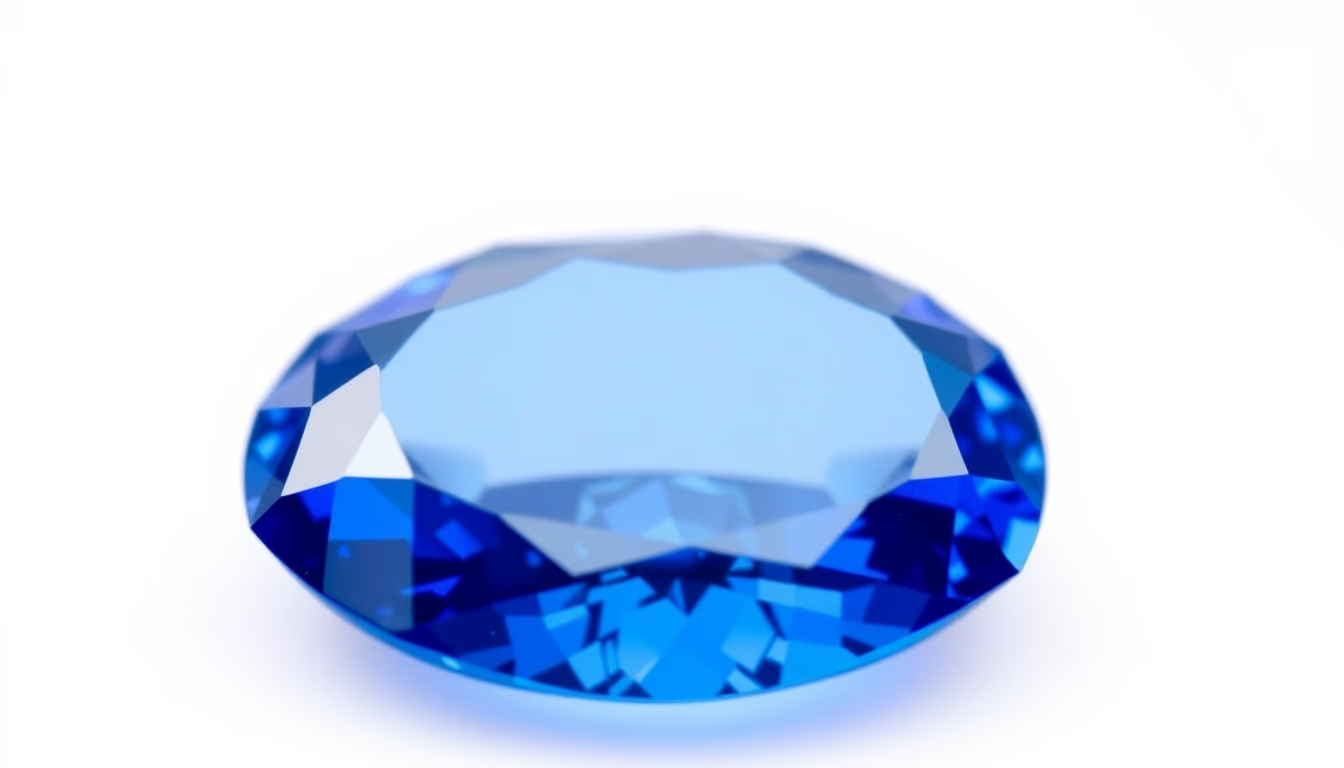
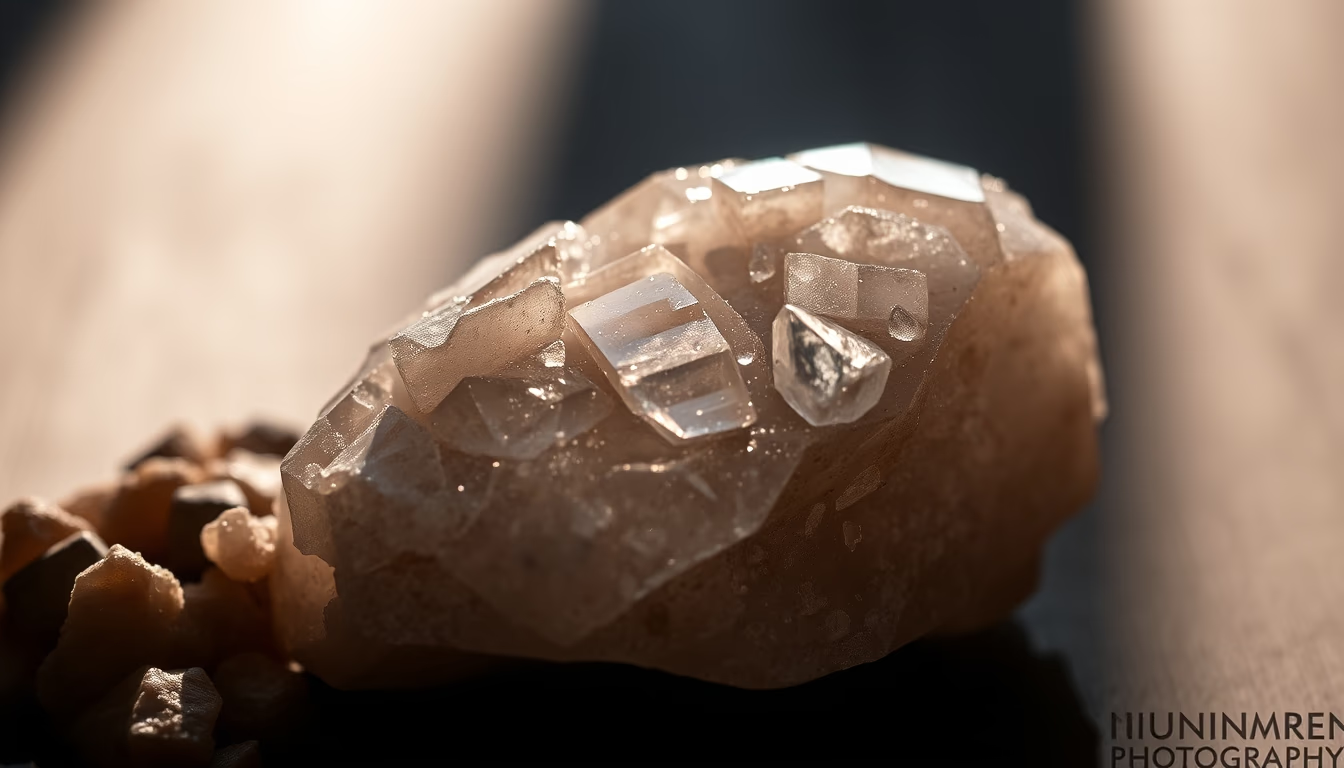
Ruby red gemstone
1344×768 · AVIF · CC BY 4.0

Ruby is a red variety of corundum, one of the hardest and most valuable minerals in the world, widely used in jewelry and a symbol of passion and power.
About this subject
Ruby, one of the four precious gemstones alongside diamond, emerald, and sapphire, is a variety of the mineral corundum (aluminum oxide). Its intense red color is caused by the presence of chromium in the crystal structure. With a hardness of 9 on the Mohs scale, it is extremely scratch-resistant, second only to diamond.
The main ruby deposits are in Myanmar (formerly Burma), which has produced some of the most famous specimens, such as the Sunrise Ruby. Other important sources include Mozambique, Thailand, Sri Lanka, and Madagascar. The gem forms under specific geological conditions, typically in metamorphic rocks like marble, or in alluvial deposits.
Historically, ruby has been revered in many cultures. In ancient India, it was called "ratnaraj" or "king of gems." The Burmese believed it conferred invincibility on warriors. In medieval Europe, it was associated with health, wealth, and wisdom. Today, exceptional natural rubies can fetch prices higher than diamonds of similar size. In addition to natural gems, synthetic rubies have been produced in laboratories since the late 19th century, used both in jewelry and technological applications such as lasers and watches.
Frequently Asked Questions
What determines the value of a ruby?
The value of a ruby is mainly determined by color (bright, uniform red is most prized), clarity (inclusions are common, but fewer is better), cut, and carat weight. Origin also matters, with Burmese rubies historically commanding the highest prices.
Are all natural rubies red?
Yes, ruby is defined as red corundum. The hue can vary from orange-red to purplish-red, but pure red is most desirable. Other colors of corundum are classified as sapphire.
How can I tell a natural ruby from a synthetic one?
Distinction usually requires gemological testing, as synthetic rubies have identical chemical composition. Features like natural inclusions (e.g., rutile needles) and fluorescence can help. A gemologist can use microscopes and other equipment for identification.
Direct URL
https://pub-c7d6a6ea828543ac903a74a341ccb2e1.r2.dev/imagens/ruby-red-gemstone-aerial-drone-shot-p7.avifHow to credit
Include a visible link back to UtilizAí. Copy one of the snippets below:
<a href="https://xn--utiliza-eza.com/en/midia/imagens/ruby-red-gemstone-aerial-drone-shot-p7">Ruby red gemstone</a> by <a href="https://xn--utiliza-eza.com">UtilizAí</a>, licensed under <a href="https://creativecommons.org/licenses/by/4.0/">CC BY 4.0</a>.
[Ruby red gemstone](https://xn--utiliza-eza.com/en/midia/imagens/ruby-red-gemstone-aerial-drone-shot-p7) by [UtilizAí](https://xn--utiliza-eza.com), CC BY 4.0
License: CC-BY-4.0