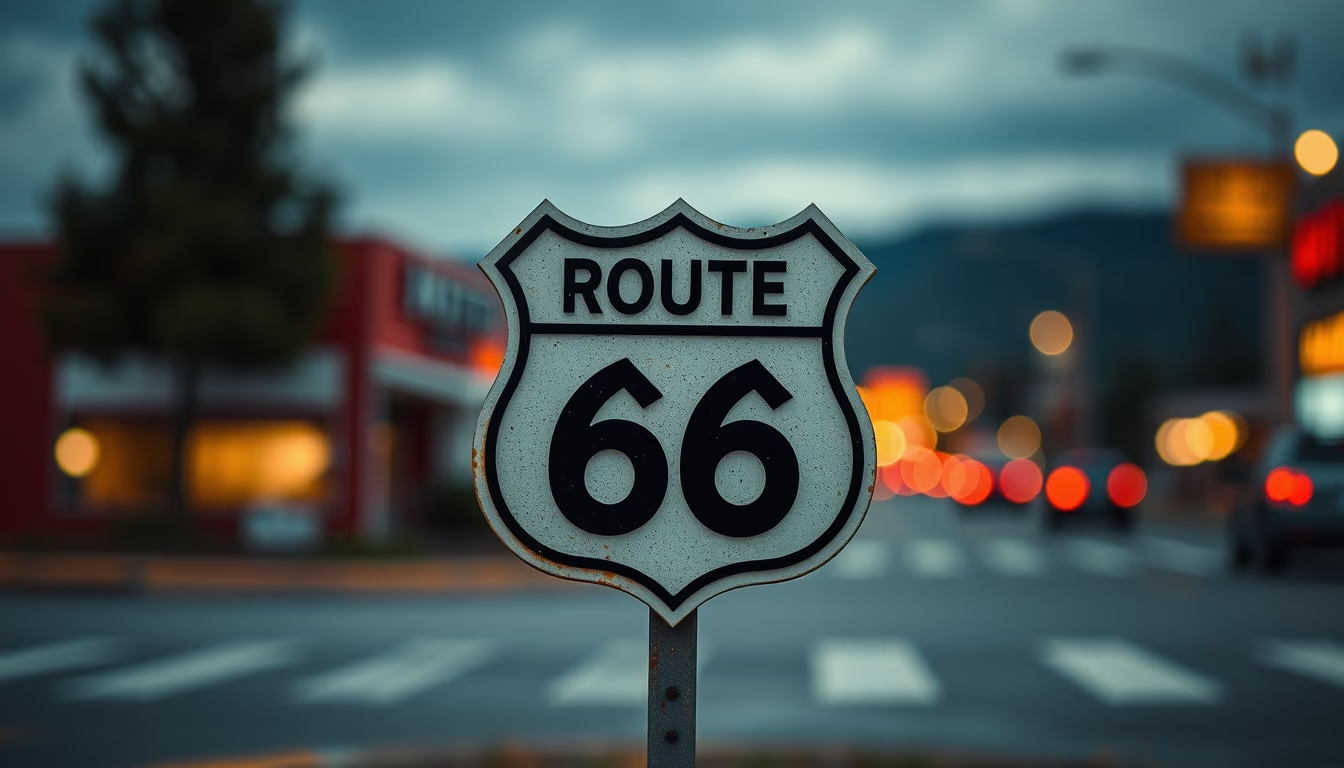
Route 66 motel neon
1344×768 · AVIF · CC BY 4.0
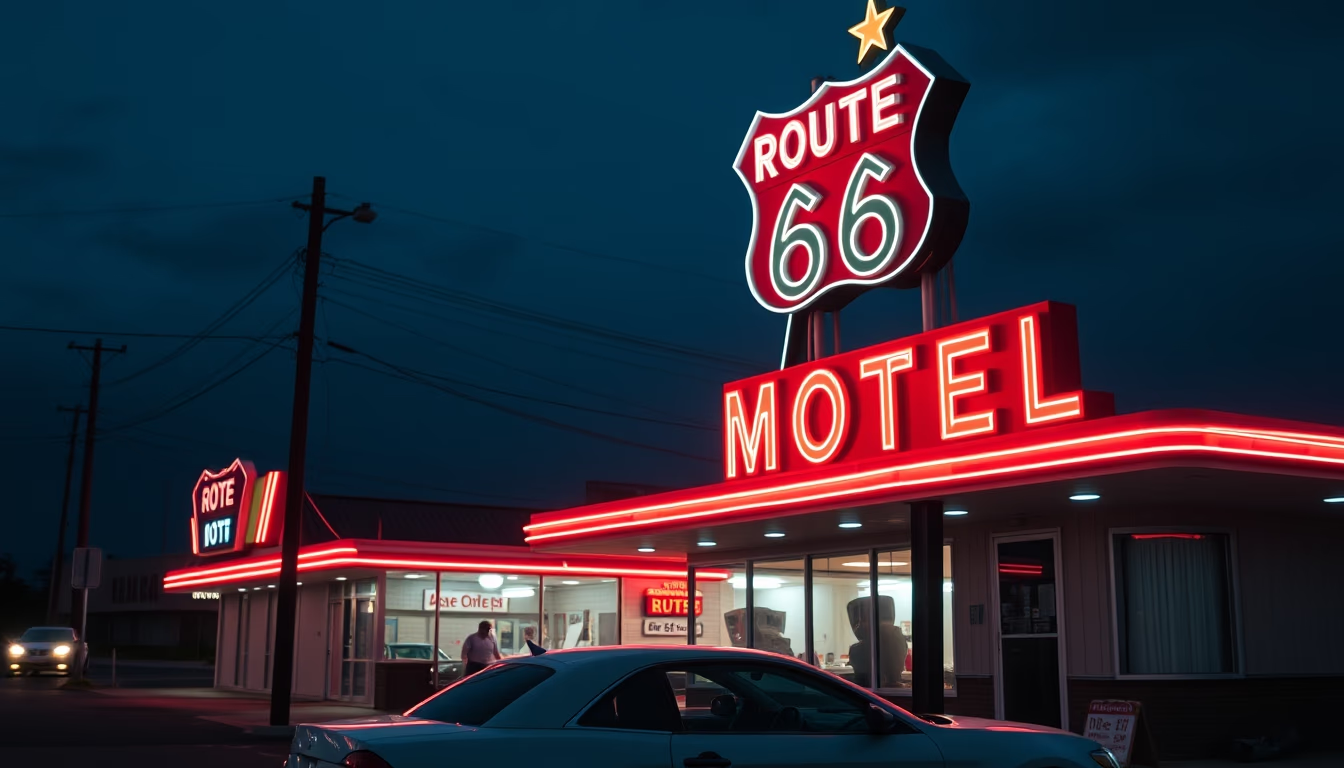
Neon signs of historic Route 66 motels reveal the golden age of American highways and car culture.
About this subject
Route 66, established in 1926, connected Chicago to Santa Monica, California, driving road tourism across the United States. Along its 2,448 miles, hundreds of motels emerged to serve travelers seeking cheap and charming lodging. Many of these establishments, with typical 1950s architecture, used neon signs to stand out at night. Neon, a noble gas emitting reddish-orange light when electrified, was combined with other gases and phosphors to create vibrant colors, becoming synonymous with the road.
Motels like the Blue Swallow Motel in Tucumcari, New Mexico, or the Wigwam Motel in Holbrook, Arizona, preserve original signs that are now historic landmarks. Sign designs ranged from geometric shapes to figures like arrows, stars, and even Native Americans, reflecting the era's kitsch aesthetic. Dramatic lighting with deep shadows and high contrast, known as Rembrandt lighting, is a style often used to highlight the texture of signs and the nostalgic atmosphere.
Following the decline of Route 66 after the interstate highway system's construction in the 1970s, many motels closed, but some were restored thanks to preservation movements. The National Park Service created the Route 66 Corridor Preservation Program, and the road was designated a Historic Route in 1985. Today, neon signs are photographed by travelers worldwide and are symbols of American culture, appearing in films, music, and art. The Rembrandt lighting technique used in some modern photographs emphasizes the contrast between neon light and dark shadows, evoking the spirit of Route 66.
Frequently Asked Questions
What is the origin of neon signs on Route 66 motels?
Neon signs began to be used in the 1920s and became popular in the 1950s and 1960s, when Route 66 was at its peak. They served to attract drivers at night and make motels stand out against the landscape.
Which are the most iconic Route 66 motels with preserved neon?
Examples include the Blue Swallow Motel (New Mexico), Wigwam Motel (Arizona), and El Vado Motel (New Mexico). All maintain restored original signs and are must-sees for enthusiasts.
Why is Rembrandt lighting associated with Route 66 photos?
Rembrandt lighting creates dramatic shadows and highlights the glow of neon, enhancing the nostalgic atmosphere and texture of signs. It is a popular technique in night photography to evoke the classic visual style of the road.
Direct URL
https://pub-c7d6a6ea828543ac903a74a341ccb2e1.r2.dev/imagens/route-66-motel-neon-rembrandt-lighting-dramatic-shadows-fresh13.avifHow to credit
Include a visible link back to UtilizAí. Copy one of the snippets below:
<a href="https://xn--utiliza-eza.com/en/midia/imagens/route-66-motel-neon-rembrandt-lighting-dramatic-shadows-fresh13">Route 66 motel neon</a> by <a href="https://xn--utiliza-eza.com">UtilizAí</a>, licensed under <a href="https://creativecommons.org/licenses/by/4.0/">CC BY 4.0</a>.
[Route 66 motel neon](https://xn--utiliza-eza.com/en/midia/imagens/route-66-motel-neon-rembrandt-lighting-dramatic-shadows-fresh13) by [UtilizAí](https://xn--utiliza-eza.com), CC BY 4.0
License: CC-BY-4.0