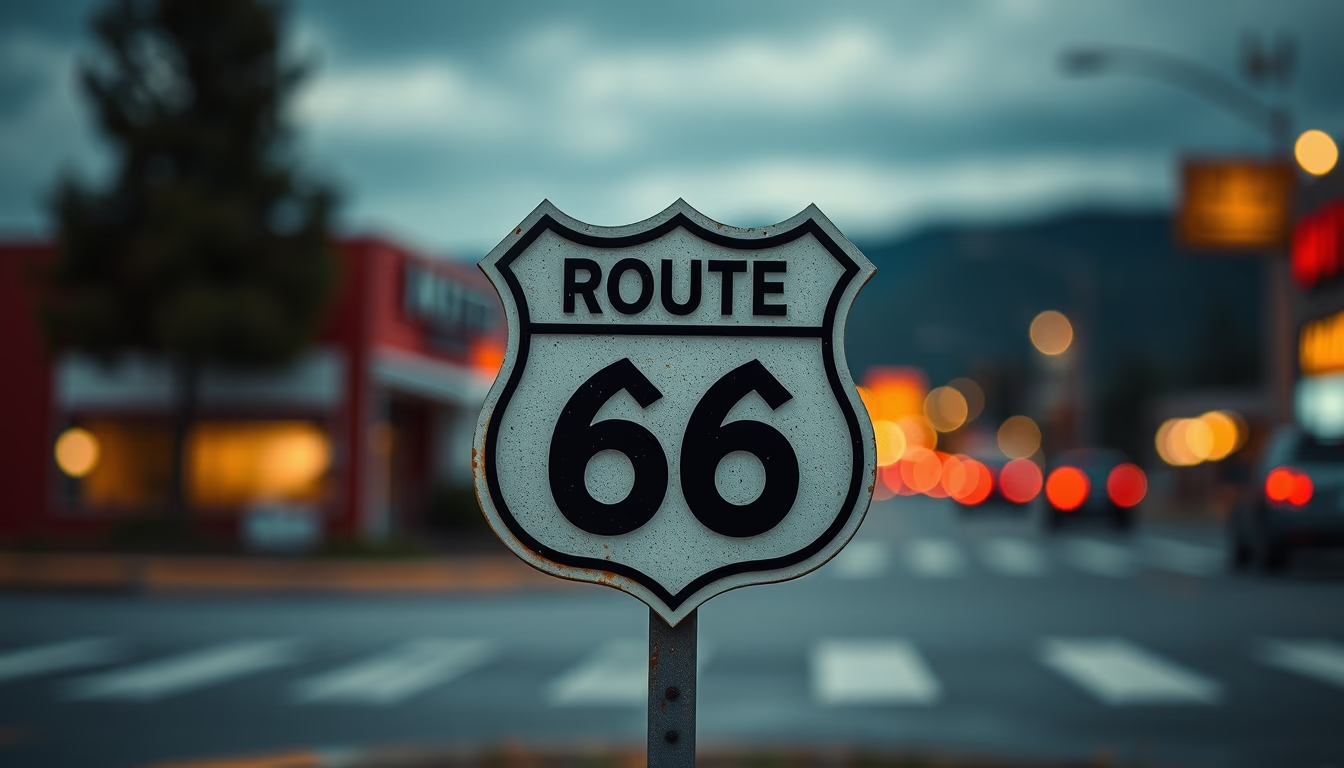
Route 66 motel neon
1344×768 · AVIF · CC BY 4.0
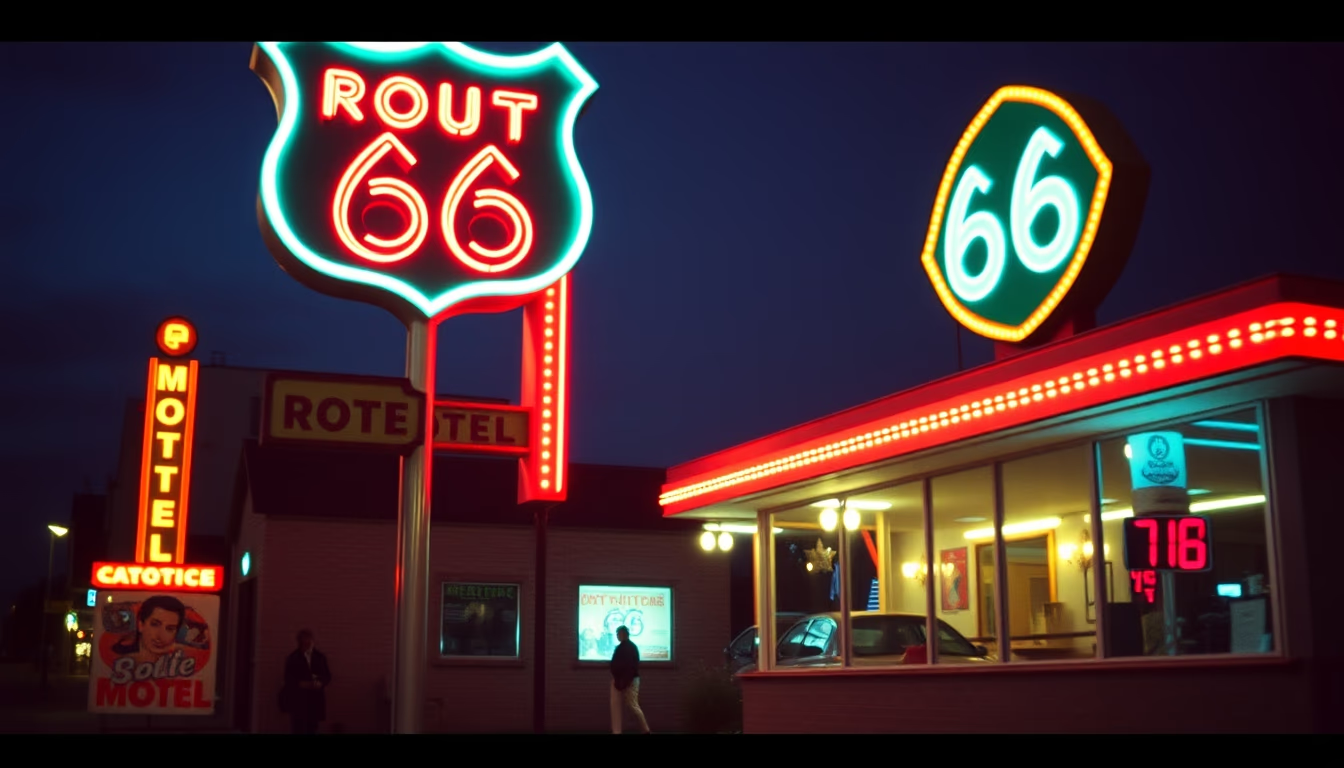
The neon sign of a motel along historic Route 66, symbol of the golden age of American road trips and highway tourism.
About this subject
Route 66, also known as the Main Street of America, was one of the first highways in the U.S. federal system, officially established in 1926. Stretching 2,448 miles (3,940 km), it connected Chicago, Illinois, to Santa Monica, California, crossing eight states and diverse landscapes, from the Midwest plains to the Arizona desert. During its heyday in the 1940s and 1950s, the route was the main artery for migrants, tourists, and truckers, fostering a thriving roadside economy of gas stations, diners, souvenir shops, and, of course, motels.
Motels along Route 66 became cultural icons, with neon signs advertising vacancies, pools, and air conditioning. Neon, imported from Europe and popularized in the U.S. in the 1920s, peaked after World War II. The luminous signs, with geometric shapes and vibrant colors, attracted weary travelers and created an unmistakable nocturnal landscape. Each motel aimed to stand out with unique designs, such as arrow-shaped signs or names spelled with flashing lights, reinforcing the entrepreneurial spirit and friendly competition.
The advent of interstate highways in the 1970s caused Route 66 to lose traffic, leading to many business closures. However, preservation efforts beginning in the 1990s revitalized the route. Today, several motels with original neon signs have been restored, such as the Blue Swallow Motel in Tucumcari, New Mexico, and the El Vado Motel in Albuquerque. They serve as living museums, attracting vintage car enthusiasts, photographers, and tourists seeking the nostalgia of an era when travel was an adventure. The road has also inspired songs, films, and TV series, cementing its place in popular culture.
Frequently Asked Questions
What is Route 66?
Route 66 is a historic U.S. highway, established in 1926, that ran from Chicago, Illinois, to Santa Monica, California. It was one of the first paved roads in the country and became a symbol of American road culture, especially during the 1940s and 1950s.
Why are neon signs famous on Route 66?
Neon signs were the most common and attractive form of advertising for motels and roadside businesses during Route 66's peak. They created a vibrant nighttime landscape and helped tired drivers locate services. Many have been preserved as icons of the golden age of road trips.
Which famous Route 66 motels still exist?
Historic motels such as the Blue Swallow Motel in Tucumcari, New Mexico, and the El Vado Motel in Albuquerque, New Mexico, have been restored and still operate with their original neon signs. Other examples include the Wigwam Motel in Holbrook, Arizona, and the Munger Moss Motel in Lebanon, Missouri.
Direct URL
https://pub-c7d6a6ea828543ac903a74a341ccb2e1.r2.dev/imagens/route-66-motel-neon-lo-fi-disposable-camera-fresh7.avifHow to credit
Include a visible link back to UtilizAí. Copy one of the snippets below:
<a href="https://xn--utiliza-eza.com/en/midia/imagens/route-66-motel-neon-lo-fi-disposable-camera-fresh7">Route 66 motel neon</a> by <a href="https://xn--utiliza-eza.com">UtilizAí</a>, licensed under <a href="https://creativecommons.org/licenses/by/4.0/">CC BY 4.0</a>.
[Route 66 motel neon](https://xn--utiliza-eza.com/en/midia/imagens/route-66-motel-neon-lo-fi-disposable-camera-fresh7) by [UtilizAí](https://xn--utiliza-eza.com), CC BY 4.0
License: CC-BY-4.0