Route 66 motel neon
1344×768 · AVIF · CC BY 4.0
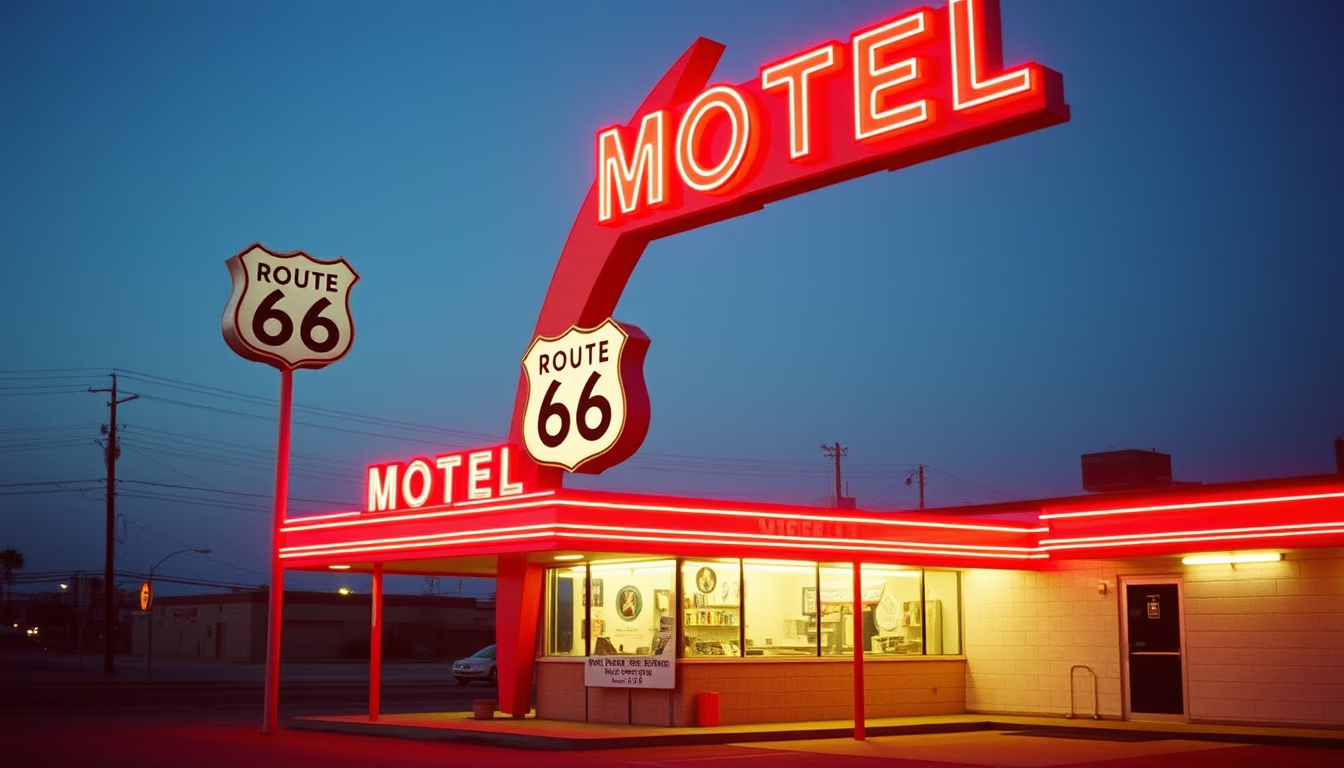
A neon motel sign on the iconic Route 66 symbolizes the golden age of American road trips, with its vintage aesthetic and shimmering lights.
About this subject
Route 66, also known as the Main Street of America or the Mother Road, was one of the first federal highways in the United States, established in 1926. It connected Chicago to Santa Monica, California, crossing eight states and about 2,448 miles (3,940 km) of diverse landscapes from the Midwest to the Pacific. Along its path, motels, gas stations, and diners with vibrant neon signs proliferated, becoming icons of car culture. These establishments catered to travelers seeking cheap and picturesque accommodation, especially during the tourism boom of the 1950s and 1960s.
The neon signs of Route 66 motels are examples of postwar American commercial design, often featuring bold geometric shapes and fluorescent colors such as red, blue, and yellow. Neon, a noble gas that emits light when electrified, was widely used to attract motorists driving at night. Each sign told a local story: names like Blue Swallow Motel, Wigwam Village, or El Vado evoked regional fantasies and unique experiences. Many of these motels survived the partial decommissioning of Route 66 in 1985, when it was replaced by interstates, and today are preserved or restored tourist attractions.
The vintage aesthetic of these signs has inspired preservation and nostalgia movements. In 2020, the Route 66 Road Ahead Partnership counted over 400 historic motels along the highway, of which roughly 100 still display original neon signs. Photographing such signs captures not only the lighting but the sense of freedom and adventure associated with car travel. The film grain texture, as indicated by the tags, refers to analog images from past decades, enhancing historical authenticity.
Route 66 became a symbol of American culture abroad, appearing in songs, movies, and TV shows. The image of a neon motel sign at night evokes a feeling of journey, of stopping at a place that has not changed for decades. It is a testament to the golden age of road trips when the road itself was the experience.
Frequently Asked Questions
What is the cultural significance of neon signs on Route 66?
Neon signs are symbols of the heyday of American road travel, representing postwar commercial design, hospitality, and nostalgia for the golden age of road trips. They attracted nighttime travelers and became visual landmarks along the route.
How many historic motels still exist on Route 66?
According to the Route 66 Road Ahead Partnership, over 400 historic motels have been identified along the highway. Of these, roughly 100 still display original neon signs, many restored by preservation efforts.
Why is the film grain effect associated with images of Route 66?
Film grain evokes analog photography from the 1940s to 1970s, the peak period of Route 66. This aesthetic effect enhances historical authenticity and a nostalgic feel, accentuating the vintage atmosphere of roadside scenes.
Direct URL
https://pub-c7d6a6ea828543ac903a74a341ccb2e1.r2.dev/imagens/route-66-motel-neon-film-grain-authentic-fresh6.avifHow to credit
Include a visible link back to UtilizAí. Copy one of the snippets below:
<a href="https://xn--utiliza-eza.com/en/midia/imagens/route-66-motel-neon-film-grain-authentic-fresh6">Route 66 motel neon</a> by <a href="https://xn--utiliza-eza.com">UtilizAí</a>, licensed under <a href="https://creativecommons.org/licenses/by/4.0/">CC BY 4.0</a>.
[Route 66 motel neon](https://xn--utiliza-eza.com/en/midia/imagens/route-66-motel-neon-film-grain-authentic-fresh6) by [UtilizAí](https://xn--utiliza-eza.com), CC BY 4.0
License: CC-BY-4.0