Rosetta stone
1344×768 · AVIF · CC BY 4.0
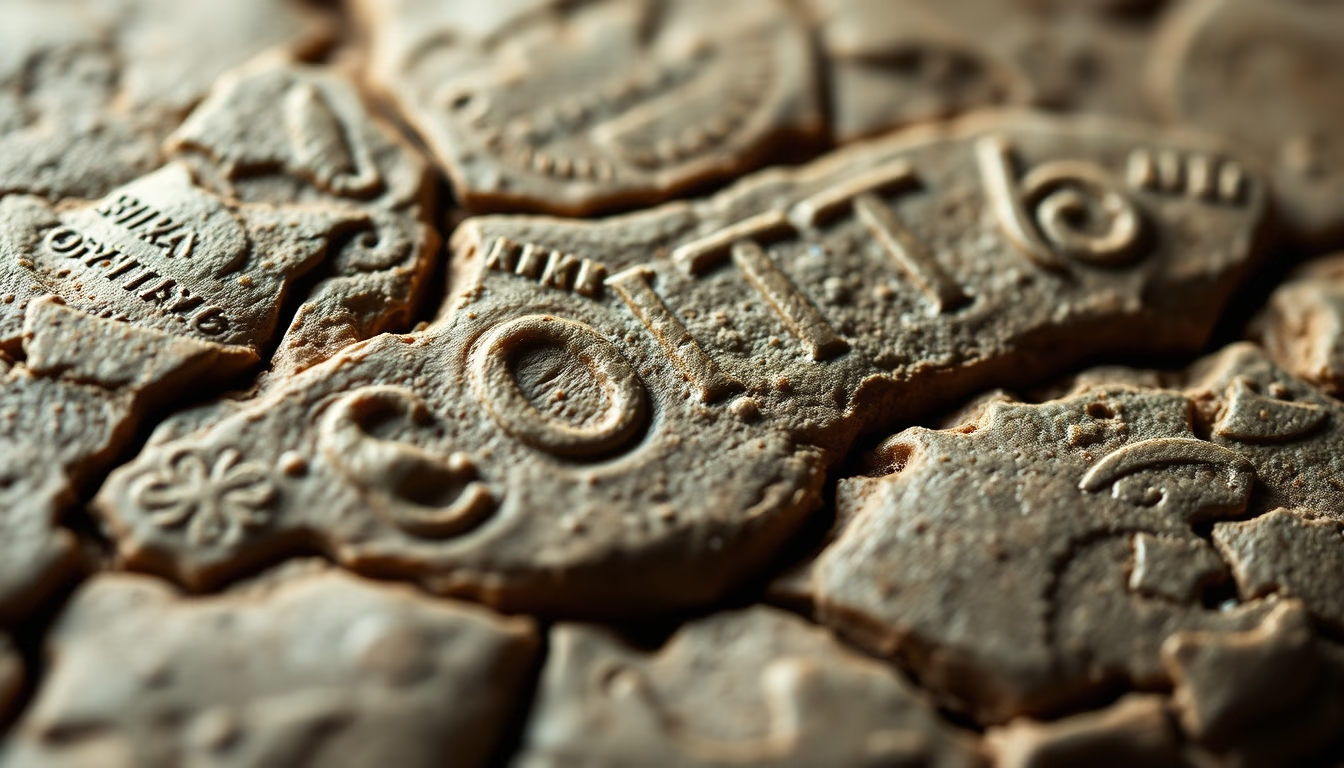
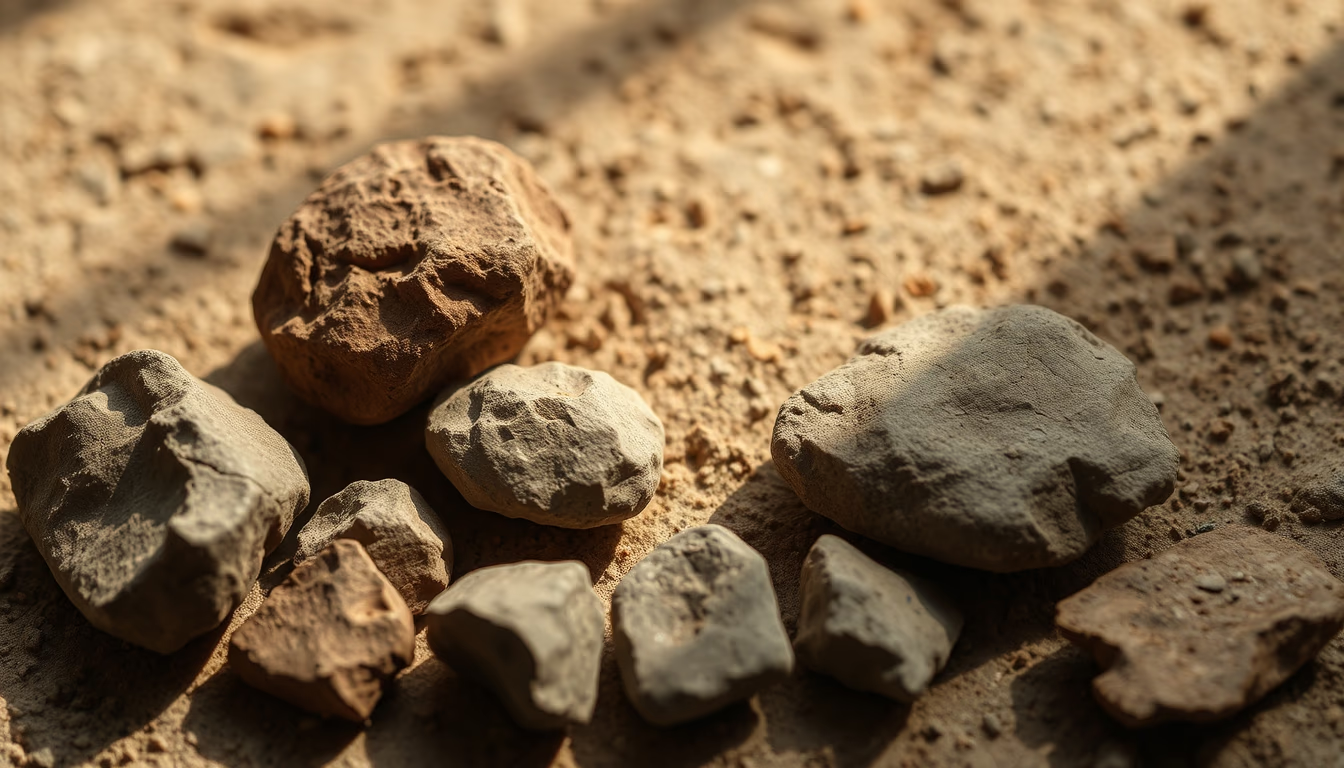
The Rosetta Stone, discovered in 1799, was key to deciphering Egyptian hieroglyphs, featuring inscriptions in three scripts.
About this subject
The Rosetta Stone is a fragment of a granodiorite stele, carved in 196 BC during the reign of Ptolemy V Epiphanes, a pharaoh of Ptolemaic Egypt. The text records a decree issued by a synod of priests in Memphis, establishing the royal cult of Ptolemy V and praising his contributions to temples. The original stele stood about 1.5 meters tall, but the preserved fragment is approximately 112 cm high, 76 cm wide, and 28 cm thick.
The stone's importance lies in containing the same decree in three scripts: Egyptian hieroglyphs, Demotic script, and Ancient Greek. The Greek text was known, allowing scholars, notably Jean-François Champollion, to compare scripts and decipher hieroglyphs starting in 1822. The stone was discovered by French soldiers near the town of Rashid (Rosetta) in the Nile Delta during Napoleon's campaign in Egypt. After the French defeat, it was taken by the British and has been in the British Museum since 1802, where it is one of the most visited objects.
Deciphering hieroglyphs opened the door to studying ancient Egyptian civilization, revealing literature, history, and religious practices. The stone is monolingual but trilateral, with the hieroglyphic text damaged, yet sufficient for Champollion's work. Interestingly, the decree was issued 9 years after Ptolemy V's coronation, and the stone was reused as construction material before its rediscovery.
Frequently Asked Questions
Where was the Rosetta Stone found?
It was discovered in 1799 by French soldiers near the town of Rashid (Rosetta) in the Nile Delta, Egypt, during Napoleon's campaign.
Why is the Rosetta Stone so important?
Because it contains the same text in three different scripts, it allowed the decipherment of Egyptian hieroglyphs, which had been a mystery for centuries.
Who deciphered the hieroglyphs using the Rosetta Stone?
The main credit goes to French scholar Jean-François Champollion, who announced his breakthrough in 1822, although others like Thomas Young also contributed.
Direct URL
https://pub-c7d6a6ea828543ac903a74a341ccb2e1.r2.dev/imagens/rosetta-stone-macro-closeup-p5.avifHow to credit
Include a visible link back to UtilizAí. Copy one of the snippets below:
<a href="https://xn--utiliza-eza.com/en/midia/imagens/rosetta-stone-macro-closeup-p5">Rosetta stone</a> by <a href="https://xn--utiliza-eza.com">UtilizAí</a>, licensed under <a href="https://creativecommons.org/licenses/by/4.0/">CC BY 4.0</a>.
[Rosetta stone](https://xn--utiliza-eza.com/en/midia/imagens/rosetta-stone-macro-closeup-p5) by [UtilizAí](https://xn--utiliza-eza.com), CC BY 4.0
License: CC-BY-4.0