Rosetta stone
1344×768 · AVIF · CC BY 4.0

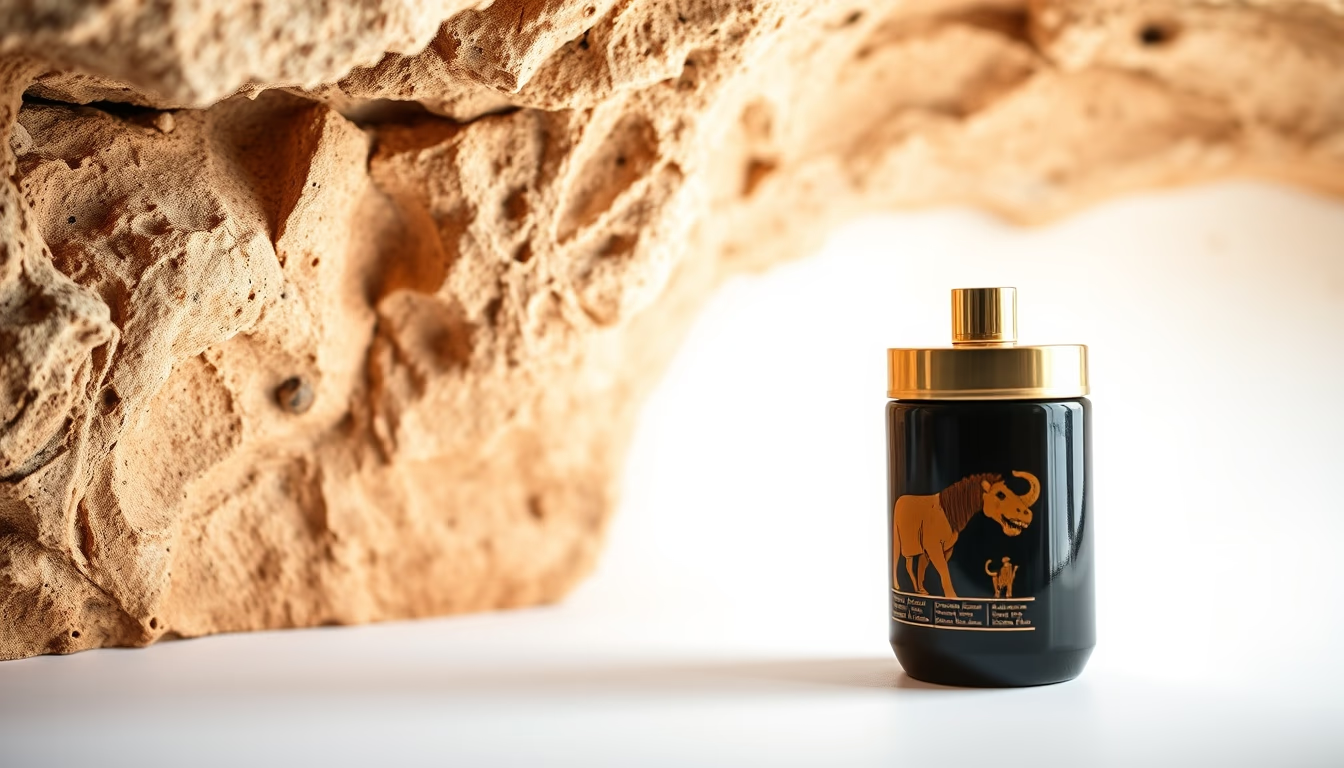
The Rosetta Stone is an ancient Egyptian stele fragment that enabled the decipherment of Egyptian hieroglyphs, revolutionizing Egyptology.
About this subject
Discovered on July 15, 1799, by French soldiers during Napoleon's campaign in Egypt, the Rosetta Stone is a granodiorite stele inscribed with a decree issued at Memphis in 196 BC. The decree, written in three scripts (hieroglyphic, demotic, and ancient Greek), honors Pharaoh Ptolemy V Epiphanes. The presence of known Greek text allowed scholar Jean-François Champollion to decipher the hieroglyphs in 1822, unlocking the understanding of ancient Egyptian civilization.
Currently housed in the British Museum in London, the stone measures approximately 112.3 cm in height, 75.7 cm in width, and 28.4 cm in thickness, weighing about 760 kg. It has minor damage and gaps, especially on the upper left corner where some hieroglyphs are missing. Since its discovery, the Rosetta Stone has become a symbol of the key to deciphering codes and lost languages, and it lends its name to a famous language-learning software.
The historical significance of the artifact extends beyond Egyptology: it represents a milestone in the scientific method of linguistic analysis and an example of how multilingual documents can unveil ancient cultures. The stone has also sparked repatriation controversies, with Egypt requesting its return since the 1920s, without success. In 2022, scientists created a high-resolution 3D replica for study and virtual exhibitions.
Frequently Asked Questions
What is written on the Rosetta Stone?
The Rosetta Stone contains a decree from Pharaoh Ptolemy V from 196 BC, recorded in three scripts: Egyptian hieroglyphs, demotic script, and ancient Greek. The text establishes the cult of the pharaoh and grants tax exemptions to temples.
Who deciphered the Rosetta Stone and how?
French linguist Jean-François Champollion deciphered the hieroglyphs in 1822. He compared the names of kings in hieroglyphic cartouches with their Greek versions, identifying sounds and meanings.
Why is the Rosetta Stone in the British Museum and not in Egypt?
After the French defeat, the stone was handed over to the British as part of the Treaty of Alexandria in 1801. It has been in the British Museum ever since, despite repeated repatriation requests from Egypt.
Direct URL
https://pub-c7d6a6ea828543ac903a74a341ccb2e1.r2.dev/imagens/rosetta-stone-documentary-photography-p1.avifHow to credit
Include a visible link back to UtilizAí. Copy one of the snippets below:
<a href="https://xn--utiliza-eza.com/en/midia/imagens/rosetta-stone-documentary-photography-p1">Rosetta stone</a> by <a href="https://xn--utiliza-eza.com">UtilizAí</a>, licensed under <a href="https://creativecommons.org/licenses/by/4.0/">CC BY 4.0</a>.
[Rosetta stone](https://xn--utiliza-eza.com/en/midia/imagens/rosetta-stone-documentary-photography-p1) by [UtilizAí](https://xn--utiliza-eza.com), CC BY 4.0
License: CC-BY-4.0