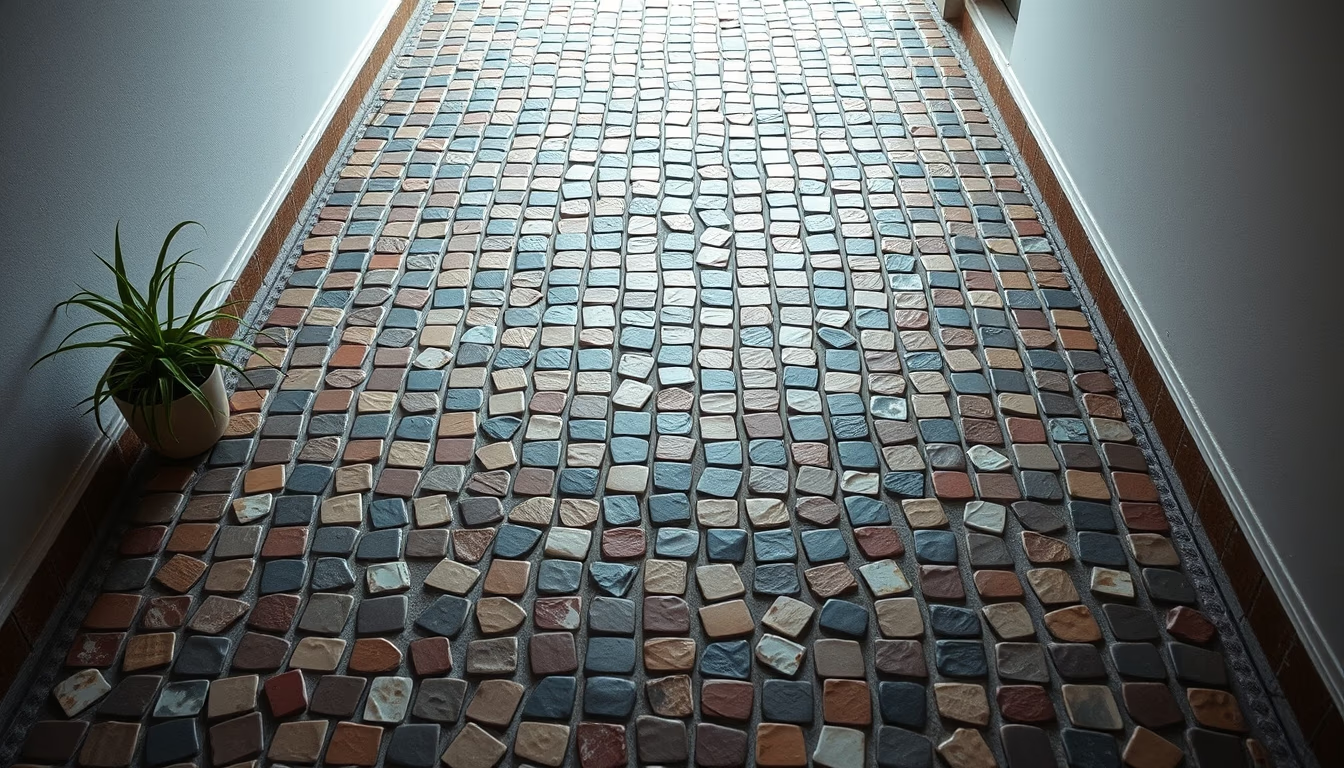
Roman mosaic floor
1344×768 · AVIF · CC BY 4.0
Explore the history and technique of Roman mosaic floors, archaeological treasures that reveal the culture and art of Ancient Rome.
About this subject
Roman mosaic floors are among the most impressive legacies of Classical Antiquity. Made from small pieces of stone, glass, or ceramic called tesserae, these mosaics decorated everything from luxurious villas to public baths and temples. The technique peaked between the 2nd century BC and the 5th century AD, especially during the Roman Empire, when artisans created geometric compositions, mythological scenes, and everyday depictions. Famous examples include the Alexander Mosaic found in Pompeii and the mosaics of the Villa Romana del Casale in Sicily, which astonish with their wealth of detail and color.
The production of a Roman mosaic involved a meticulous process. First, a stable mortar base was prepared, onto which the tesserae were laid one by one. Designs could be made directly on site or on prefabricated panels. The variety of materials allowed vibrant hues: white marble for backgrounds, blue glass for the sea, terracotta for earthy tones. Mosaics were not only decorative but also functional, helping to insulate the environment and being durable. Many survived for millennia thanks to the eruption of Vesuvius in 79 AD, which buried cities like Pompeii and Herculaneum, preserving floors, walls, and objects in exceptional condition.
The symbolism of Roman mosaics reflected social values and beliefs. Hunting scenes, banquets, and mythology demonstrated status and education. Geometric mosaics, such as meander and interlace patterns, also carried meanings of order and eternity. Today, these artifacts are studied by archaeologists to understand routines, economy, and cultural exchanges. Many are in museums, like the National Roman Museum, or protected in situ. Preservation faces challenges such as degradation from moisture and pollution, but 3D digitalization projects have enabled detailed records and virtual access for the public.
Frequently Asked Questions
How were Roman mosaics made?
They were made with small cubes of stone, glass, or ceramic called tesserae, set into a mortar base. Artisans created patterns or scenes directly on site or on panels.
What is the most famous Roman mosaic?
The Alexander Mosaic, found in the House of the Faun in Pompeii, depicting the Battle of Issus between Alexander and Darius III. Another is the Gladiator Mosaic from the Borghese Villa.
Why are so many Roman mosaics so well preserved?
The eruption of Vesuvius in 79 AD covered entire cities with volcanic ash, protecting the mosaics from decay. Their durability also comes from the craftsmanship and burial conditions.
Direct URL
https://pub-c7d6a6ea828543ac903a74a341ccb2e1.r2.dev/imagens/roman-mosaic-floor-studio-still-life-p5.avifHow to credit
Include a visible link back to UtilizAí. Copy one of the snippets below:
<a href="https://xn--utiliza-eza.com/en/midia/imagens/roman-mosaic-floor-studio-still-life-p5">Roman mosaic floor</a> by <a href="https://xn--utiliza-eza.com">UtilizAí</a>, licensed under <a href="https://creativecommons.org/licenses/by/4.0/">CC BY 4.0</a>.
[Roman mosaic floor](https://xn--utiliza-eza.com/en/midia/imagens/roman-mosaic-floor-studio-still-life-p5) by [UtilizAí](https://xn--utiliza-eza.com), CC BY 4.0
License: CC-BY-4.0