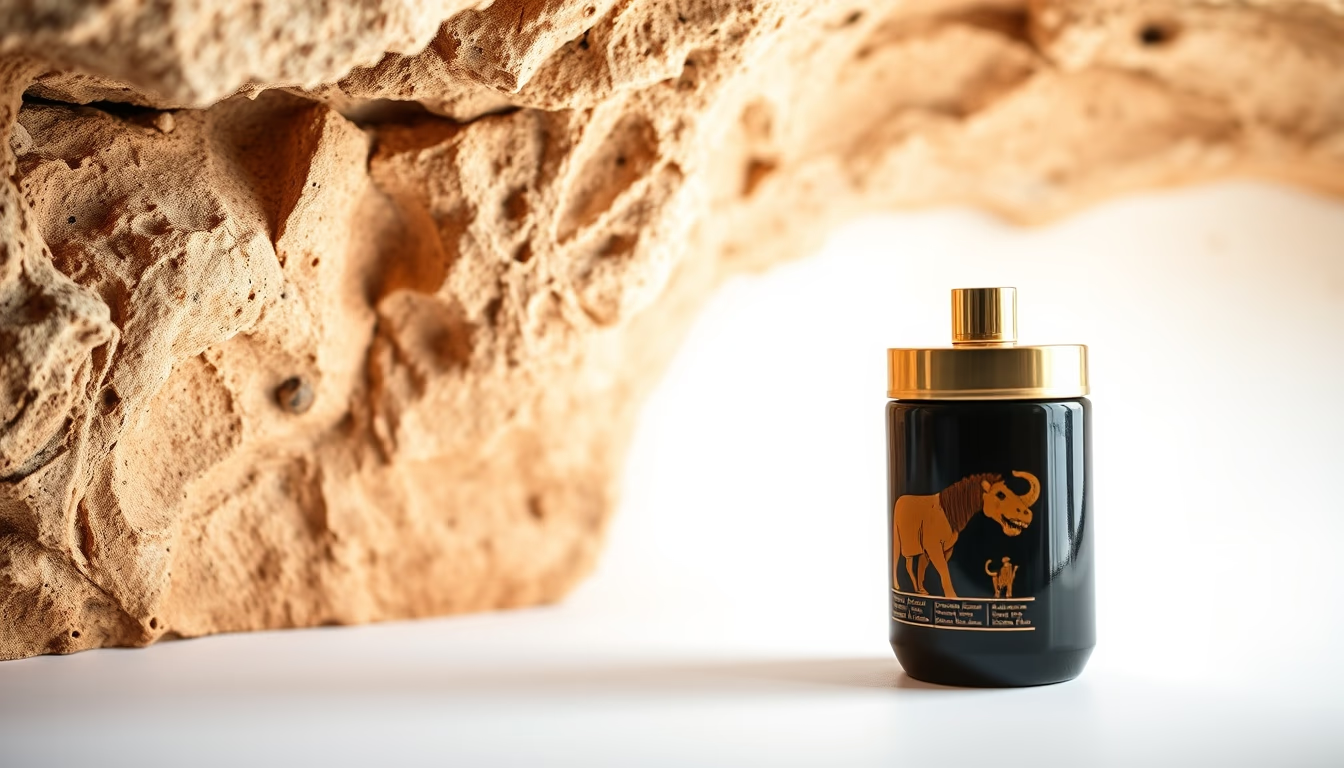
Roman mosaic floor
1344×768 · AVIF · CC BY 4.0

Roman mosaic floors reveal the art and engineering of the Empire, featuring geometric patterns and mythological scenes made of thousands of tesserae.
About this subject
Roman mosaics were decorative floors made of small pieces of stone, glass, or ceramic called tesserae, forming geometric patterns, human figures, animals, or mythological scenes. They were common in noble houses, public baths, and temples from the 2nd century BC to the 5th century AD. The most used technique was opus tessellatum, with square tesserae of 0.5 to 1.5 cm. Opus vermiculatum used smaller, irregular pieces for precise details like faces.
These floors not only beautified spaces but also provided thermal insulation and indicated social status. The Alexander Mosaic from the House of the Faun in Pompeii (circa 100 BC) is one of the most famous, depicting the Battle of Issus. Other notable sites include Hadrian's Villa in Tivoli and the ruins of Conímbriga in Portugal. Colors came from natural materials: white marble, black basalt, blue glass, and reddish terracotta.
Production required planning: designs were made on clay or papyrus and transferred to the floor. Artisans called musivarii fixed the tesserae onto a mortar base. Signed mosaics show that many artists were Greeks brought as slaves or immigrants. With the fall of the Roman Empire, the technique declined but influenced Byzantine and medieval art.
Today, these mosaics are valuable historical sources. Their preservation depends on environmental conditions and archaeological efforts. Visitors to sites like Pompeii can see original floors, while many are in museums such as the Louvre and the Museo Nazionale Romano.
Frequently Asked Questions
How were Roman mosaics made?
Roman mosaics were made by placing tesserae (small pieces of stone, glass, or ceramic) onto a mortar base. The design was planned in advance, and artisans used techniques like opus tessellatum (square tesserae) and opus vermiculatum (smaller pieces for details).
Where can I see preserved Roman mosaics?
Roman mosaics can be seen at archaeological sites such as Pompeii (Italy), Conímbriga (Portugal), and Hadrian's Villa (Tivoli). Many are displayed in museums like the Museo Nazionale Romano and the Louvre.
What is the difference between Roman and Greek mosaics?
Greek mosaics predominantly used natural pebbles, while Romans introduced cut tesserae, allowing greater precision and color variety. Romans also expanded the use to large-scale floors and complex narrative themes.
Direct URL
https://pub-c7d6a6ea828543ac903a74a341ccb2e1.r2.dev/imagens/roman-mosaic-floor-long-exposure-p6.avifHow to credit
Include a visible link back to UtilizAí. Copy one of the snippets below:
<a href="https://xn--utiliza-eza.com/en/midia/imagens/roman-mosaic-floor-long-exposure-p6">Roman mosaic floor</a> by <a href="https://xn--utiliza-eza.com">UtilizAí</a>, licensed under <a href="https://creativecommons.org/licenses/by/4.0/">CC BY 4.0</a>.
[Roman mosaic floor](https://xn--utiliza-eza.com/en/midia/imagens/roman-mosaic-floor-long-exposure-p6) by [UtilizAí](https://xn--utiliza-eza.com), CC BY 4.0
License: CC-BY-4.0