Roman mosaic floor
1344×768 · AVIF · CC BY 4.0
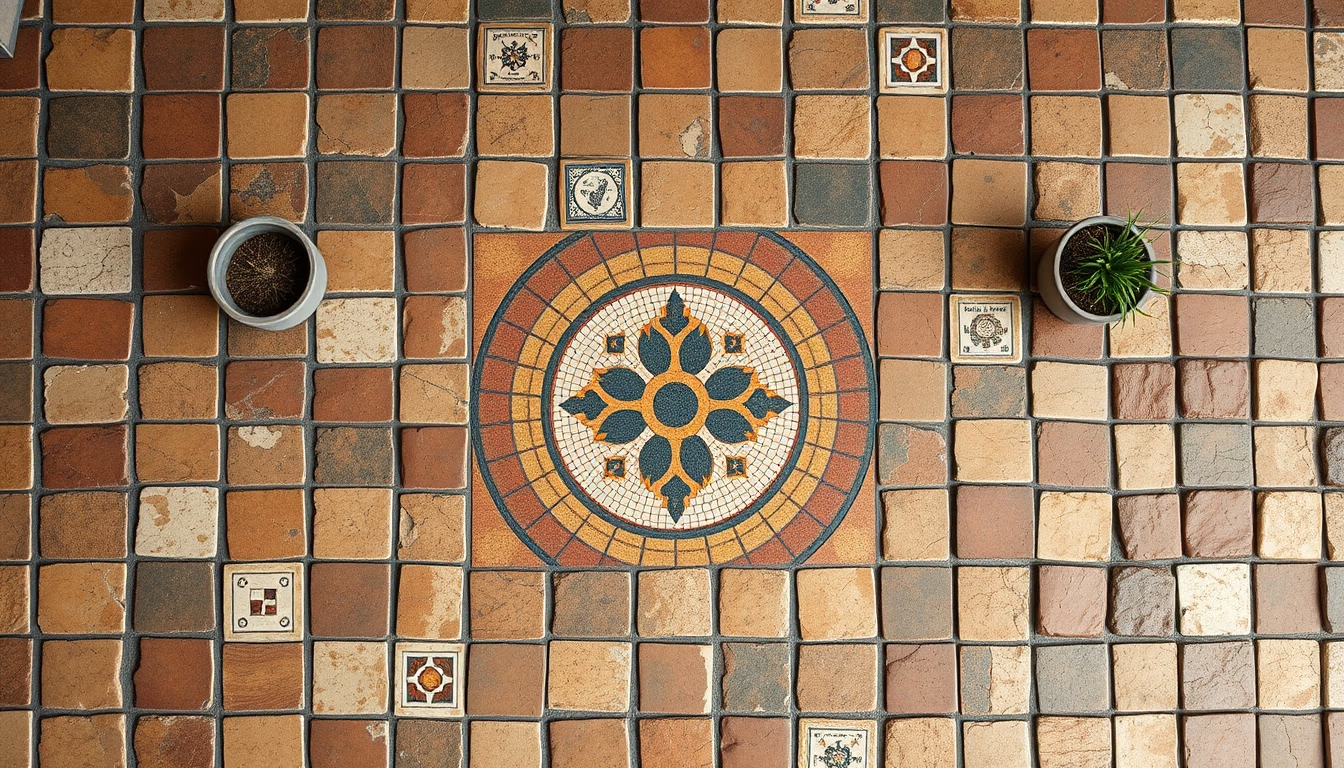
Roman mosaic floors are testaments to the engineering and art of Ancient Rome, with techniques that endure to this day.
About this subject
Roman mosaics are artistic compositions made of small colored pieces called tesserae, usually marble, glass, or ceramic. This decorative technique was widely used in floors of homes, temples, and public baths, especially between the 2nd century BC and 5th century AD. Themes ranged from mythological scenes and historical battles to geometric patterns and everyday life depictions, such as the famous 'Cave Canem' (Beware of the dog) inscription found in Pompeii.
Craftsmanship required exceptional skill. First, artisans prepared a mortar base, onto which the tesserae were manually set. Opus tessellatum was the most common method, using tesserae about 1 cm in size. Opus vermiculatum produced fine details with smaller pieces arranged in curved lines, ideal for portraits and complex scenes. The Alexander Mosaic in Pompeii is a notable example, depicting the Battle of Issus with remarkable precision.
Beyond aesthetics, mosaics served practical purposes: they insulated floors from moisture and were easy to clean. Many survived intact for centuries, like those at the Herculaneum archaeological site, buried by the eruption of Mount Vesuvius in 79 AD. Today, these mosaics provide valuable insights into Roman life, religion, and technology, influencing Renaissance and modern artists.
Interestingly, some Roman mosaics were reused in medieval buildings, such as in the Basilica of San Clemente in Rome, blending styles. The largest Roman mosaic ever found is in the city of Lod, Israel, covering about 180 m² and dating to the 4th century AD. Mosaic production declined with the fall of the empire, but the techniques and patterns persisted in Byzantine and Islamic art.
Frequently Asked Questions
How were Roman mosaics made?
Roman mosaics were made using small cubes of stone, glass, or ceramic (tesserae) set into wet mortar. Artisans used techniques like opus tessellatum for common patterns and opus vermiculatum for fine details.
Where are the best examples of Roman mosaics found?
Excellent examples are found in Pompeii and Herculaneum (Italy), the Villa Romana del Casale (Sicily), and the Lod archaeological site (Israel). Many are preserved because they were buried by volcanic eruptions.
Why are Roman mosaics important for history?
Mosaics reveal aspects of daily life, mythology, politics, and Roman technology. They are valuable sources for archaeologists and historians, depicting realistic and abstract scenes that complement written records.
Direct URL
https://pub-c7d6a6ea828543ac903a74a341ccb2e1.r2.dev/imagens/roman-mosaic-floor-isometric-flat-lay-p7.avifHow to credit
Include a visible link back to UtilizAí. Copy one of the snippets below:
<a href="https://xn--utiliza-eza.com/en/midia/imagens/roman-mosaic-floor-isometric-flat-lay-p7">Roman mosaic floor</a> by <a href="https://xn--utiliza-eza.com">UtilizAí</a>, licensed under <a href="https://creativecommons.org/licenses/by/4.0/">CC BY 4.0</a>.
[Roman mosaic floor](https://xn--utiliza-eza.com/en/midia/imagens/roman-mosaic-floor-isometric-flat-lay-p7) by [UtilizAí](https://xn--utiliza-eza.com), CC BY 4.0
License: CC-BY-4.0