Roman aqueduct ruins
1344×768 · AVIF · CC BY 4.0
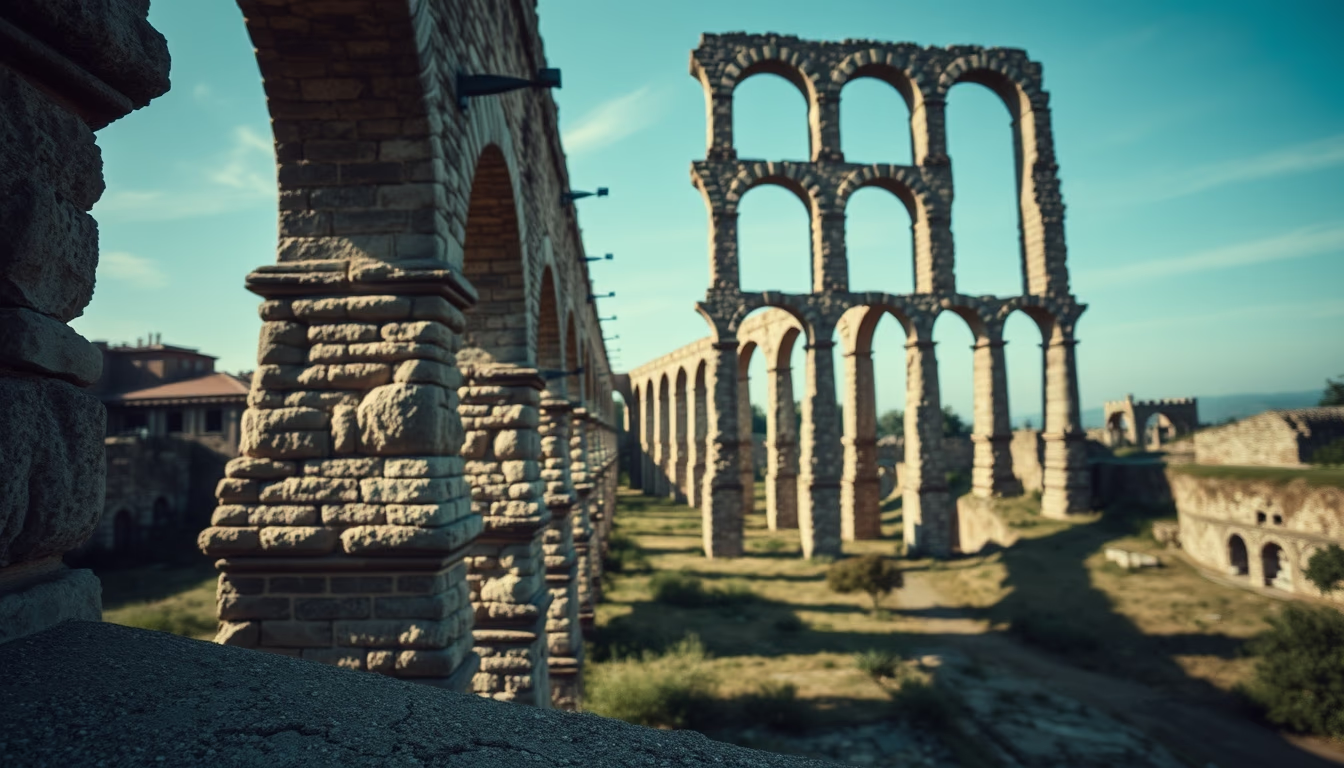
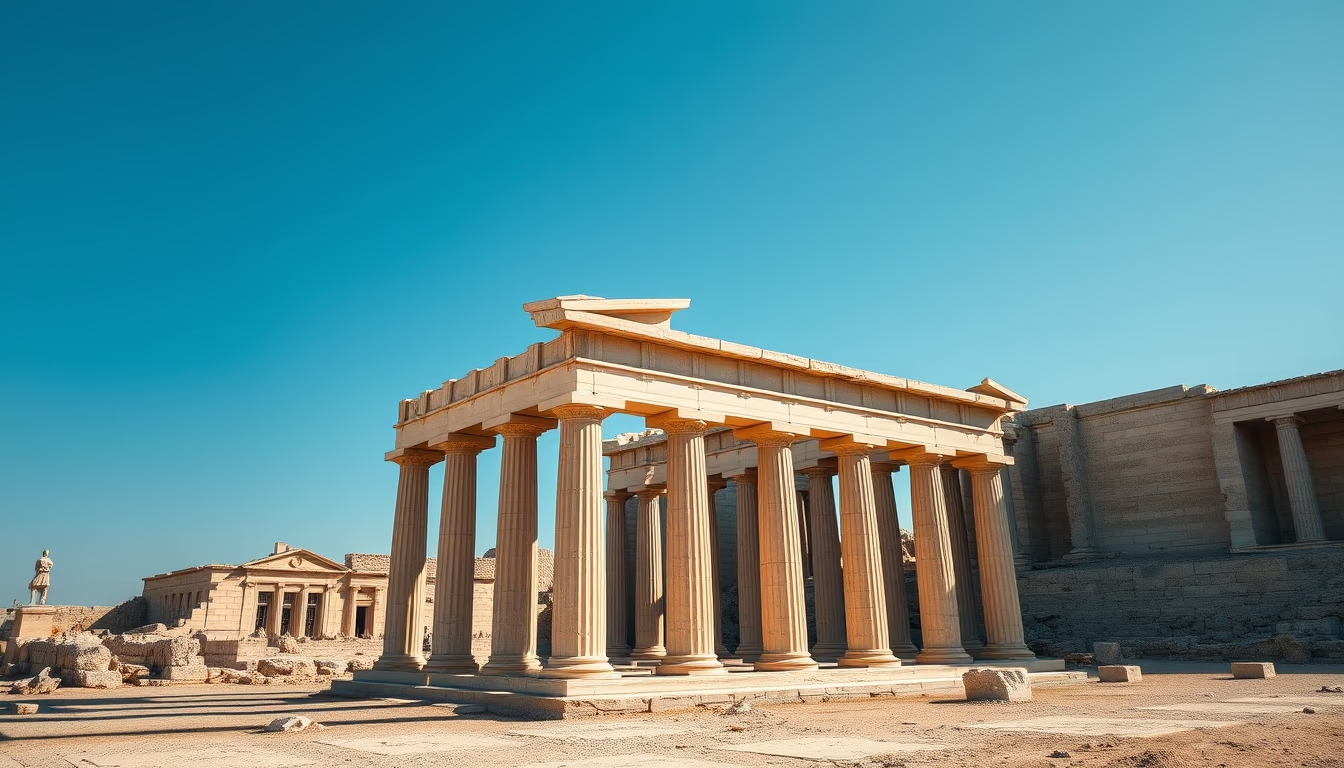
Roman aqueduct ruins: landmarks of ancient engineering that supplied water to imperial cities, now backdrops for fashion editorials and world heritage sites.
About this subject
Roman aqueducts are among the greatest achievements of ancient engineering. Built between the 4th century BCE and the 5th century CE, these structures transported water from distant sources to cities, public baths, and fountains. The longest, Aqua Marcia, stretched 91 km. Many aqueducts relied on gravity with minimal slopes, requiring millimeter precision in leveling. The Pont du Gard in France and the Segovia Aqueduct in Spain are well-preserved examples that showcase Roman mastery in stone arches. They not only demonstrate technical skill but also highlight the importance of water for hygiene and leisure in Roman culture.
Today, these ruins are tourist attractions and often serve as backdrops for cultural events and photo shoots. The combination of ancient architecture with contemporary fashion creates a striking visual contrast, explored in editorials like the one that inspired this image. Natural light highlighting the textures of stones and the vegetation that has overtaken them over centuries adds a layer of decaying beauty. Sites like the Roman Campagna or the Appian Way offer settings where past and present converge.
The preservation of aqueducts faces challenges such as pollution and urban development. Organizations like UNESCO and local governments work to maintain these monuments, which tell the story of the empire that dominated the Mediterranean. For history enthusiasts, visiting a Roman aqueduct is understanding how water management shaped Western civilization.
Frequently Asked Questions
What was the main function of Roman aqueducts?
They transported water from distant springs or rivers to cities, supplying fountains, public baths, houses, and sewage systems. Water was vital for urban life and the prestige of the Empire.
Where can I see preserved Roman aqueducts today?
Notable examples include Pont du Gard (France), Segovia Aqueduct (Spain), Aqua Claudia (Italy), and Aqueduct of the Miracles (Mérida, Spain). Many are UNESCO World Heritage sites.
How did the Romans build aqueducts without modern technology?
They used simple tools like water levels and ropes, along with slave labor. Construction involved tunneling, raising arches, and using lime mortar. Empirical knowledge ensured precise gradients.
Direct URL
https://pub-c7d6a6ea828543ac903a74a341ccb2e1.r2.dev/imagens/roman-aqueduct-ruins-high-fashion-editorial-p3.avifHow to credit
Include a visible link back to UtilizAí. Copy one of the snippets below:
<a href="https://xn--utiliza-eza.com/en/midia/imagens/roman-aqueduct-ruins-high-fashion-editorial-p3">Roman aqueduct ruins</a> by <a href="https://xn--utiliza-eza.com">UtilizAí</a>, licensed under <a href="https://creativecommons.org/licenses/by/4.0/">CC BY 4.0</a>.
[Roman aqueduct ruins](https://xn--utiliza-eza.com/en/midia/imagens/roman-aqueduct-ruins-high-fashion-editorial-p3) by [UtilizAí](https://xn--utiliza-eza.com), CC BY 4.0
License: CC-BY-4.0