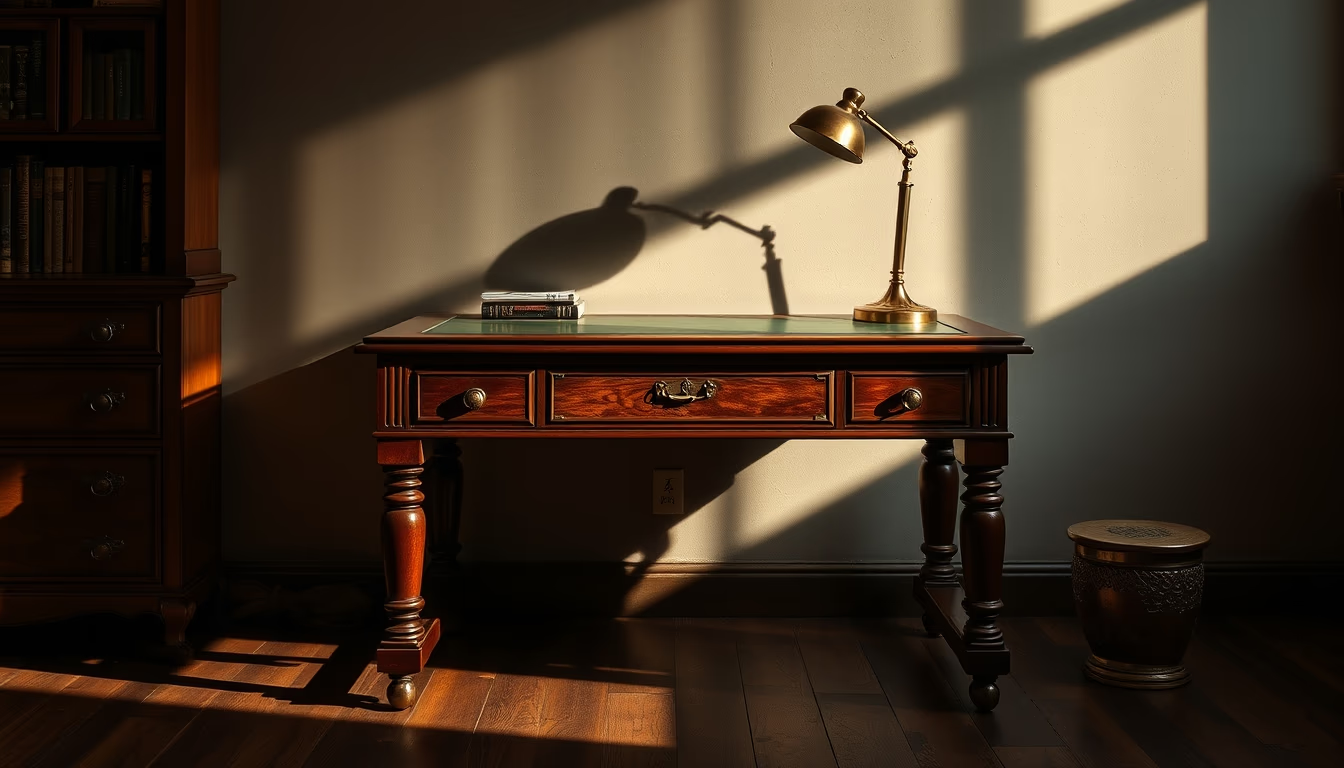
Roll top desk antique
1344×768 · AVIF · CC BY 4.0
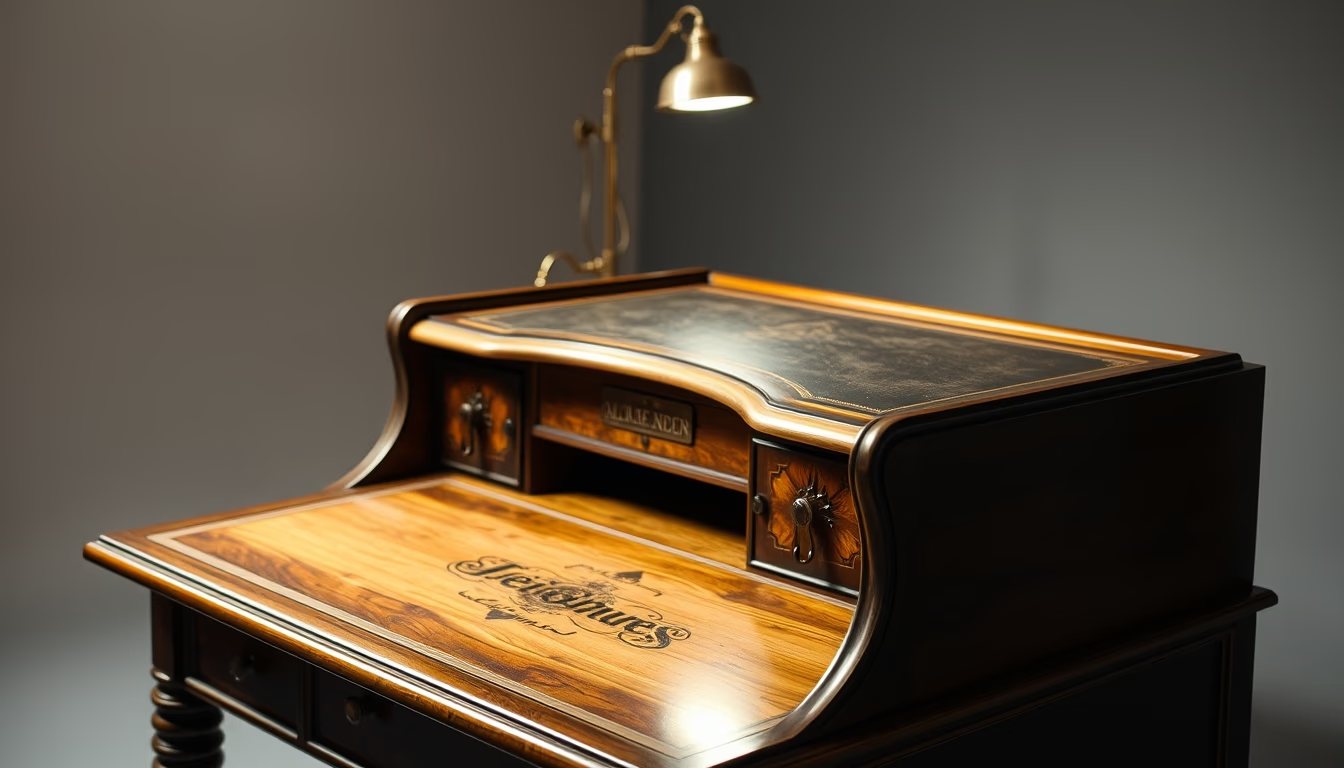
The roll top desk, a classic 19th-century piece of furniture, combines functionality and artisanal elegance with compartmentalized drawers and a rolling tambour mechanism.
About this subject
The roll top desk emerged in the United States during the 1850s and gained widespread popularity in the Victorian era as a staple for home and commercial offices. The tambour mechanism, made of wooden slats glued to a flexible canvas backing, was patented by Abner Cutler in 1854, though earlier European prototypes existed. Typical construction features a central writing surface with cubbyholes and drawers, flanked by larger file drawers, crafted from fine hardwoods such as mahogany, oak, or walnut.
The roll top design allowed users to secure all contents with a single lock, offering security and organization in an era of expanding paperwork. Prominent manufacturers like the Wooton Desk Company produced highly ornate models with carvings and inlays, regarded as status symbols. By World War I, mass production led to simpler designs, but antique pieces remain sought after by collectors and restoration enthusiasts.
In Brazil, these desks were imported by coffee barons and adapted by local workshops, blending neoclassical and art nouveau influences. Original roll top desks in good condition can fetch high prices at auction, with restorers carefully preserving the rolling mechanism and wood patina.
Frequently Asked Questions
How does the roll top mechanism work on an antique desk?
The top consists of thin wooden slats glued to a flexible fabric backing, forming a curtain that slides in side grooves. Pulling it down curves the slats and locks the desk closed.
Which woods were commonly used in antique roll top desks?
Mahogany, oak, and walnut were most common, chosen for durability and grain beauty. Luxury models used ebony, rosewood, or pau-ferro, often with inlay details.
Why was the roll top desk so popular in 19th-century offices?
It provided internal organization with many compartments and the security of a single lock, ideal for storing documents and valuables. Its compact design saved space, and the closed top hid work from view.
Direct URL
https://pub-c7d6a6ea828543ac903a74a341ccb2e1.r2.dev/imagens/roll-top-desk-antique-studio-still-life-fresh12.avifHow to credit
Include a visible link back to UtilizAí. Copy one of the snippets below:
<a href="https://xn--utiliza-eza.com/en/midia/imagens/roll-top-desk-antique-studio-still-life-fresh12">Roll top desk antique</a> by <a href="https://xn--utiliza-eza.com">UtilizAí</a>, licensed under <a href="https://creativecommons.org/licenses/by/4.0/">CC BY 4.0</a>.
[Roll top desk antique](https://xn--utiliza-eza.com/en/midia/imagens/roll-top-desk-antique-studio-still-life-fresh12) by [UtilizAí](https://xn--utiliza-eza.com), CC BY 4.0
License: CC-BY-4.0