Roll top desk antique
1344×768 · AVIF · CC BY 4.0
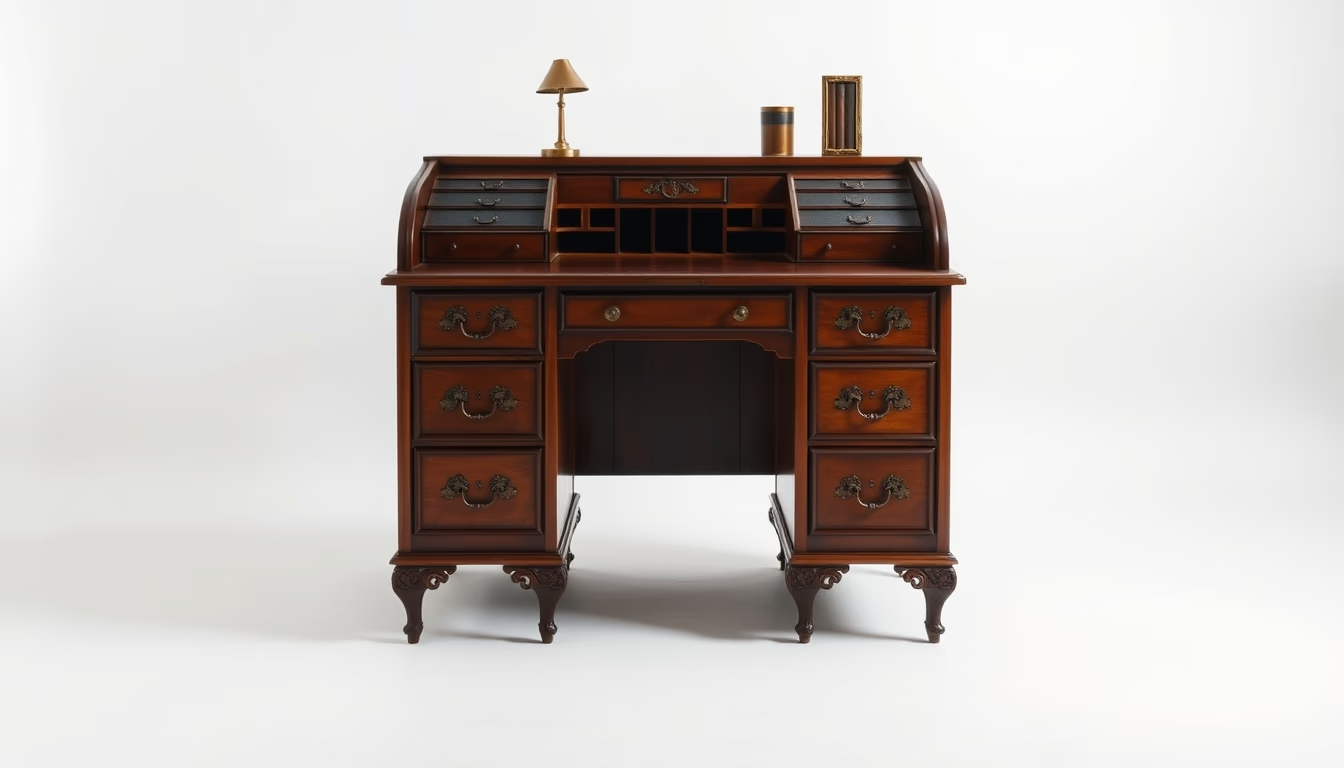
The roll top desk, a symbol of 19th century bureaucratic work, combines ingenious design with quality woodworking.
About this subject
The roll top desk, characterized by its cylindrical tambour cover, became a hallmark of office furniture in the late 19th and early 20th centuries. Its defining feature is a flexible curtain of horizontal wooden slats that roll along side channels, allowing the desk to be fully closed and locked. This mechanism was popularized by manufacturers such as the Wooton Desk Company in the United States and William S. & J. A. Maple in the United Kingdom, who crafted elaborate pieces from mahogany, oak, and walnut.
Victorian-era design prioritized both aesthetics and function. Roll top desks offered an orderly workspace with numerous cubbyholes and drawers, keeping documents and supplies neatly organized while providing a private, lockable compartment. Higher-end models featured intricate carvings, brass hardware, and exotic veneers like rosewood or satinwood.
Culturally, the roll top desk symbolizes the rise of white-collar bureaucracy and executive authority. Notable owners included U.S. President Rutherford B. Hayes and writer Mark Twain. In popular media, it appears in period dramas and offices, evoking nostalgia for a bygone era. In Brazil, imported and locally crafted examples from the early 1900s are sought after by collectors and interior designers.
To identify an authentic antique roll top desk, check the quality of joints, the thickness of slats, and any manufacturer's marks. Well-preserved or restored pieces can command high prices at auction. While modern versions exist, the originals remain revered for their craftsmanship and timeless appeal.
Frequently Asked Questions
What is a roll top desk?
A roll top desk is a type of desk featuring a curved, slatted tambour that rolls down on side tracks to close and lock the workspace. It became popular in the late 1800s for its security and organization.
How can I tell if a roll top desk is genuinely antique?
Check the slat thickness (antique desks have thicker slats), look for manufacturer stamps, aging signs like scratches or patina, and hardware such as brass handles and round-headed screws. Authentic pieces often have dovetail joints.
What wood was commonly used for antique roll top desks?
Oak and mahogany were typical for English and American models. Walnut and rosewood appear in higher-end pieces, and in Brazil, jacaranda (Brazilian rosewood) was used locally.
Direct URL
https://pub-c7d6a6ea828543ac903a74a341ccb2e1.r2.dev/imagens/roll-top-desk-antique-commercial-product-photography-fresh6.avifHow to credit
Include a visible link back to UtilizAí. Copy one of the snippets below:
<a href="https://xn--utiliza-eza.com/en/midia/imagens/roll-top-desk-antique-commercial-product-photography-fresh6">Roll top desk antique</a> by <a href="https://xn--utiliza-eza.com">UtilizAí</a>, licensed under <a href="https://creativecommons.org/licenses/by/4.0/">CC BY 4.0</a>.
[Roll top desk antique](https://xn--utiliza-eza.com/en/midia/imagens/roll-top-desk-antique-commercial-product-photography-fresh6) by [UtilizAí](https://xn--utiliza-eza.com), CC BY 4.0
License: CC-BY-4.0