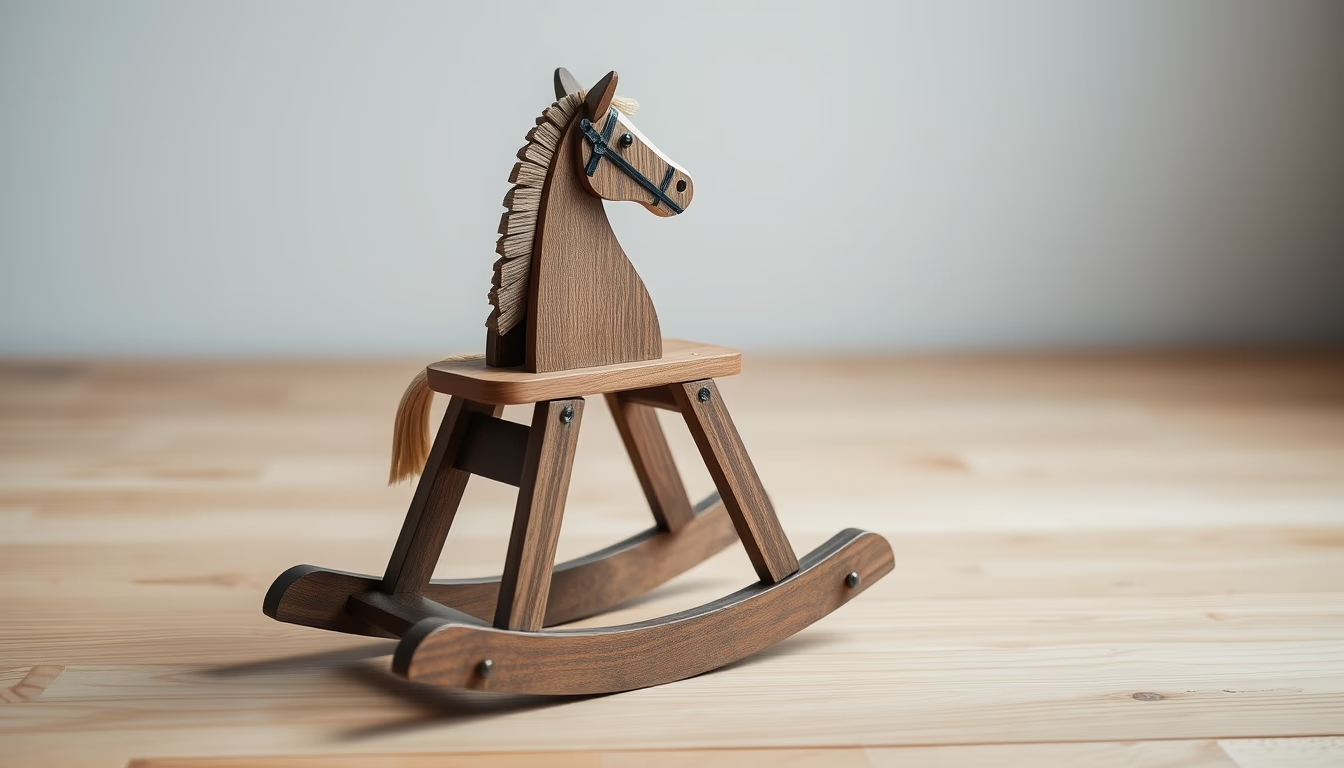
Rocking horse wooden
1344×768 · AVIF · CC BY 4.0
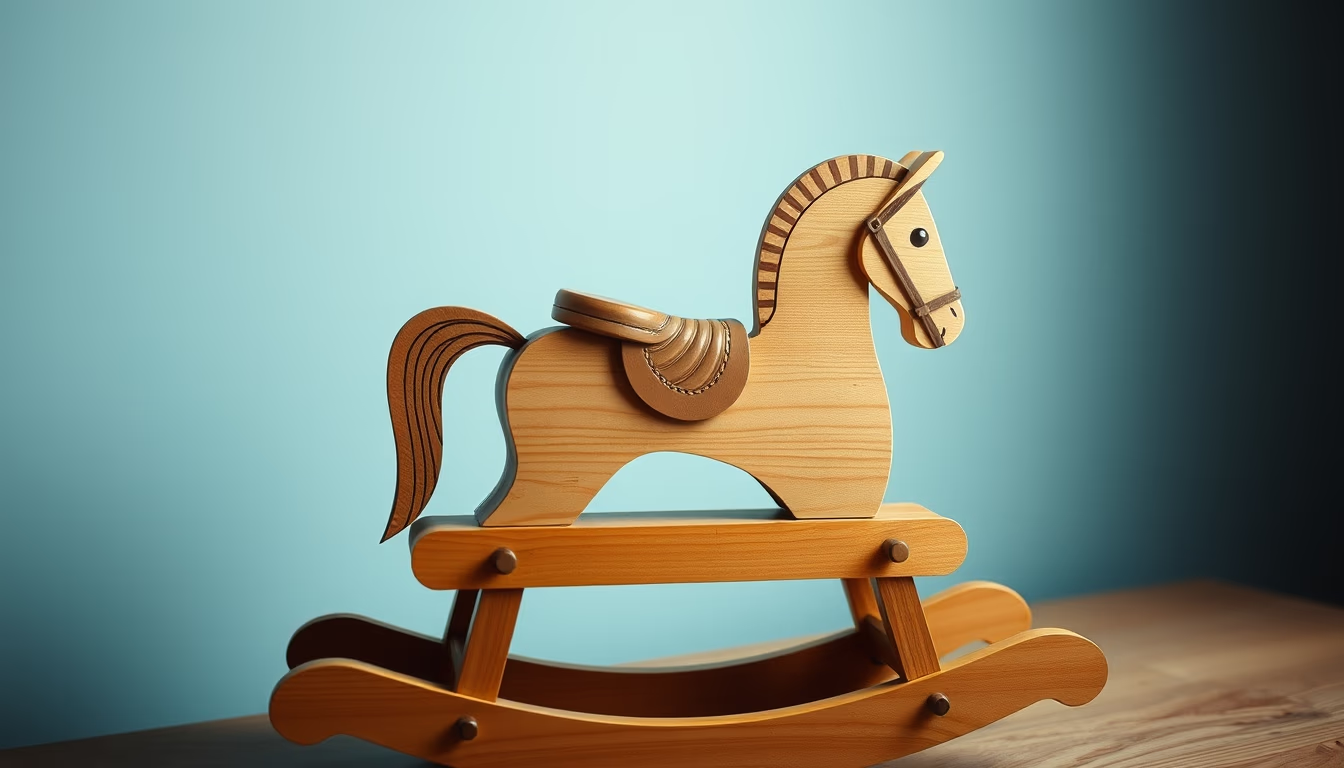
Wooden rocking horse: a classic toy that spans generations, symbolizing childhood and traditional craftsmanship.
About this subject
The wooden rocking horse is one of the oldest and most emblematic toys in Western culture. Its origins date back to the 17th century, when it evolved from simple stick horses used to simulate riding. However, it was during the Victorian era (19th century) that the toy gained popularity, especially among wealthy families who commissioned handcrafted pieces from skilled artisans. These horses were carved from hardwoods such as oak, walnut, or beech, and often hand-painted with realistic details, including manes of real horsehair and leather saddles.
The manufacturing of rocking horses requires specific woodworking and carving skills. The classic design features a curved base (rocker) that allows back-and-forth movement, mimicking a gallop. More sophisticated models may include sound mechanisms, such as a roller that emits a neighing sound when moved. Construction techniques vary: antique pieces may have joints fitted without nails, while modern versions use screws and glue. Safety is also important, with rounded edges and non-toxic paints.
Beyond being a toy, the wooden rocking horse has become a decorative and collectible item. Pieces from the 18th and 19th centuries can fetch thousands of dollars at auction, especially those signed by renowned cabinetmakers or belonging to royal families. One of the most famous examples is the rocking horse of Prince George, son of King George III, exhibited at the Museum of London. Today, many parents opt for handmade versions, valuing nostalgic appeal and durability, while contemporary designers reinterpret the form with minimalist or sustainable styles.
Interestingly, the rocking horse also appears in various pop culture works, such as Stanley Kubrick's film "The Shining" (1980), where a vintage specimen is used as a suspense element. In Brazil, the toy was adapted with regional influences, such as the use of local woods (pau-brasil, peroba) and vibrant paint colors. Despite competition from electronic toys, the wooden rocking horse maintains its status as a timeless icon, often passed down through generations as a sentimental heirloom.
Frequently Asked Questions
What is the origin of the wooden rocking horse?
The rocking horse originated in the 17th century as an evolution of the hobby horse. It became popular during the Victorian era, especially among noble families, who commissioned handmade pieces from fine woods.
How to choose a safe wooden rocking horse for children?
Check for a stable base, rounded edges, non-toxic paint, and weight capacity. Models certified by safety standards (e.g., ASTM, EN) offer greater assurance.
How to preserve an antique rocking horse?
Keep it away from moisture and direct sunlight. Dust with a dry cloth, and apply beeswax or linseed oil to nourish the wood. Consult a professional restorer for valuable pieces.
Direct URL
https://pub-c7d6a6ea828543ac903a74a341ccb2e1.r2.dev/imagens/rocking-horse-wooden-lo-fi-disposable-camera-fresh5.avifHow to credit
Include a visible link back to UtilizAí. Copy one of the snippets below:
<a href="https://xn--utiliza-eza.com/en/midia/imagens/rocking-horse-wooden-lo-fi-disposable-camera-fresh5">Rocking horse wooden</a> by <a href="https://xn--utiliza-eza.com">UtilizAí</a>, licensed under <a href="https://creativecommons.org/licenses/by/4.0/">CC BY 4.0</a>.
[Rocking horse wooden](https://xn--utiliza-eza.com/en/midia/imagens/rocking-horse-wooden-lo-fi-disposable-camera-fresh5) by [UtilizAí](https://xn--utiliza-eza.com), CC BY 4.0
License: CC-BY-4.0