Rocking chair mid century
1344×768 · AVIF · CC BY 4.0
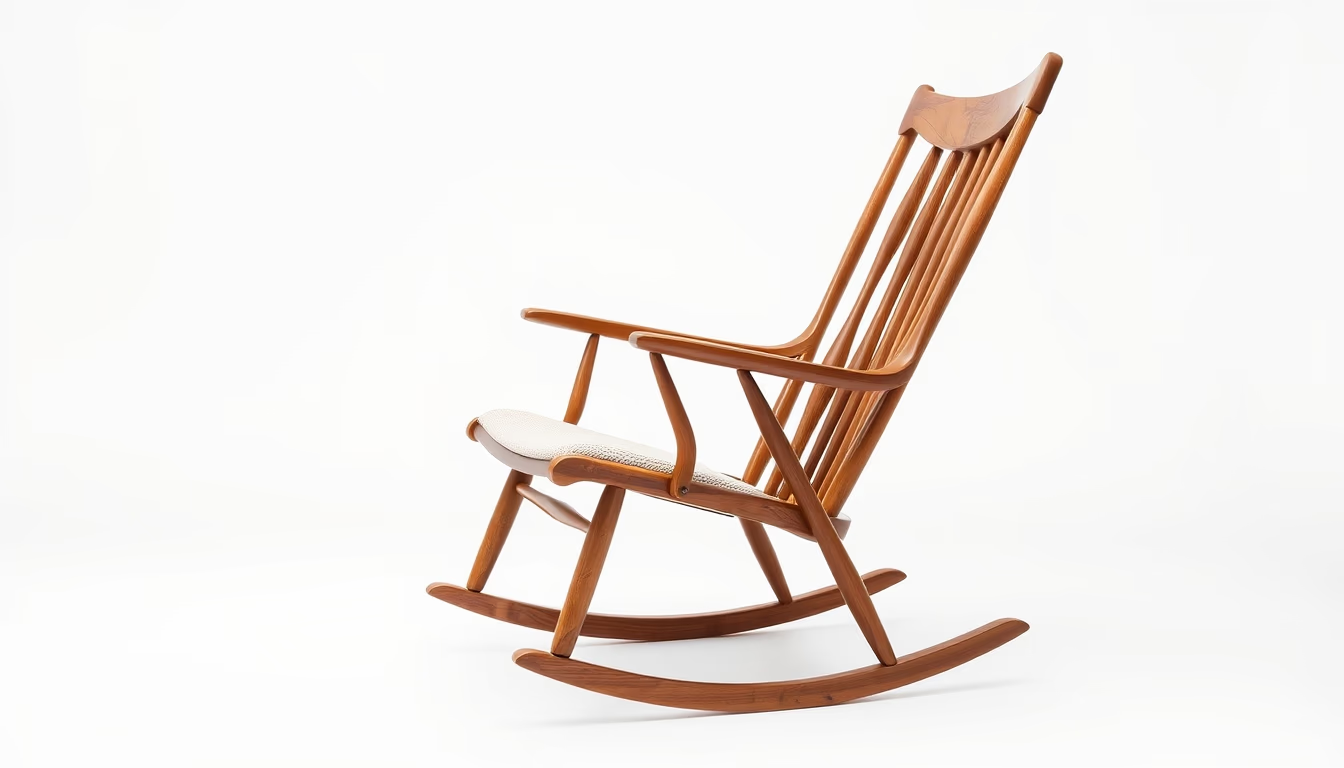
A mid-century rocking chair blends organic forms and clean lines, epitomizing the height of modern design from the 1950s and 1960s.
About this subject
The mid-century rocking chair is an icon of modern design, defined by ergonomic curves, solid wood or molded plywood construction, and a lack of unnecessary ornamentation. This style flourished between the 1940s and 1960s, influenced by the Bauhaus movement, Scandinavian design, and a drive for functionality and affordability. In the United States, designers such as Charles and Ray Eames pioneered molded plywood techniques to create seats that conformed to the body, while in Denmark, Hans Wegner and Finn Juhl elevated woodworking to an art form. In Brazil, the modern movement also produced notable pieces, including creations by Sergio Rodrigues and Joaquim Tenreiro, who incorporated tropical woods and forms inspired by local culture. The mid-century rocking chair is more than just a functional piece of furniture; it represents an era of optimism and innovation, where design became democratized and prioritized comfort alongside aesthetics. Its fluid, inviting silhouette has made it a popular item in living rooms, nurseries, and porches, often associated with moments of relaxation and reading. Although rocking chairs date back to the early 18th century, the mid-century version modernized the concept by stripping away excess detail and emphasizing purity of form. Today, these chairs are highly collectible and continue to inspire reproductions, keeping the heritage of modern design alive.
Frequently Asked Questions
What defines a mid-century rocking chair?
A mid-century rocking chair is characterized by ergonomic curves, solid wood or molded plywood, clean lines, and a lack of ornamentation. It reflects the principles of modern design from the 1950s and 1960s: functionality, simplicity, and harmony with the environment.
What materials are typical of this style?
Common materials include hardwoods such as walnut, teak, and oak, as well as molded plywood. Some models incorporate woven cane or leather for the seat and backrest. The focus is on natural texture and durability.
Who are the most famous designers of this period?
Prominent designers include Charles and Ray Eames (USA), Hans Wegner and Finn Juhl (Denmark), and in Brazil, Sergio Rodrigues and Joaquim Tenreiro. Each contributed innovations in materials and form that defined the mid-century aesthetic.
Direct URL
https://pub-c7d6a6ea828543ac903a74a341ccb2e1.r2.dev/imagens/rocking-chair-mid-century-commercial-product-photography-fresh7.avifHow to credit
Include a visible link back to UtilizAí. Copy one of the snippets below:
<a href="https://xn--utiliza-eza.com/en/midia/imagens/rocking-chair-mid-century-commercial-product-photography-fresh7">Rocking chair mid century</a> by <a href="https://xn--utiliza-eza.com">UtilizAí</a>, licensed under <a href="https://creativecommons.org/licenses/by/4.0/">CC BY 4.0</a>.
[Rocking chair mid century](https://xn--utiliza-eza.com/en/midia/imagens/rocking-chair-mid-century-commercial-product-photography-fresh7) by [UtilizAí](https://xn--utiliza-eza.com), CC BY 4.0
License: CC-BY-4.0