Rocket launch night fire
1344×768 · AVIF · CC BY 4.0
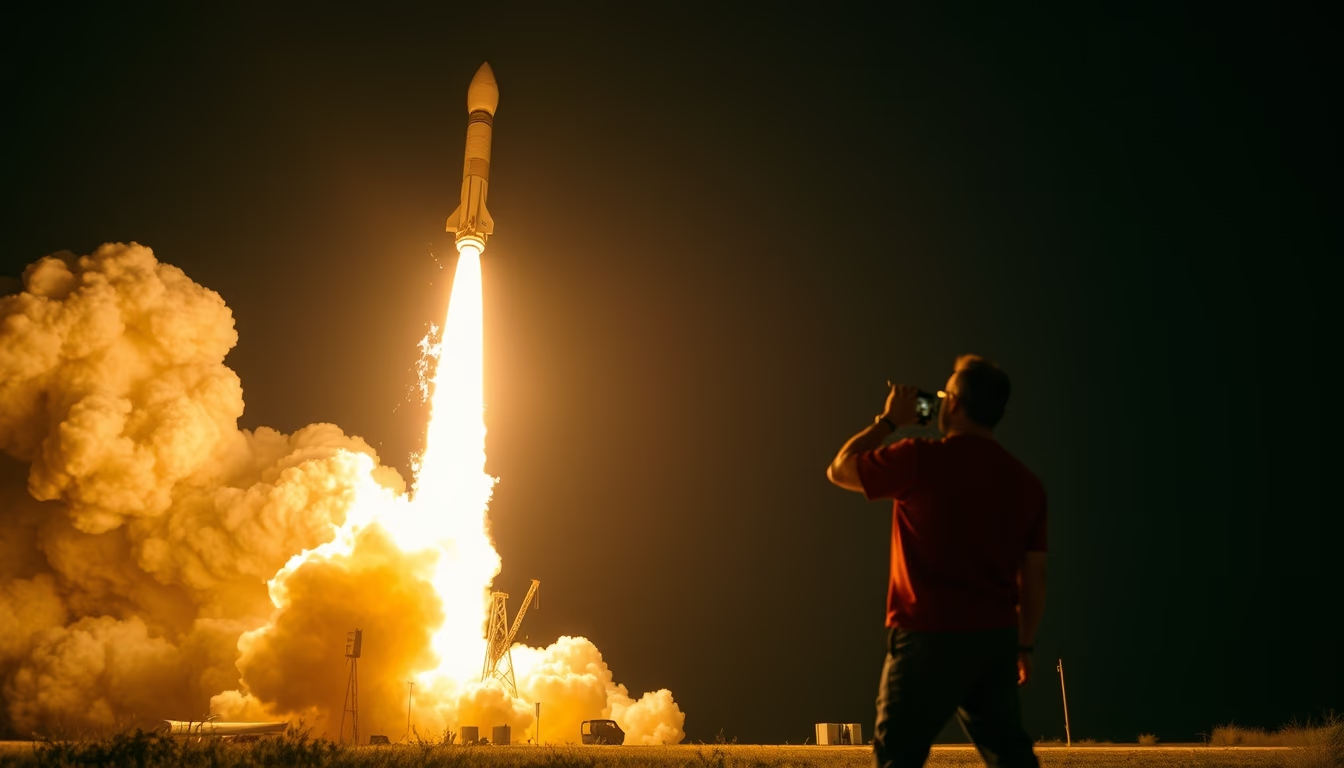
Night rocket launches blend precision engineering with visual spectacle, lighting up the sky with intense flames as spacecraft overcome Earth's gravity.
About this subject
Night rocket launches are common in modern space exploration due to technical advantages. Reduced solar interference allows more precise optical and thermal tracking, essential for missions deploying geostationary satellites or docking with the International Space Station. Rockets like SpaceX's Falcon 9 burn kerosene and liquid oxygen, producing a bright yellow flame that contrasts sharply with the dark sky.
Historically, the first crewed night launch was Apollo 8 on December 21, 1968. NASA chose a nighttime window to optimize the translunar injection trajectory. During the mission, astronauts witnessed Earthrise, an iconic image of our planet from the Moon. Night launches were also used for the Space Shuttle, which required sunlight for visual inspection but often lifted off before dawn.
Flame color varies by propellant: liquid hydrogen burns with a nearly invisible blue flame, while kerosene-based fuels produce yellow and orange flames. At Brazil's Alcântara launch site, night launches highlight the coastal landscape. The flash can be seen hundreds of kilometers away, creating a natural spectacle that fascinates enthusiasts and scientists alike.
Culturally, night launches are global media events. Live broadcasts gather millions of viewers who follow the countdown and the rocket's ascent. The image of a column of fire piercing the darkness symbolizes human ingenuity and the quest for cosmic knowledge. Each launch represents years of work, innovation, and international collaboration.
Frequently Asked Questions
Why are rockets launched at night?
Night launches enable better optical and thermal tracking, and they take advantage of favorable launch windows for specific orbits, such as geostationary satellites or ISS rendezvous.
Which fuel produces the brightest flame?
Fuels like kerosene and liquid oxygen yield intense yellow flames. Liquid hydrogen, on the other hand, produces a blue flame that is often nearly invisible during the day.
What was the first crewed night launch?
Apollo 8, on December 21, 1968, was the first crewed mission launched at night. The timing optimized the trajectory toward the Moon.
Direct URL
https://pub-c7d6a6ea828543ac903a74a341ccb2e1.r2.dev/imagens/rocket-launch-night-fire-national-geographic-style-p1.avifHow to credit
Include a visible link back to UtilizAí. Copy one of the snippets below:
<a href="https://xn--utiliza-eza.com/en/midia/imagens/rocket-launch-night-fire-national-geographic-style-p1">Rocket launch night fire</a> by <a href="https://xn--utiliza-eza.com">UtilizAí</a>, licensed under <a href="https://creativecommons.org/licenses/by/4.0/">CC BY 4.0</a>.
[Rocket launch night fire](https://xn--utiliza-eza.com/en/midia/imagens/rocket-launch-night-fire-national-geographic-style-p1) by [UtilizAí](https://xn--utiliza-eza.com), CC BY 4.0
License: CC-BY-4.0