Rocket launch night fire
1344×768 · AVIF · CC BY 4.0
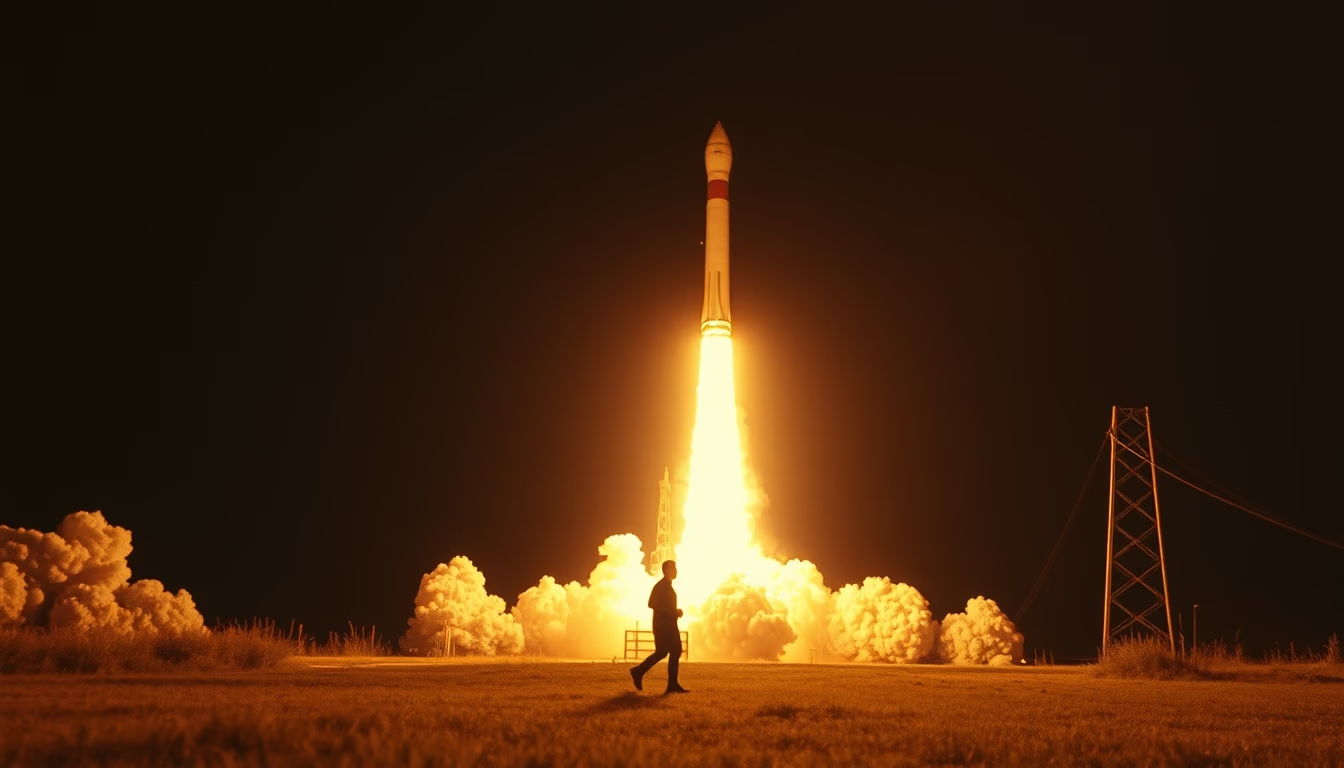
Night rocket launches combine visual spectacle and precision engineering, with flames lighting up the dark sky in a landmark event of space exploration.
About this subject
Night rocket launches are among the most dramatic demonstrations of human technological capability. The choice of nighttime is not merely aesthetic; it involves factors such as atmospheric conditions, air traffic, and orbital alignment. Rockets like SpaceX's Falcon 9 and the Russian Soyuz often lift off at night to take advantage of specific launch windows that optimize trajectory for the International Space Station or other destinations.
The intense flame seen in night launches results from the combustion of propellants such as kerosene and liquid oxygen or hydrogen and liquid oxygen. This reaction produces temperatures exceeding 3,000 degrees Celsius, creating a flash visible for miles. Engine designs, like the RD-180 or Raptor, are optimized to maximize thrust, while sound suppression systems reduce vibrations that could damage the vehicle.
Historically, the first successful night launch was that of Sputnik 1 in 1957, although it took off at dusk. Since then, NASA and other agencies have conducted iconic night missions, such as Apollo 17 (the last lunar landing) and the launch of the James Webb Space Telescope. In Brazil, the Alcântara Launch Center in Maranhão performs night operations for polar orbit satellites.
A technical curiosity: the flame color can indicate fuel composition. Blue flames indicate efficient hydrogen combustion, while orange or yellow flames are typical of kerosene. Additionally, the rocket's night trail can form artificial noctilucent clouds, which reflect sunlight even after sunset, visible for hundreds of kilometers.
Frequently Asked Questions
Why are rockets launched at night?
Night launches are chosen for technical reasons such as launch windows that align trajectory with the orbital destination, more stable atmospheric conditions, and less air traffic. Additionally, the rocket's visibility against the dark sky aids observation and data collection by tracking cameras.
What is the temperature of a rocket flame?
The temperature in a rocket's combustion chamber can exceed 3,000 °C, depending on the propellant. Engines using liquid hydrogen and oxygen burn cleaner and hotter, while kerosene engines produce yellower flames but are still extremely hot.
What does the flame color mean in a launch?
Flame color indicates the type of fuel and combustion efficiency. Blue flames are typical of hydrogen, indicating clean and complete burning. Orange or yellow flames come from carbon-based fuels like kerosene, which produce soot and incandescent particles.
Direct URL
https://pub-c7d6a6ea828543ac903a74a341ccb2e1.r2.dev/imagens/rocket-launch-night-fire-film-grain-authentic-p4.avifHow to credit
Include a visible link back to UtilizAí. Copy one of the snippets below:
<a href="https://xn--utiliza-eza.com/en/midia/imagens/rocket-launch-night-fire-film-grain-authentic-p4">Rocket launch night fire</a> by <a href="https://xn--utiliza-eza.com">UtilizAí</a>, licensed under <a href="https://creativecommons.org/licenses/by/4.0/">CC BY 4.0</a>.
[Rocket launch night fire](https://xn--utiliza-eza.com/en/midia/imagens/rocket-launch-night-fire-film-grain-authentic-p4) by [UtilizAí](https://xn--utiliza-eza.com), CC BY 4.0
License: CC-BY-4.0