Robot vacuum on floor
1344×768 · AVIF · CC BY 4.0
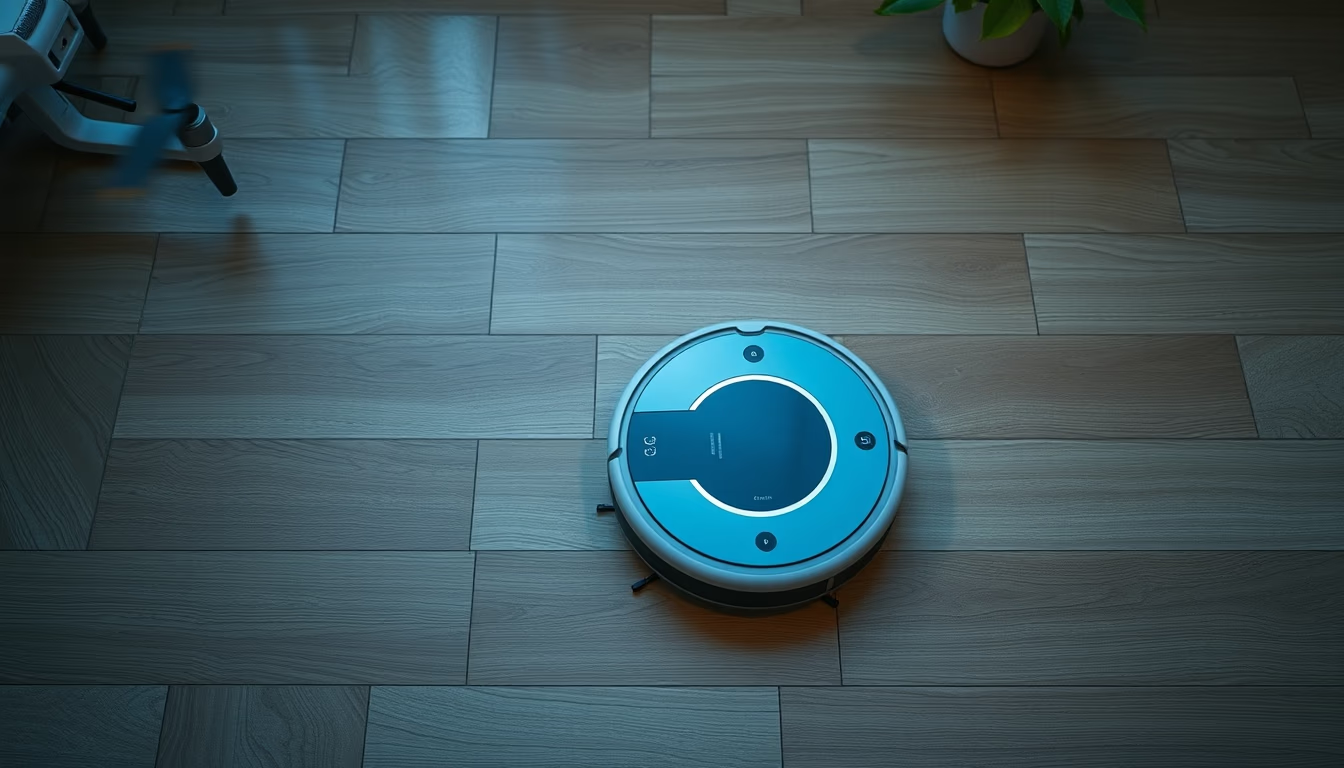
Robot vacuums have revolutionized home cleaning with smart sensors and autonomous navigation, gaining worldwide popularity.
About this subject
Robot vacuums, also known as robovacs, are autonomous cleaning devices that use laser sensors, cameras, and mapping algorithms to navigate indoor spaces. Since the first commercial model launched in 2002 by iRobot (Roomba), the technology has evolved rapidly: today, devices like the Roborock S8 and Dreame Bot L10s Ultra offer features such as object recognition, self-cleaning bases, and integration with voice assistants. The global robot vacuum market was valued at about $9 billion in 2023, with a projected compound annual growth rate of 20% through 2030, driven by increasing urbanization and demand for convenience.
In Brazil, adoption of robot vacuums grows yearly, especially in large cities like São Paulo and Rio de Janeiro, where compact apartments favor their use. Models with drop and obstacle sensors prevent damage to furniture and stairs, while Wi-Fi connectivity allows scheduling cleaning via app. Smart mapping functionality creates detailed floor plans, enabling the robot to clean specific rooms or avoid areas with scattered objects. Lithium batteries provide an average autonomy of 120 minutes for areas up to 1,000 sq ft.
A curiosity: early prototypes of robot vacuums appeared in the 1990s but failed in navigation by repeatedly bumping into walls. Advances in SLAM (Simultaneous Localization and Mapping) and LiDAR sensors solved this. Today, premium models like the Samsung Jet Bot AI+ use artificial intelligence to identify up to 100 objects (cables, shoes, pet waste) and avoid them. The 2026 trend points to robot vacuums with articulated arms for picking up small objects and self-emptying docking stations.
Beyond floor cleaning, many robot vacuums incorporate mopping functions with integrated water tanks and flow control. Models like the Ecovacs Deebot X2 Omni combine vacuuming and sweeping in a single pass. Maintenance includes regular cleaning of the HEPA filter and replacement of side brushes every three months, ensuring efficiency in removing pet hair and fine dust.
Frequently Asked Questions
What is the average battery life of a robot vacuum?
Most robot vacuums have a lithium battery with autonomy between 90 and 150 minutes, enough to clean up to 1,000 sq ft in a single cycle. Advanced models can return to the base and recharge automatically to continue cleaning.
Do robot vacuums work on different floor types (carpet, tile, hardwood)?
Yes, most navigate seamlessly over tile, porcelain, hardwood, laminate, and low-pile carpets. Sensors automatically adjust suction power, on carpets, suction increases to remove embedded dirt.
Do I need Wi-Fi to use a robot vacuum?
No, but Wi-Fi enables scheduling cleaning, setting no-go zones, and monitoring the robot via smartphone. Without Wi-Fi, the robot operates only via the physical button, performing random or basic pattern cleaning.
Direct URL
https://pub-c7d6a6ea828543ac903a74a341ccb2e1.r2.dev/imagens/robot-vacuum-on-floor-aerial-drone-shot-p3.avifHow to credit
Include a visible link back to UtilizAí. Copy one of the snippets below:
<a href="https://xn--utiliza-eza.com/en/midia/imagens/robot-vacuum-on-floor-aerial-drone-shot-p3">Robot vacuum on floor</a> by <a href="https://xn--utiliza-eza.com">UtilizAí</a>, licensed under <a href="https://creativecommons.org/licenses/by/4.0/">CC BY 4.0</a>.
[Robot vacuum on floor](https://xn--utiliza-eza.com/en/midia/imagens/robot-vacuum-on-floor-aerial-drone-shot-p3) by [UtilizAí](https://xn--utiliza-eza.com), CC BY 4.0
License: CC-BY-4.0