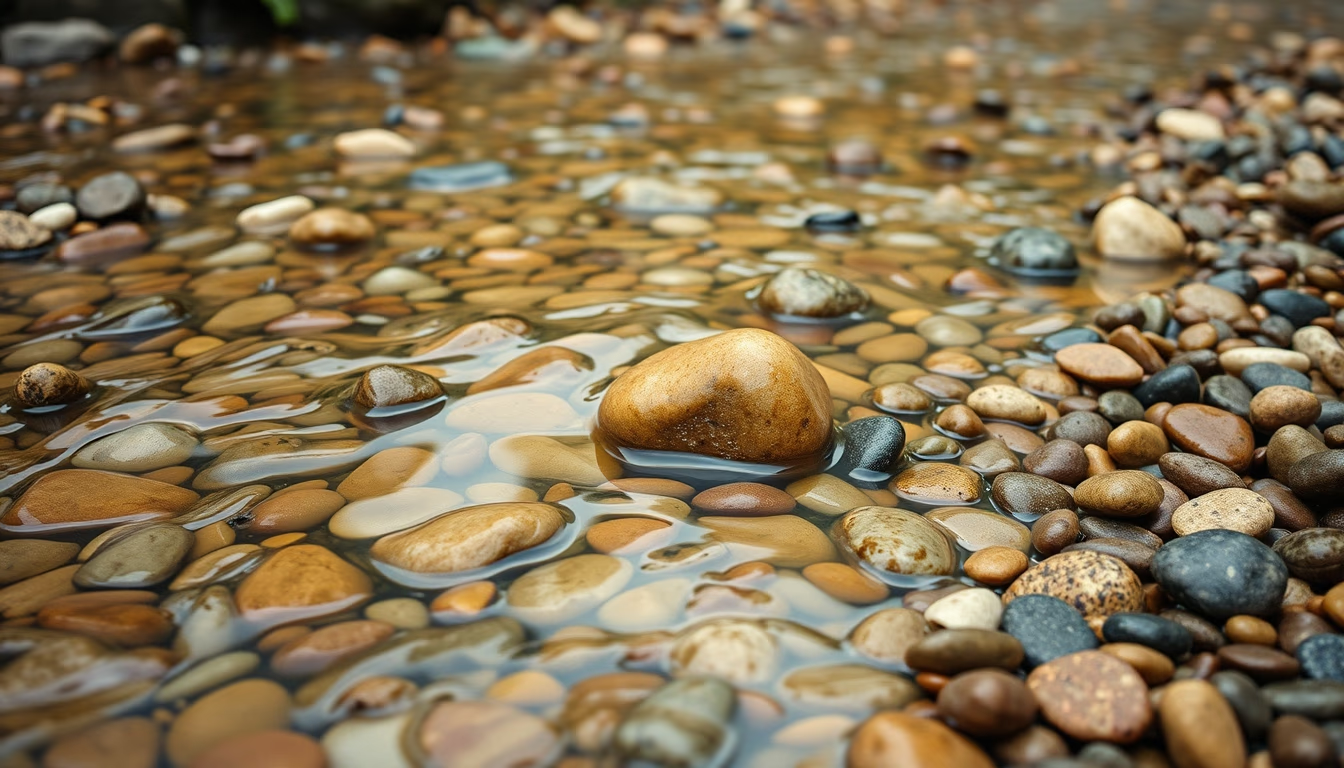
River smooth pebbles colorful
1344×768 · AVIF · CC BY 4.0

Smooth, colorful river pebbles from Brazilian rivers like the São Francisco are natural formations admired for their hues and textures.
About this subject
Smooth, colorful river pebbles are rock fragments that have undergone millennia of abrasion by water and friction against each other in riverbeds. In Brazil, rivers such as the São Francisco, Tocantins, and Araguaia are known for producing pebbles in diverse colors, including red, yellow, green, gray, and black. This chromatic variety stems from the mineral composition of the parent rocks, such as quartz, feldspar, granite, and basalt, which reveal their intrinsic colors when fragmented and polished.
Beyond their natural beauty, pebbles play an important ecological role in aquatic ecosystems, serving as habitats for microorganisms and fish. Culturally, they are used in gardening, landscaping, and handicrafts, commonly adorning dry gardens, pathways, and fountains. In the Upper São Francisco region of Minas Gerais, pebble extraction is a traditional economic activity, though it must be managed sustainably to avoid environmental impacts.
Collectors and visual artists value these pebbles for their smooth texture and vibrant colors, which become more vivid when wet. The formation of these stones involves fluvial transport and deposition on pebble beaches, known as "seixais." Geological studies indicate that the angularity and size of pebbles can reveal information about the travel distance and energy of the water flow, making them important indicators in watershed analysis.
Frequently Asked Questions
What causes the different colors in river pebbles?
Colors come from the mineral composition of the original rocks. For instance, iron oxides produce reddish tones, while quartz yields clear or milky colors. The presence of mica, feldspar, and other elements also contributes to the variety.
Where can I find colorful pebbles in Brazil?
The main locations are riverbeds like the São Francisco, especially in Minas Gerais and Bahia, as well as the Tocantins and Araguaia rivers. They are also common on pebble beaches in mountainous regions and plateaus with a history of fluvial erosion.
Can pebbles be freely collected?
No. In many areas, collection is regulated to protect the ecosystem. Commercial extraction requires an environmental license, and individuals should check local laws before collecting, avoiding permanent preservation areas.
Direct URL
https://pub-c7d6a6ea828543ac903a74a341ccb2e1.r2.dev/imagens/river-smooth-pebbles-colorful-studio-editorial-portrait-fresh7.avifHow to credit
Include a visible link back to UtilizAí. Copy one of the snippets below:
<a href="https://xn--utiliza-eza.com/en/midia/imagens/river-smooth-pebbles-colorful-studio-editorial-portrait-fresh7">River smooth pebbles colorful</a> by <a href="https://xn--utiliza-eza.com">UtilizAí</a>, licensed under <a href="https://creativecommons.org/licenses/by/4.0/">CC BY 4.0</a>.
[River smooth pebbles colorful](https://xn--utiliza-eza.com/en/midia/imagens/river-smooth-pebbles-colorful-studio-editorial-portrait-fresh7) by [UtilizAí](https://xn--utiliza-eza.com), CC BY 4.0
License: CC-BY-4.0