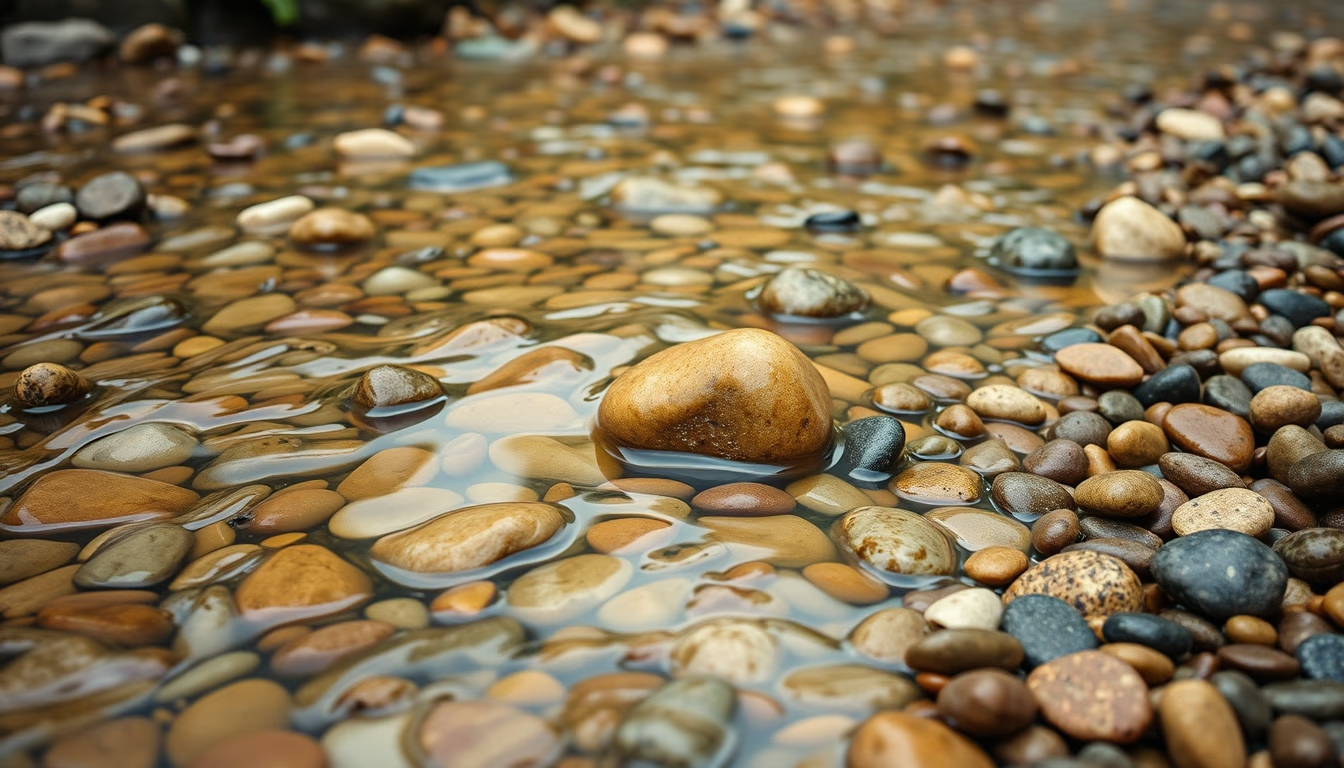
River smooth pebbles colorful
1344×768 · AVIF · CC BY 4.0
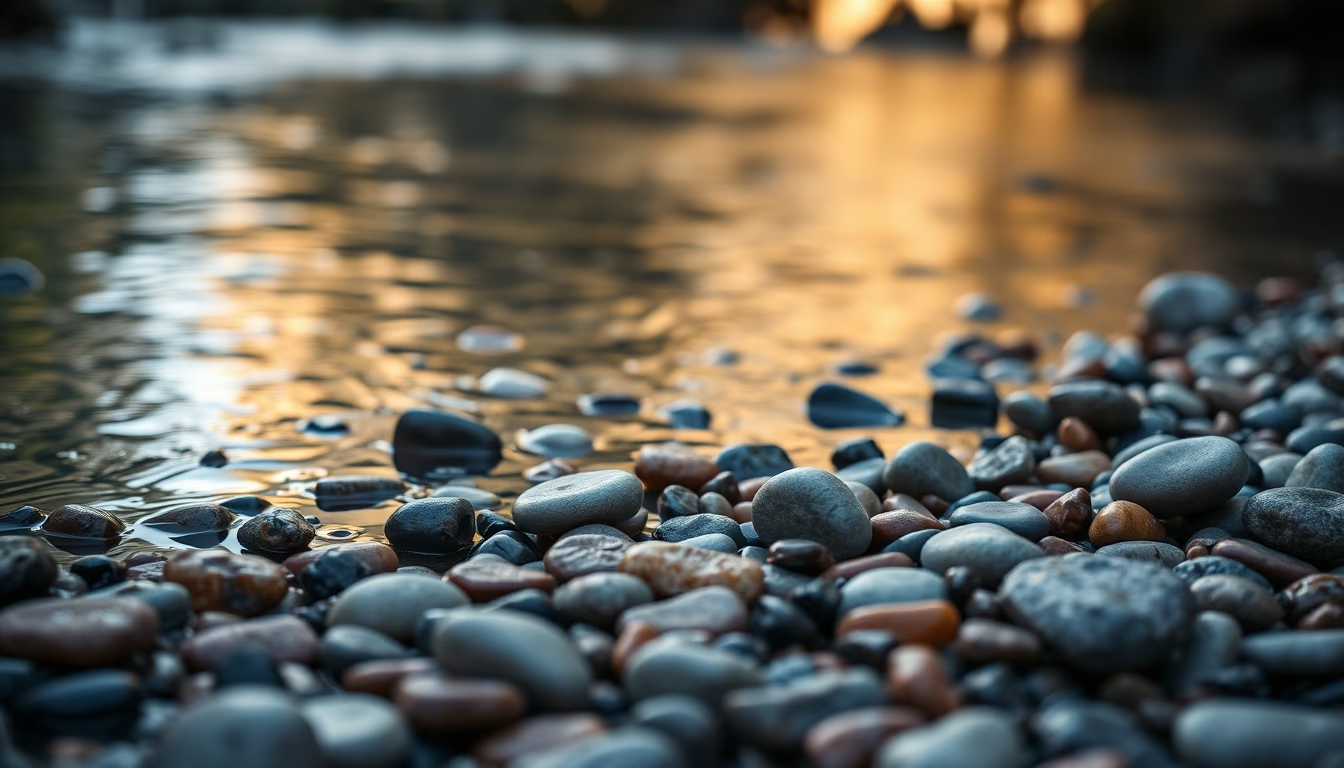
Colorful smooth pebbles found in riverbeds are natural geological formations that delight with their diversity of colors and textures.
About this subject
River pebbles, also known as river rocks or cobbles, are rock fragments that have been smoothed and rounded by continuous water action and abrasion over thousands of years. The process of fluvial erosion transforms angular stones into smooth, oval shapes with a polished surface. The wide range of colors, including red, yellow, blue, green, and gray, stems from the original mineral composition: iron oxides produce reddish hues, quartzite yields white and pink tones, while copper can generate greens and blues.
In Brazil, rivers such as the São Francisco and Rio Doce are famous for their colorful pebble beds, particularly in mountain and plateau regions. During floods, sediment transport intensifies, exposing new layers of pebbles along riverbanks. These pebbles are widely used in landscaping, interior decoration, aquariums, and Zen gardens, where they symbolize tranquility and balance.
In Japanese culture, pebbles are essential elements in karesansui (dry gardens), representing rivers and islands. The practice of collecting pebbles for meditative purposes dates back centuries, and many believe they carry positive energy. Geologists also study pebbles to understand a region's geological history by analyzing their composition and wear patterns.
Fun fact: the smoothest and most colorful pebbles are often found in moderate to fast-flowing rivers, where the ideal friction for polishing occurs. Over-extraction can impact aquatic ecosystems, so collection should be done responsibly and in compliance with local regulations.
Frequently Asked Questions
Why are river pebbles so smooth?
River pebbles become smooth through constant friction with water, sand, and other sediment over thousands of years, a process called abrasion. The continuous movement wears down sharp edges, resulting in rounded and polished surfaces.
How do river pebbles get their colors?
Colors are determined by the minerals in the original rock. For instance, iron oxides produce reddish hues, quartz yields white and pink, and copper minerals generate greens and blues. Chemical exposure over time can also alter coloration.
Do river pebbles have any cultural significance?
Yes, in various cultures pebbles are used in Japanese Zen gardens to represent water and islands, and for meditation. In Brazil, they are common in decoration and landscaping, and some consider them stones of positive energy.
Direct URL
https://pub-c7d6a6ea828543ac903a74a341ccb2e1.r2.dev/imagens/river-smooth-pebbles-colorful-fine-art-photography-fresh11.avifHow to credit
Include a visible link back to UtilizAí. Copy one of the snippets below:
<a href="https://xn--utiliza-eza.com/en/midia/imagens/river-smooth-pebbles-colorful-fine-art-photography-fresh11">River smooth pebbles colorful</a> by <a href="https://xn--utiliza-eza.com">UtilizAí</a>, licensed under <a href="https://creativecommons.org/licenses/by/4.0/">CC BY 4.0</a>.
[River smooth pebbles colorful](https://xn--utiliza-eza.com/en/midia/imagens/river-smooth-pebbles-colorful-fine-art-photography-fresh11) by [UtilizAí](https://xn--utiliza-eza.com), CC BY 4.0
License: CC-BY-4.0