Risograph print texture
1344×768 · AVIF · CC BY 4.0
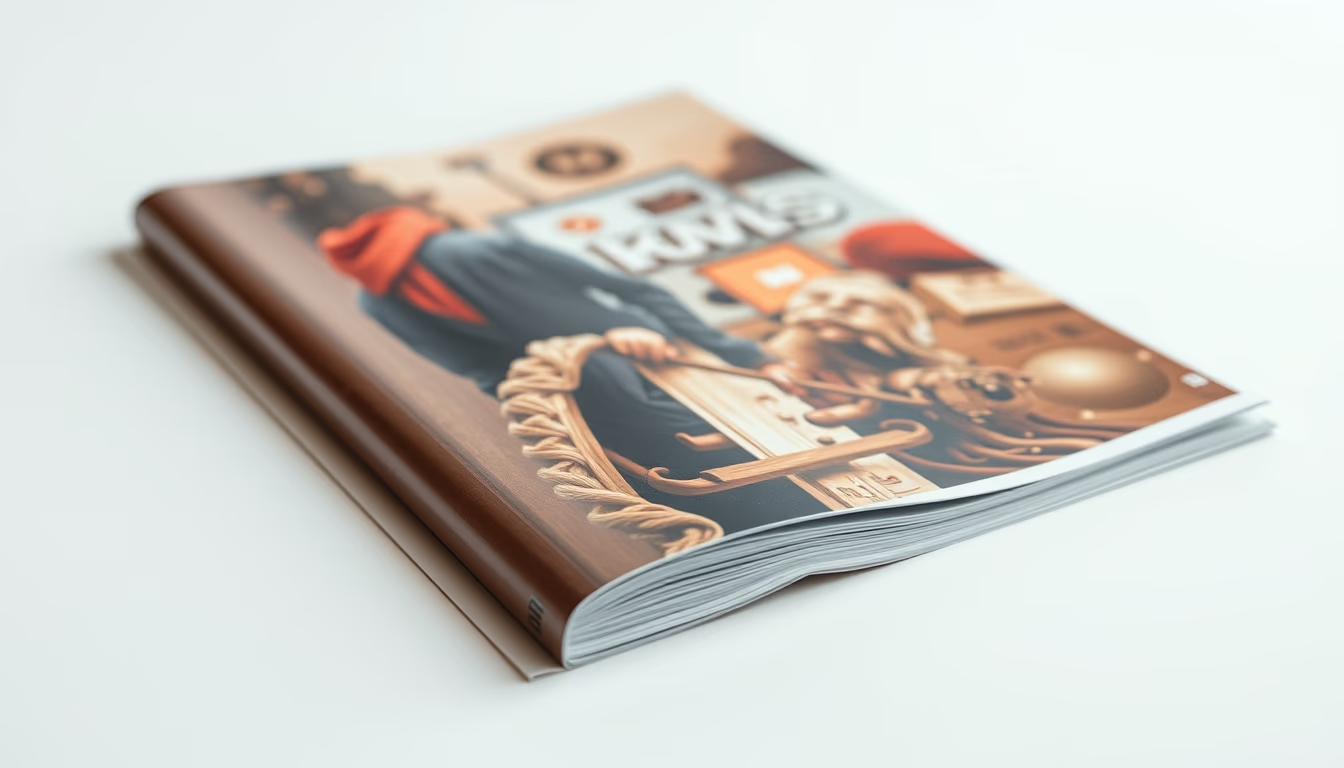
Risograph print texture creates a unique visual effect, with ink layers and halftone dots reminiscent of screen printing but with a handmade charm.
About this subject
The risograph printing technique was developed in Japan in the 1980s by the Riso Kagaku Corporation. Initially created as a cost-effective alternative to photocopying and offset printing, it quickly won over artists and designers for its distinctive aesthetic. The process uses a rotating drum with a master paper stencil, through which ink is forced, resulting in vibrant colors and imperfect overlaps that evoke an analog feel.
Unlike digital printing, each color is applied in a separate pass, which can cause slight misregistrations and irregular textures. This imperfection is precisely what makes risograph so appreciated in contemporary graphic design, zines, posters, and art pieces. The soy-based inks are eco-friendly and produce a matte finish with a slight raised texture that can be felt by touch.
Typical textures include halftone dots, ink splatters, and varying saturation areas. Artists exploit these features to create compositions that blend digital and manual methods. The current movement valuing analog and handmade aesthetics has fueled the resurgence of risograph, especially among small studios and independent publishers.
Interestingly, each risograph printer has its own personality, with slight color and registration variations that make every print unique. This singularity contrasts with mass reproduction and appeals to those seeking visual authenticity in a digitally dominated world.
Frequently Asked Questions
What is risograph printing?
It is a printing technique combining screen printing and mimeograph elements, using a stencil and soy-based inks to produce copies with unique textures and colors.
Why is risograph popular among artists?
Because of its handmade aesthetic, controlled imperfections, and vibrant colors. Each print is slightly different, emphasizing authenticity and experimentation.
What are the visual characteristics of risograph?
Halftone dots, color overlays, misregistrations, ink splatters, and a matte finish with a perceptible texture.
Direct URL
https://pub-c7d6a6ea828543ac903a74a341ccb2e1.r2.dev/imagens/risograph-print-texture-commercial-product-photography-p0.avifHow to credit
Include a visible link back to UtilizAí. Copy one of the snippets below:
<a href="https://xn--utiliza-eza.com/en/midia/imagens/risograph-print-texture-commercial-product-photography-p0">Risograph print texture</a> by <a href="https://xn--utiliza-eza.com">UtilizAí</a>, licensed under <a href="https://creativecommons.org/licenses/by/4.0/">CC BY 4.0</a>.
[Risograph print texture](https://xn--utiliza-eza.com/en/midia/imagens/risograph-print-texture-commercial-product-photography-p0) by [UtilizAí](https://xn--utiliza-eza.com), CC BY 4.0
License: CC-BY-4.0