Rio carnival float colorful
1344×768 · AVIF · CC BY 4.0
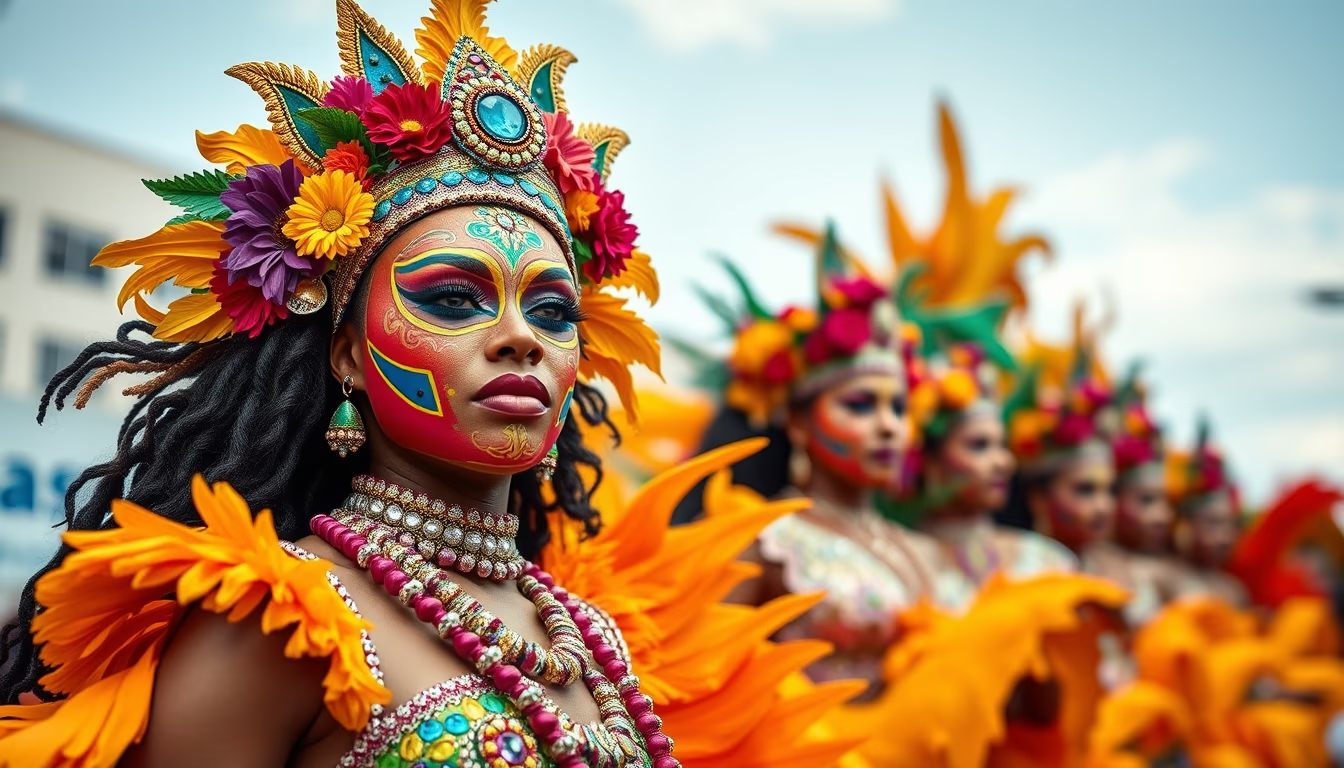
Rio de Janeiro's Carnival floats are giant works of art that enchant millions of revelers during the parades at the Marquês de Sapucaí.
About this subject
The allegorical floats are the visual centerpiece of the Rio de Janeiro samba school parades. Each school invests millions of reais in building up to eight floats that tell stories through sculptures, lights, special effects and vibrant colors. The creative process begins months earlier with the carnavalesco, responsible for the concept and design. The structures are assembled in warehouses such as the Cidade do Samba, using materials like styrofoam, fiberglass and metal frameworks. Floats can exceed 15 meters in height, requiring extreme care to avoid touching the electrical wiring along the avenue.
The tradition of carnival floats dates back to the early 20th century, when the first carnival societies already used decorated vehicles. However, it was from the 1970s onward that the floats became increasingly complex and grandiose. Nowadays, historical, mythological, ecological and social themes are common, reflecting contemporary issues. Sustainability also gains ground: many schools recycle materials and use LED technology to reduce environmental impact.
During the parade, each float is accompanied by dozens of performers who dance and interact with the allegory. The costumes of the "destaques" (featured dancers) positioned atop the floats are equally elaborate and can weigh up to 60 kilograms. Safety is a priority: floats are inspected by engineers and have tested braking and stability systems. The judges' scoring considers criteria such as evolution, harmony, and of course the beauty and creativity of the floats.
The cultural importance of carnival floats goes beyond entertainment. They represent the artistic expression and cultural resilience of the Brazilian people. Many floats honor personalities, celebrate diversity, or denounce social issues, making the parade a stage for both festive and critical manifesto. Each year, the anticipation for the Special Group schools' parade attracts tourists from around the world, generating thousands of direct and indirect jobs.
Frequently Asked Questions
How are carnival floats built?
Construction starts with the carnavalesco's design, followed by styrofoam modeling, fiberglass reinforcement, and metal framework assembly. Floats are decorated with paint, fabrics, lights and special effects. Everything is done in the schools' warehouses, such as Cidade do Samba, over several months.
What is the maximum height of a carnival float?
Floats can exceed 15 meters in height, but must respect the limit imposed by the electrical wiring of the Sapucaí, which is roughly 18 meters above ground. For safety, the maximum height is strictly controlled.
How many floats does each samba school take to the avenue?
Each Special Group school parades with about 6 to 8 allegorical floats, plus wings of featured dancers and the drum section. The exact number varies according to regulations and the chosen theme.
Direct URL
https://pub-c7d6a6ea828543ac903a74a341ccb2e1.r2.dev/imagens/rio-carnival-float-colorful-studio-editorial-portrait-fresh15.avifHow to credit
Include a visible link back to UtilizAí. Copy one of the snippets below:
<a href="https://xn--utiliza-eza.com/en/midia/imagens/rio-carnival-float-colorful-studio-editorial-portrait-fresh15">Rio carnival float colorful</a> by <a href="https://xn--utiliza-eza.com">UtilizAí</a>, licensed under <a href="https://creativecommons.org/licenses/by/4.0/">CC BY 4.0</a>.
[Rio carnival float colorful](https://xn--utiliza-eza.com/en/midia/imagens/rio-carnival-float-colorful-studio-editorial-portrait-fresh15) by [UtilizAí](https://xn--utiliza-eza.com), CC BY 4.0
License: CC-BY-4.0