Rio carnival float colorful
1344×768 · AVIF · CC BY 4.0
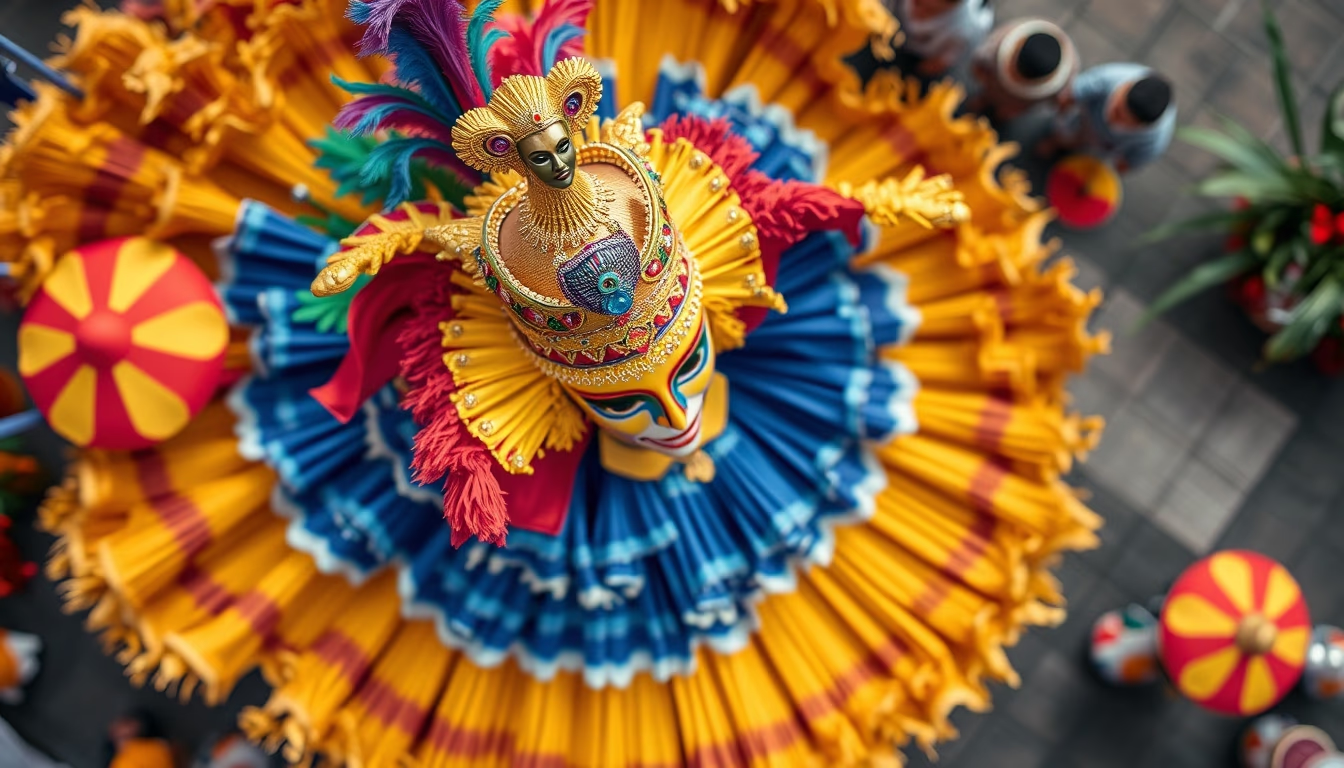
Rio Carnival floats are moving works of art that turn the avenue into a spectacle of color and creativity.
About this subject
Carnival floats are the visual heart of samba school parades in Rio de Janeiro. Each school invests millions of reais in building structures that can reach 70 meters in length and 12 meters in height, laden with sculptures, special effects, and mechanical allegories. The construction of these floats can take months, involving hundreds of professionals such as carpenters, sculptors, painters, and engineers. The parade theme, which tells a story or honors a subject, is materialized in the floats, which must move in sync with the drum section and dancers.
The city of Rio de Janeiro, Brazil's cultural capital, has hosted the world's largest carnival since the early 20th century. The Sambódromo da Marquês de Sapucaí, built in 1984 by Oscar Niemeyer, is the official stage where floats parade under the gaze of millions of live and television spectators. Floats are not merely decorative: they carry "destaques" (dancers and celebrities) who interact with the crowd. Creativity is so intense that some floats become true icons, such as those depicting mythological figures, Brazilian landscapes, or social critiques.
Producing a carnival float involves complex engineering techniques to ensure stability and safety, even with movements like wing openings, rotating platforms, or water jets. Common materials include styrofoam, fiberglass, metal, and fabrics, with painting done by hand by specialized artists. Many floats also feature LED lighting and mapped projections. Competition is fierce among schools, and a poorly built float can cost points in the overall score. Each year, new technologies and materials are tested to surpass previous parades.
Interestingly, carnival floats are not exclusive to Rio; other Brazilian cities like São Paulo and Salvador also hold parades, but Rio remains the primary showcase. The term "alegórico" comes from Greek "allegoria", meaning symbolic representation, and every element on the float has a meaning within the theme. Beyond carnival, these ephemeral works influence contemporary art and design, studied in art and architecture schools. Although they have a short lifespan (many are dismantled after the parade), carnival floats leave a legacy of innovation and cultural expression.
Frequently Asked Questions
How long does it take to build a Rio Carnival float?
Building a float can take 3 to 6 months, depending on complexity. Major samba schools start planning right after the previous year's carnival.
What is the average cost of a carnival float?
Floats cost between R$ 500,000 and R$ 5 million each. A school's total parade budget can reach R$ 20 million, including costumes, floats, and infrastructure.
Are carnival floats reused after the parade?
Typically no. They are dismantled and recycled. Materials like styrofoam and fabrics may be donated to communities or used in other projects, but the main structure is not reused for the next parade.
Direct URL
https://pub-c7d6a6ea828543ac903a74a341ccb2e1.r2.dev/imagens/rio-carnival-float-colorful-isometric-flat-lay-fresh9.avifHow to credit
Include a visible link back to UtilizAí. Copy one of the snippets below:
<a href="https://xn--utiliza-eza.com/en/midia/imagens/rio-carnival-float-colorful-isometric-flat-lay-fresh9">Rio carnival float colorful</a> by <a href="https://xn--utiliza-eza.com">UtilizAí</a>, licensed under <a href="https://creativecommons.org/licenses/by/4.0/">CC BY 4.0</a>.
[Rio carnival float colorful](https://xn--utiliza-eza.com/en/midia/imagens/rio-carnival-float-colorful-isometric-flat-lay-fresh9) by [UtilizAí](https://xn--utiliza-eza.com), CC BY 4.0
License: CC-BY-4.0