Rio carnival float colorful
1344×768 · AVIF · CC BY 4.0
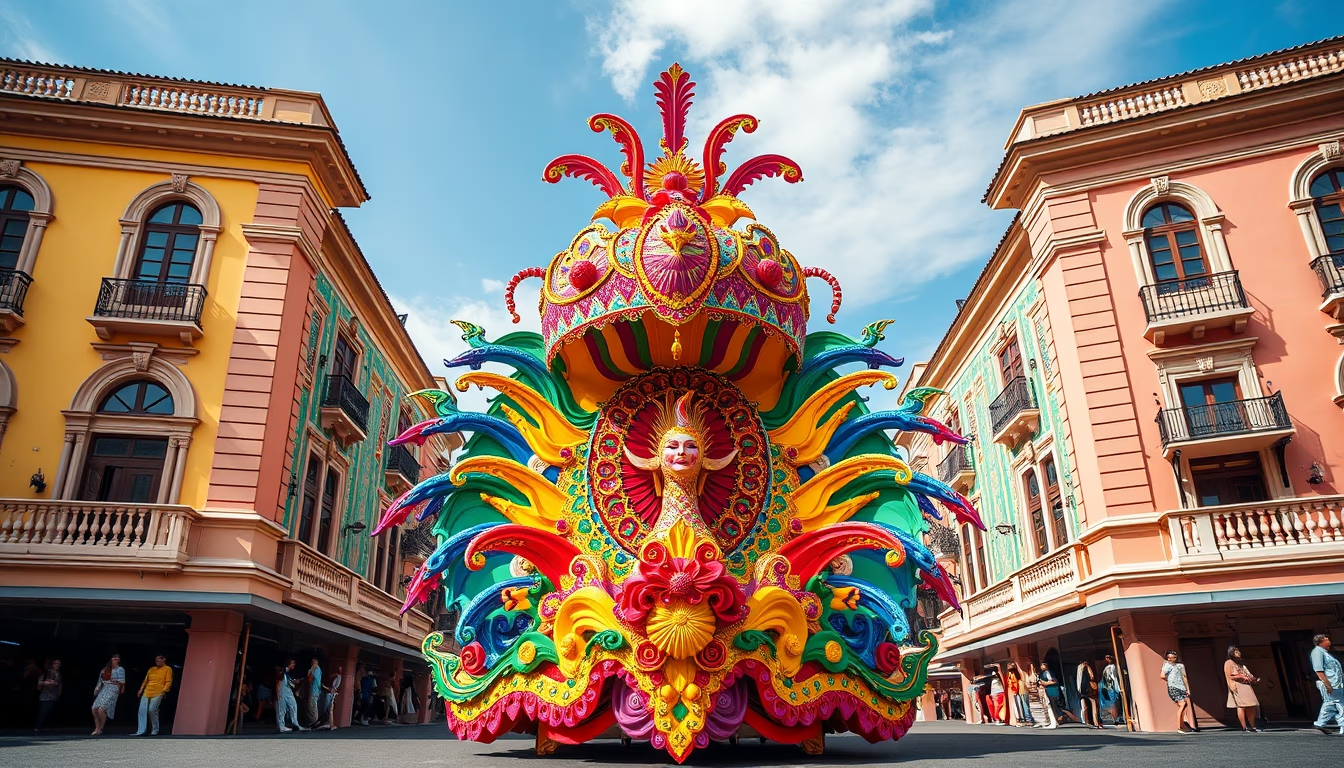
Rio de Janeiro's carnival floats are engineering and artistic masterpieces, reaching up to 15 meters in height and featuring thousands of LED lights.
About this subject
The carnival floats of Rio de Janeiro, locally called 'alegorias', are the highlight of the samba school parades at the Sambódromo. Each float is built over about a year by a multidisciplinary team including visual artists, engineers, electricians and seamstresses. The structures are mainly made of styrofoam, papier-mâché, wood and steel, covered with fabrics, foams and lavish ornaments. Many floats incorporate hydraulic and electronic systems for movement and lighting, featuring thousands of programmable LED lamps.
The theme of each float is set by the school's 'carnavalesco', the artistic director responsible for the entire parade plot. Floats can represent historical figures, Afro-Brazilian deities, Brazilian ecosystems, social critiques or scenes from pop culture. For example, in 2023 the school Imperatriz Leopoldinense featured a float honoring the Xingu indigenous people, over 10 meters tall with detailed artificial feathers.
Construction requires high investments: each float can cost between R$ 200,000 and R$ 2 million, depending on complexity. Samba schools invest millions of reais in the entire parade, funded by sponsorships, government grants and costume sales. After Carnival, floats are dismantled and their materials recycled or stored for future use. The total economic impact of Rio's Carnival exceeds R$ 4 billion annually.
Interestingly, the tradition of carnival floats dates back to the 19th century, when 'grandes sociedades' paraded with decorated carriages. The modern format emerged in the 1930s with the professionalization of samba schools. In 1984, the construction of the Sambódromo (designed by Oscar Niemeyer) provided a permanent stage for the parade, allowing floats to become increasingly bold and grandiose.
Frequently Asked Questions
How are carnival floats transported to the Sambódromo?
The floats are assembled in samba school warehouses (barracões) and, on the eve of the parade, are transported on special trucks to the Sambódromo's staging area. They follow a planned route with police escort and traffic teams to avoid damage.
Are carnival floats reused from one year to the next?
Generally, no. Each samba school creates a new plot every year, so the floats are dismantled after the parade. Some recyclable materials, like steel frames and electronic equipment, may be reused, but most is discarded or donated.
What is the largest carnival float ever built in Rio?
In 2023, the school Grande Rio featured a float 18 meters tall, depicting a giant tree, considered one of the largest ever. The height limit at the Sambódromo is about 20 meters, but floats also have width and length restrictions.
Direct URL
https://pub-c7d6a6ea828543ac903a74a341ccb2e1.r2.dev/imagens/rio-carnival-float-colorful-architectural-photography-fresh4.avifHow to credit
Include a visible link back to UtilizAí. Copy one of the snippets below:
<a href="https://xn--utiliza-eza.com/en/midia/imagens/rio-carnival-float-colorful-architectural-photography-fresh4">Rio carnival float colorful</a> by <a href="https://xn--utiliza-eza.com">UtilizAí</a>, licensed under <a href="https://creativecommons.org/licenses/by/4.0/">CC BY 4.0</a>.
[Rio carnival float colorful](https://xn--utiliza-eza.com/en/midia/imagens/rio-carnival-float-colorful-architectural-photography-fresh4) by [UtilizAí](https://xn--utiliza-eza.com), CC BY 4.0
License: CC-BY-4.0