Retired investor reviewing real estate fund portfolio
1344×768 · AVIF · CC BY 4.0

Retired investor reviews real estate fund portfolio, assessing passive income and sector outlook.
About this subject
Retirement demands careful financial planning, and many investors turn to real estate investment trusts (REITs) for stable passive income. In Brazil, real estate funds (FIIs) are regulated by the Securities and Exchange Commission (CVM) and offer exposure to assets such as shopping malls, corporate offices, and logistics warehouses, with periodic tax-exempt income distributions for individuals. An experienced investor reviewing their portfolio evaluates metrics like dividend yield, property vacancy rates, and manager quality.
The scene depicts a typical late-afternoon moment when a retired investor dedicates time to analyzing statements and performance reports. The softer light of the period contrasts with the seriousness of the task, which involves comparing returns across different fund types, such as brick-and-mortar (physical assets) and paper funds (backed by securities). Historical data shows that the IFIX, Brazil's REIT index, has delivered an average real return of around 8% per year over the past decade, albeit with volatility tied to the Selic rate and economic cycles.
A notable fact: the real estate fund category grew in Brazil after the regulation of Law 8,668/1993 but exploded in popularity from 2010 onwards as interest rates fell. Today, over 400 FIIs are listed on B3, with net assets exceeding R$ 200 billion. For the retired investor, periodic reviews are crucial to adjust allocations in response to market changes, such as the rise of remote work impacting corporate offices and boosting logistics warehouses.
Another key point is risk management: funds with high dividend yields may conceal vacancy issues or excessive leverage. Experienced investors analyze monthly management reports and participate in shareholder meetings. The image, though generic, symbolizes the care for assets common among retirees seeking to preserve purchasing power without relying solely on public pensions.
Frequently Asked Questions
What are the main indicators to evaluate a real estate fund?
Key indicators include dividend yield (monthly income), vacancy rate (percentage of unleased space), average lease term, and tenant quality. Also important are the historical distribution track record and fund management.
Are real estate funds tax-exempt for individuals in Brazil?
Yes, income distributed by FIIs is exempt from individual income tax, provided the fund has at least 50 shareholders and shares are traded on the stock exchange. However, capital gains from selling shares are taxed at 20%.
What is the difference between brick-and-mortar and paper funds?
Brick-and-mortar funds invest directly in physical properties (malls, offices, warehouses), generating rental income. Paper funds invest in real estate-backed securities such as CRIs and LCIs, with returns tied to interest rates or price indices.
Direct URL
https://pub-c7d6a6ea828543ac903a74a341ccb2e1.r2.dev/imagens/retired-investor-reviewing-real-estate-fund-portfolio-wide-late-afternoon.avifHow to credit
Include a visible link back to UtilizAí. Copy one of the snippets below:
<a href="https://xn--utiliza-eza.com/en/midia/imagens/retired-investor-reviewing-real-estate-fund-portfolio-wide-late-afternoon">Retired investor reviewing real estate fund portfolio</a> by <a href="https://xn--utiliza-eza.com">UtilizAí</a>, licensed under <a href="https://creativecommons.org/licenses/by/4.0/">CC BY 4.0</a>.
[Retired investor reviewing real estate fund portfolio](https://xn--utiliza-eza.com/en/midia/imagens/retired-investor-reviewing-real-estate-fund-portfolio-wide-late-afternoon) by [UtilizAí](https://xn--utiliza-eza.com), CC BY 4.0
License: CC-BY-4.0
Tags
Related images
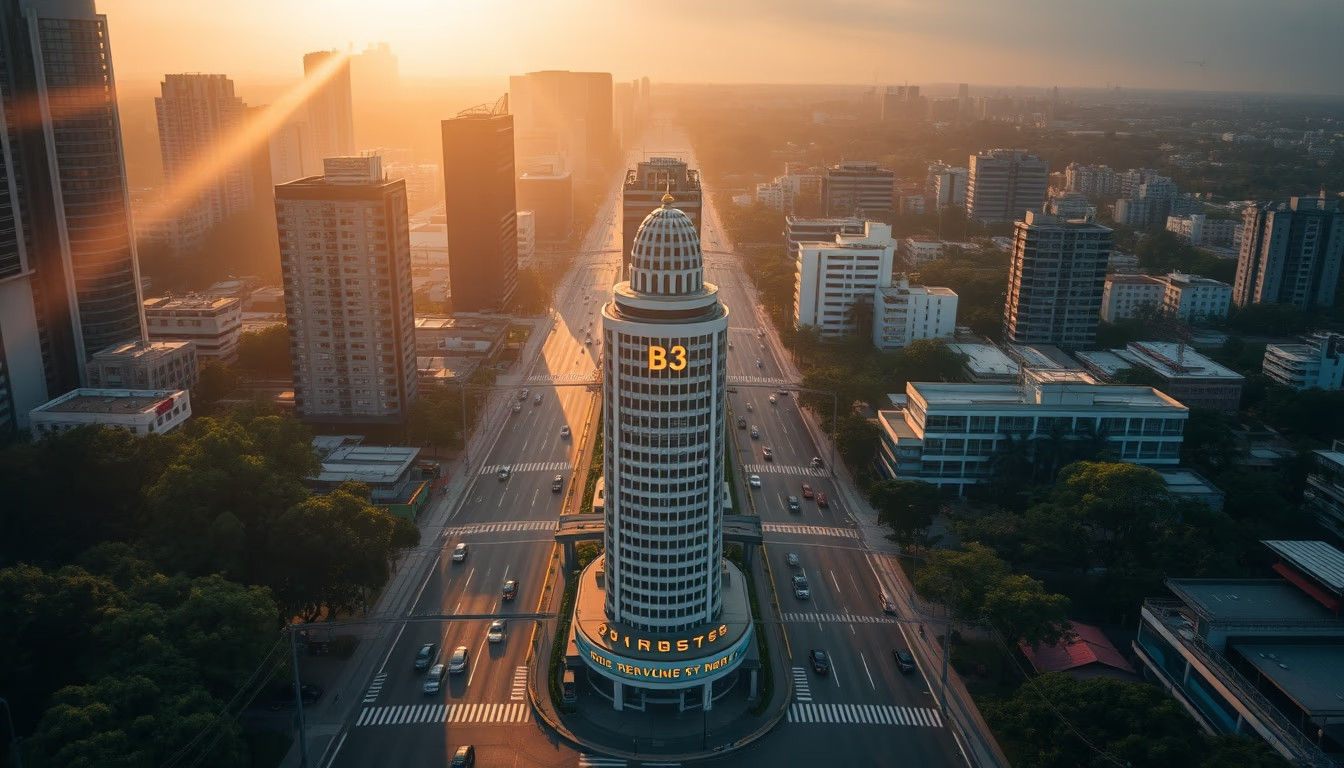 Aerial view of São Paulo financial district at golden hour with B3 building
 Aerial view of São Paulo financial district at golden hour with B3 building
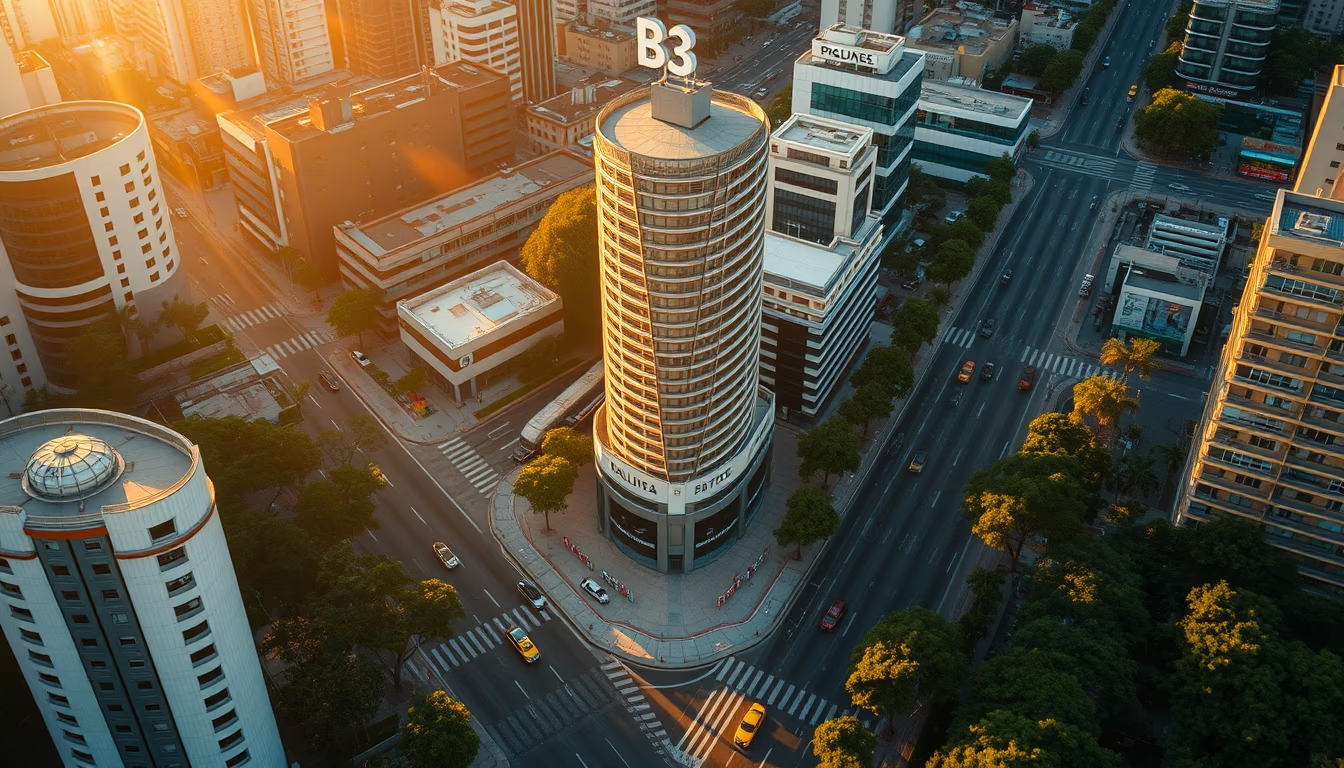 Aerial view of São Paulo financial district at golden hour with B3 building
 Aerial view of São Paulo financial district at golden hour with B3 building
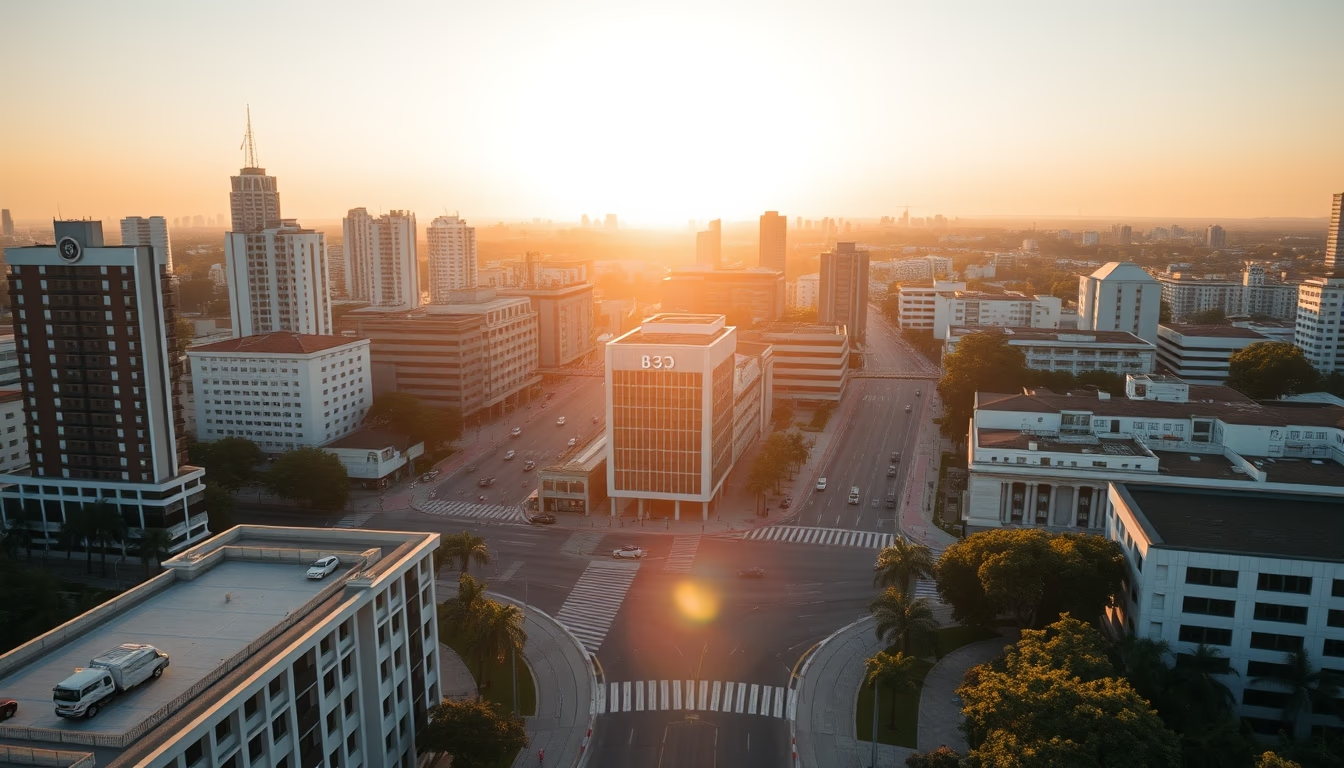 Aerial view of São Paulo financial district at golden hour with B3 building
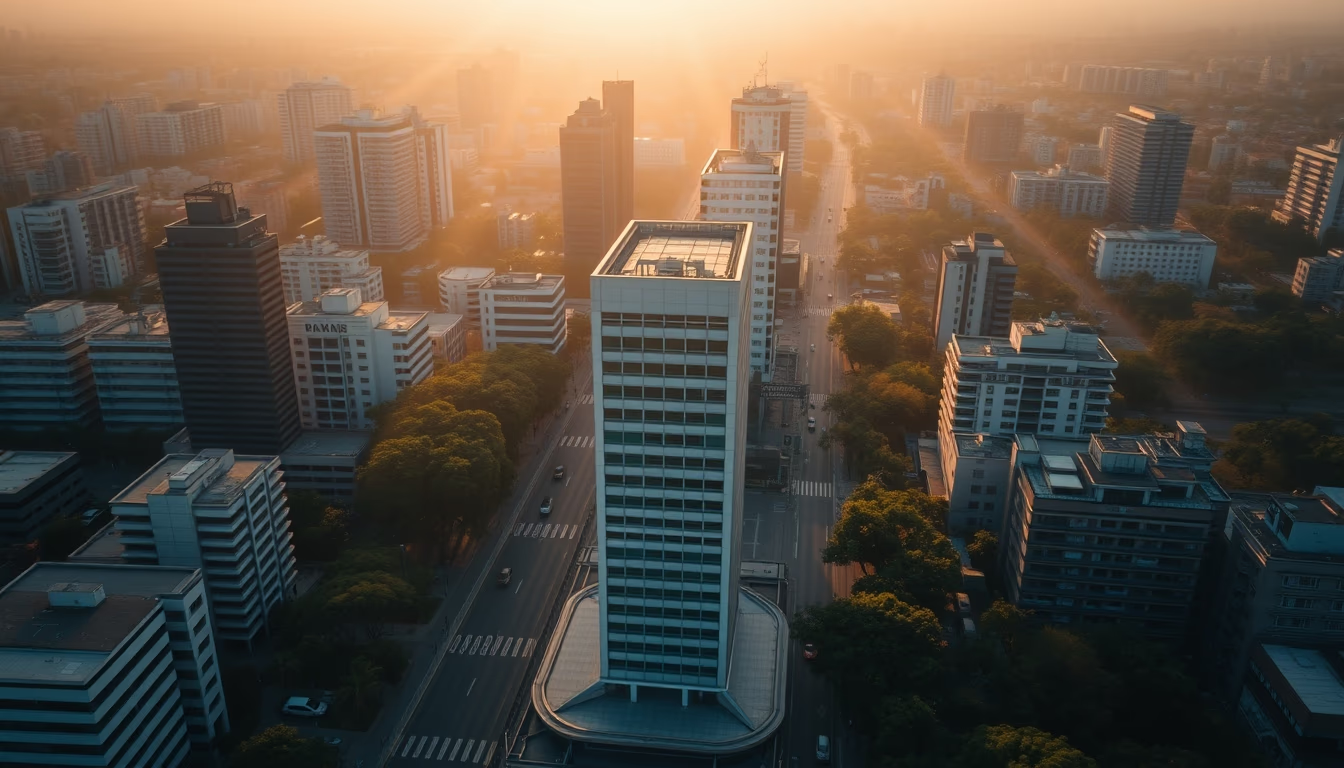 Aerial view of São Paulo financial district at golden hour with B3 building