Ram memory module ddr5
1344×768 · AVIF · CC BY 4.0
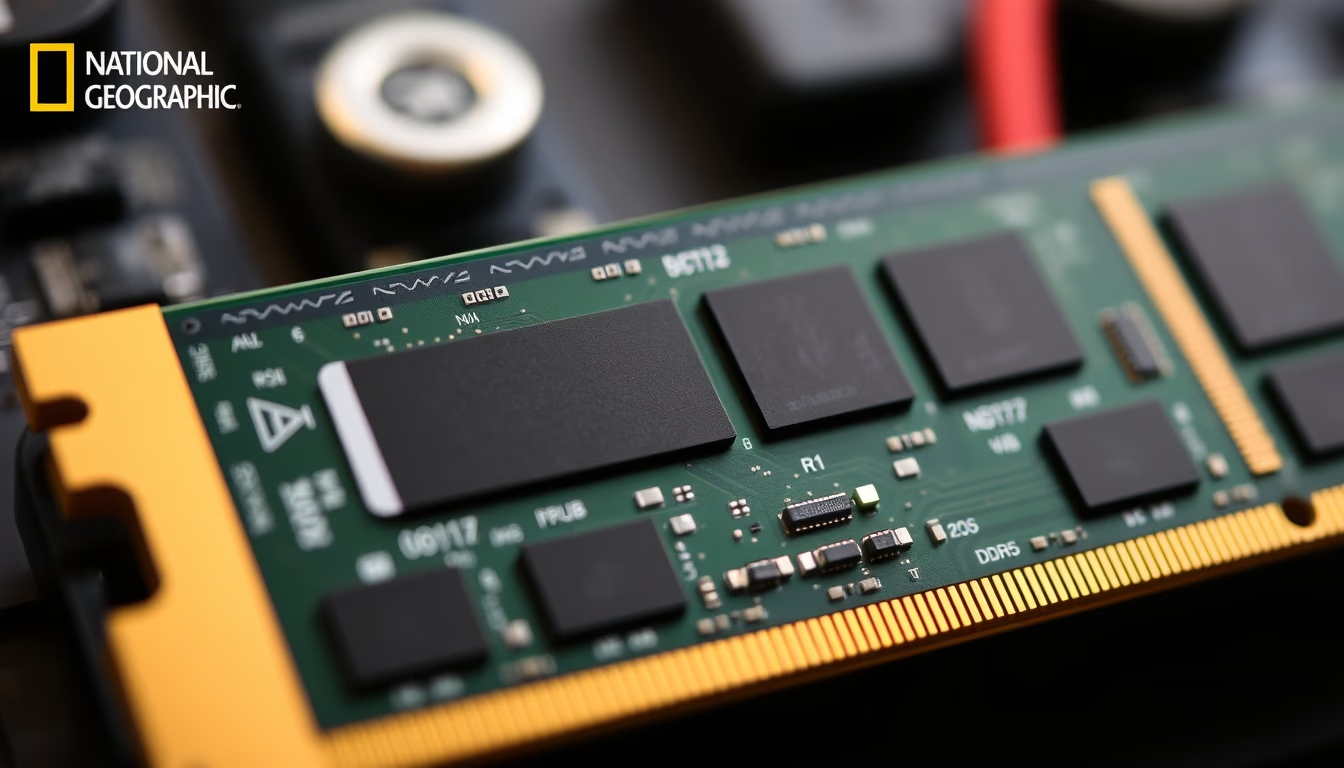
DDR5 RAM memory module delivers higher bandwidth and energy efficiency, essential for modern computing.
About this subject
The DDR5 RAM memory module represents the fifth generation of synchronous dynamic random-access memory (SDRAM), bringing significant improvements since its commercial debut in 2021. Compared to DDR4, DDR5 operates at a reduced voltage of 1.1V, leading to lower power consumption and heat generation, ideal for high-density servers and workstations. Data transfer rates start at 4800 MT/s and have reached 8400 MT/s on recent modules, supported by Intel Core 12th gen (Alder Lake) and AMD Ryzen 7000 (Raphael) platforms. Each memory channel is split into two 32-bit subchannels, doubling the number of banks and reducing latency for random accesses. DDR5 also integrates on-die power management (PMIC), improving signal integrity and frequency scalability. Maximum capacity per module reaches 128 GB (using 16 Gb chips), enabling builds of 256 GB or more on four-slot motherboards. In practice, bandwidth gains over DDR4 range from 30% to 50%, benefiting applications such as 8K video editing, artificial intelligence, and data-intensive gaming. However, higher CAS latency (typically CL40 vs. CL16/18 on DDR4) may be a concern in latency-sensitive scenarios, though the increased transfer rate compensates in most workloads. Adoption of DDR5 has grown rapidly; by 2023, it became the standard for new processors and motherboards, with predictions of fully replacing DDR4 by 2025.
Frequently Asked Questions
What does DDR5 mean in RAM memory?
DDR5 stands for Double Data Rate 5, the fifth generation of SDRAM memory that transfers data on both rising and falling edges of the clock, doubling the effective rate. It offers higher bandwidth, lower power consumption, and support for larger module capacities compared to DDR4.
What are the main differences between DDR5 and DDR4?
Key differences include: operating voltage (1.1V vs 1.2V), transfer rates (4800-8400 MT/s vs 2133-3200 MT/s), maximum module capacity (up to 128 GB vs 32 GB), dual 32-bit subchannels instead of a single 64-bit channel, and integrated PMIC. DDR5 has higher CAS latency, but the increased bandwidth compensates in most scenarios.
Is DDR5 compatible with DDR4 motherboards?
No, DDR5 and DDR4 have different physical and electrical standards, including distinct key notches and pin layouts. A motherboard that specifically supports DDR5 is required, such as those based on Intel 600/700 chipsets and AMD 600/800 chipsets.
Direct URL
https://pub-c7d6a6ea828543ac903a74a341ccb2e1.r2.dev/imagens/ram-memory-module-ddr5-national-geographic-style-p4.avifHow to credit
Include a visible link back to UtilizAí. Copy one of the snippets below:
<a href="https://xn--utiliza-eza.com/en/midia/imagens/ram-memory-module-ddr5-national-geographic-style-p4">Ram memory module ddr5</a> by <a href="https://xn--utiliza-eza.com">UtilizAí</a>, licensed under <a href="https://creativecommons.org/licenses/by/4.0/">CC BY 4.0</a>.
[Ram memory module ddr5](https://xn--utiliza-eza.com/en/midia/imagens/ram-memory-module-ddr5-national-geographic-style-p4) by [UtilizAí](https://xn--utiliza-eza.com), CC BY 4.0
License: CC-BY-4.0