Ram memory module ddr5
1344×768 · AVIF · CC BY 4.0
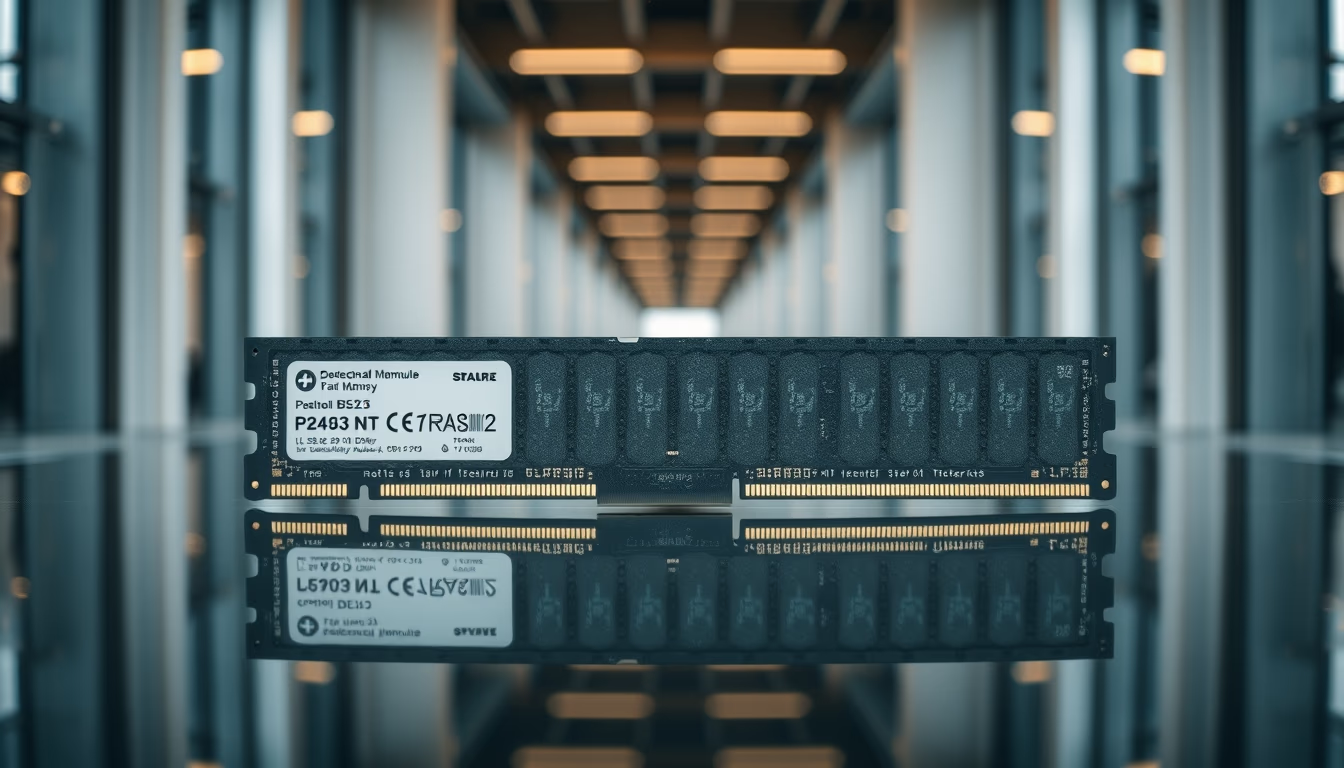
Discover the key features of the DDR5 RAM memory module, including speeds, capacity, voltage, and compatibility with modern processors.
About this subject
The DDR5 RAM memory module represents the fifth generation of Double Data Rate Synchronous Dynamic Random-Access Memory technology. Commercially launched in 2021 with initial support from Intel Alder Lake and AMD Ryzen 7000 platforms, it gradually replaces DDR4 in high-performance computers, servers, and workstations. Key innovations include a starting data rate of 4800 MT/s, which can exceed 8000 MT/s in overclocked modules, and double the capacity per module, reaching up to 64 GB in non-registered versions and 256 GB in RDIMM modules for servers.
DDR5 operates at a nominal voltage of 1.1 V, lower than the 1.2 V of DDR4, reducing power consumption and heat generation. Internally, each module features two independent 32-bit channels (totaling 64 bits), unlike DDR4 which uses a single 64-bit channel. This architecture improves data access efficiency, especially in workloads demanding high bandwidth. Another advancement is the inclusion of a power management IC (PMIC) directly on the module, allowing finer voltage control and better stability.
DDR5 adoption is growing in both consumer and enterprise markets. Motherboards with LGA1700 (Intel) and AM5 (AMD) sockets are exclusively compatible with DDR5, though hybrid versions that accept both standards exist. For users building gaming PCs or workstations, DDR5 offers significant gains in bandwidth-dependent applications such as video editing, 3D rendering, and high-frame-rate gaming. However, latency (CAS) is usually higher than high-frequency DDR4, which may slightly impact certain specific scenarios.
Interesting fact: DDR5 modules have on-die error correction (on-die ECC) to protect data within the chip, but this does not replace full server-grade ECC. The technology continues to evolve: JEDEC has defined specifications for DDR5-6400, and future revisions promise speeds above 10,000 MT/s, solidifying DDR5 as the memory foundation for the next decade.
Frequently Asked Questions
What is the main difference between DDR5 and DDR4?
DDR5 offers higher bandwidth (starting at 4800 MT/s versus 3200 MT/s for DDR4), greater capacity per module (up to 64 GB for consumers), lower voltage (1.1 V vs 1.2 V), and a dual 32-bit internal channel architecture. It also includes on-die error correction and an integrated power management IC.
Which CPUs support DDR5 memory?
The main compatible processors are Intel Core 12th gen (Alder Lake) and newer, and AMD Ryzen 7000 series (Raphael) and newer. The motherboard must also have DDR5 slots, as the physical connector is different from DDR4.
Is it worth upgrading to DDR5 now?
For users building a new PC with a compatible platform, yes, especially for bandwidth-heavy tasks. Prices have dropped close to high-frequency DDR4. However, those with good DDR4 can wait, as the gaming difference is still modest in many scenarios.
Direct URL
https://pub-c7d6a6ea828543ac903a74a341ccb2e1.r2.dev/imagens/ram-memory-module-ddr5-architectural-photography-p6.avifHow to credit
Include a visible link back to UtilizAí. Copy one of the snippets below:
<a href="https://xn--utiliza-eza.com/en/midia/imagens/ram-memory-module-ddr5-architectural-photography-p6">Ram memory module ddr5</a> by <a href="https://xn--utiliza-eza.com">UtilizAí</a>, licensed under <a href="https://creativecommons.org/licenses/by/4.0/">CC BY 4.0</a>.
[Ram memory module ddr5](https://xn--utiliza-eza.com/en/midia/imagens/ram-memory-module-ddr5-architectural-photography-p6) by [UtilizAí](https://xn--utiliza-eza.com), CC BY 4.0
License: CC-BY-4.0